How I Learned to Wear My Grandmother's 1960s Hong Kong Heirlooms
My grandmother is 89 years old, and her remarkable collection of clothing hails from 1960s Hong Kong. Now, these vibrant garments have become mine, presenting both a treasure and a challenge. How can I give these pieces another life and wear them with pride in my modern Sydney wardrobe? The task begins with an explosion of fabric at my feet—heavy coats in precarious stacks and unzipped silk cheongsams scattered across the bed. Despite the initial chaos, organising these items serves as a vivid reminder of my grandmother's colourful life.
A Sartorial Legacy
As my grandmother prepares to move into a retirement village, I am the fortunate recipient of her closet clean-out. She was always a sartorially savvy woman, and the craftsmanship of the clothes she collected and wore over decades is unparalleled. These garments offer a glimpse into her life as a twentysomething, far beyond the blurry figures in old black-and-white photographs. Even though they are decades old, each piece still bursts with life and personality.
However, incorporating items from 1960s Hong Kong into my contemporary wardrobe is no simple feat. The clothes can be physically restrictive, and their style often contrasts sharply with today's fashion trends. While I am no stranger to vintage clothing—much of my wardrobe comes from op shops—family heirlooms feel different. They carry emotional weight and history that can make them difficult to style as my own.

Expert Styling Advice
New York-based stylist Chloë Felopulos understands this tension perfectly. She notes that heirlooms can feel challenging because "you've seen it worn in such a specific way that you want to preserve that picture of your grandma." It can seem like you lack permission to wear these pieces, but Felopulos emphasises that clothes are meant to be worn. "Know that for a lot of people [passing on their garments], they just want their clothing to have another life," she says.
To gain practical advice, I consulted two style experts specialising in vintage clothing: Felopulos and Cora Walters, a curator at Cora Violet Auctions. Their insights transformed my approach to these cherished items.
Play Dress-Up and Mix Patterns
Felopulos recommends giving yourself time to experiment to overcome mental blocks. Trying unfamiliar silhouettes, colours, or patterns takes patience, as does figuring out which existing wardrobe pieces complement the heirlooms. For a floral coat from my grandmother's collection, Walters encouraged me to embrace its "romantic vibe" for a "real antique Victorian" look. She suggested pairing it with bloomer shorts, knee-high socks, and ballet flats. While I lacked bloomers, I substituted satin shorts, exploring a more feminine aesthetic outside my comfort zone.
Inspired by the coat's 1960s design—featuring a cropped length and bell sleeves—I paired it with gingham capri pants and denim mules. The pattern mixing created a cohesive look as the floral design flowed into the pants' print. Wearing this outfit to the markets, I felt a special connection, surrounded by old treasures while adorned in one myself.
Try 'Colour Sandwiching'
Felopulos also introduced the concept of colour sandwiching, which involves matching two colours in an outfit. "If the top is red, you could do a nice grey bottom, and pair it with a little red heel or a red lip," she explains. For a simple combination, I chose my grandmother's black shirt with pleated white shorts and trusty black boots. The contrast between the shirt's slim fit and mandarin collar against the baggy bottoms felt contemporary, easily fitting into my regular outfit rotation.
Unfortunately, the top was too small, with material bunching at the shoulders and a seam ripping after swift arm movements. Rather than discarding it, I considered altering it into a sleeveless piece to preserve its heritage.
Set the Scene for Modern Wear
Older clothes and accessories aren't always practical for modern living, but that shouldn't relegate them to the back of the wardrobe. Felopulos shares an example of her grandmother's gold chain mail purse, which holds only a chapstick and credit card. She still wears it on occasions that don't require a full arsenal of products.

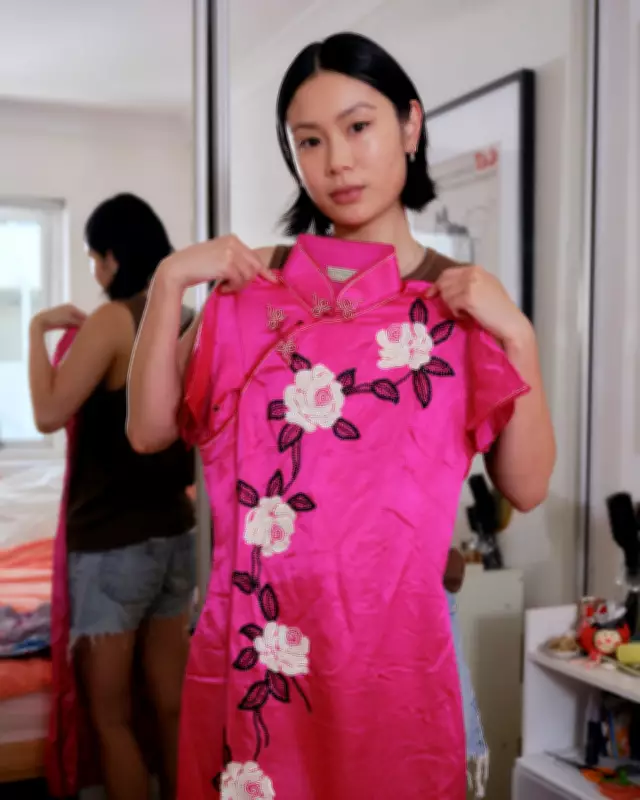
With this in mind, I thought of my grandmother's hot-pink, high-collared, form-fitting cheongsam. To work within its physical constraints, Felopulos advised envisioning where my grandmother would have worn it and translating that into my life: "Think 'what's my version of my grandma's night out?'" Initially, I hesitated to pair it with purple ballet flats, fearing two bright colours would be over the top. However, Walters noted that pairing similar fabrics creates a "soft harmony."
A Test of Courage
Wearing the hot-pink cheongsam and purple ballet flats to a neighbourhood Italian restaurant became a test of courage. I felt self-conscious, and the dress restricted how much I could eat—perhaps reflecting my grandmother's 1960s diet of less pasta and more cigarettes. When I asked Walters about navigating anxieties around wearing clothes from another era, she emphasised embracing their extravagance. "The opulent fabrics, the movement, the beautiful old labels … no one can touch that," she says. "When I wear a piece like that, people do a double take. It makes you feel singular."
I had worried that wearing 1960s Hong Kong clothing would make me look like an extra in a period drama. But donning her silk coats and jade jewellery, I remembered Felopulos' wise advice: as long as you wear the piece with pride, you're wearing it the right way. This journey has not only revitalised my grandmother's heirlooms but also deepened my connection to her vibrant legacy.