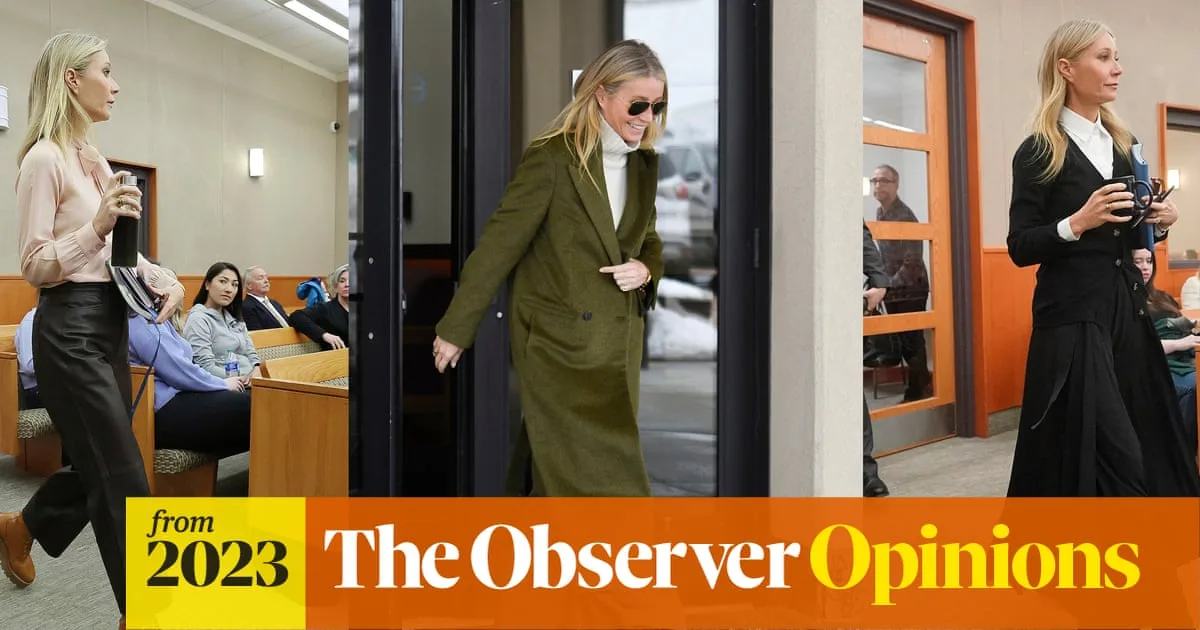
As another loving photo of a £1,000 cashmere sweater surfaces—this one by an Italian luxury brand nicknamed 'Uniqlo for billionaires' and worn by Gwyneth Paltrow during her recent skiing trial—I feel a familiar unease. Why do we ordinary people, with debts and mortgages, still lust after the clothes of the super-wealthy, especially their blandest fashions?
'Stealth wealth' describes the wardrobe of the extremely rich: fine wools in navy or grey, oversized coats, tiny handbags, whites so bright they're almost blue, and a thousand shades of camel. Logos are replaced with secret codes—a clever stitch at the hem, a cashmere hoodie. These clothes whisper 'taste' but also serve as armour, allowing the wealthy to glide through tax, war, or moral scrutiny unnoticed.
The most chilling examples pair bland fashion with stark facts. Akshata Murty, one of Britain's wealthiest women, wore £570 suede slippers on the school run shortly after receiving an £11.5 million dividend from an Indian company still operating in Russia. Gwyneth Paltrow's 'old money' style during her ski trial—neutral knitwear and chunky boots—stood in stark contrast to the gaudy courtroom looks of others, yet reminded me of the classist rules that judge us all.
I thought of Smart Works, the charity supported by Meghan Markle, which provides interview outfits to women from refuges and prisons. While it does important work, its existence acknowledges that we are judged by rules carved in diamond. The very rich benefit hourly, and perhaps I would mind this 'quiet luxury' less if the clothes were fabulous. Instead, they are bloodless, grandly bland, dreary—speaking of money, not taste; of fear, not joy.
Why should we buy these clothes without the power they represent? If we've learned anything from Succession, it's the horrors of wealth: boredom, panic, interminable snacks. Why cosplay as billionaires when to be so is to live without trust or shame? And why does the cash and privilege of a politician like Rishi Sunak—who visited a construction site in £490 Prada loafers—inspire us to run to Selfridges rather than question his priorities?
If I were more cynical, I'd suggest the fashion industry encourages us to invest in rich people's styles to distract us from the real issues. While we spend our pennies on slippers, we ignore the systems that keep the wealthy in power.