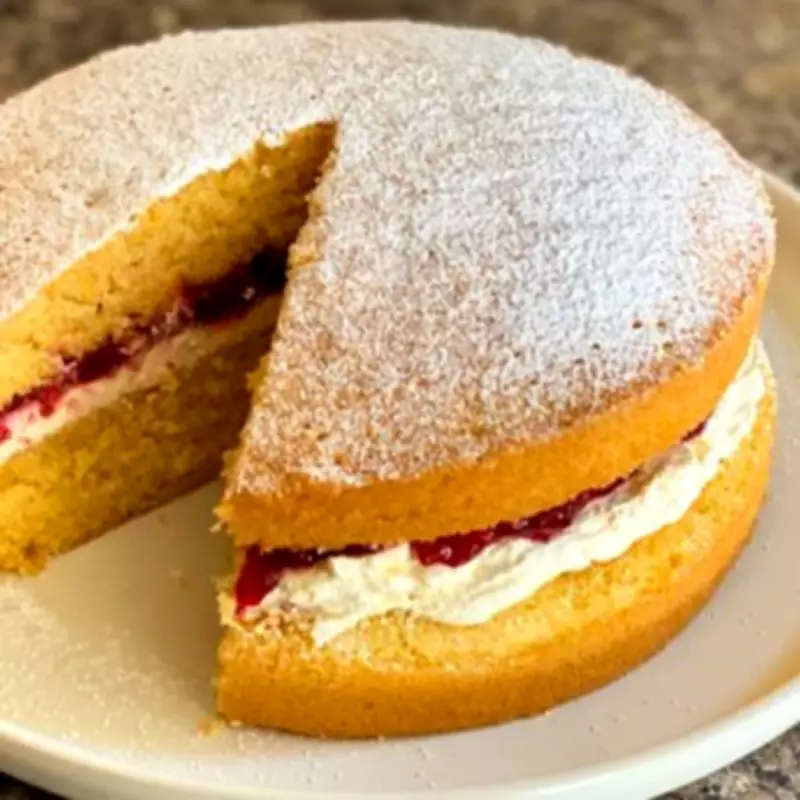
As a passionate home baker, I embarked on a delicious experiment to compare Victoria sponge cake recipes from two beloved television chefs: Mary Berry and James Martin. This classic British treat is a staple at tea parties and gatherings, known for its simple yet satisfying combination of sponge, jam, and cream. I was eager to see how these culinary experts' approaches differed and which would yield the best results.
The Contenders: Mary Berry vs. James Martin
Mary Berry, often hailed as the Queen of British Baking, has a reputation for reliable, no-fuss recipes that deliver consistently excellent outcomes. Her Victoria sponge is no exception, utilizing an all-in-one method that simplifies the baking process. James Martin, a celebrated chef with a flair for classic dishes, offers a more traditional approach that involves additional steps and ingredients. Both have impressive track records, but only one could claim victory in this tasty face-off.
Mary Berry's All-In-One Method
Mary Berry's recipe is remarkably straightforward, embodying her philosophy of accessible baking. You simply combine all the ingredients—butter, sugar, eggs, flour, and baking powder—in a single bowl and mix them together. This can be done by hand or with an electric whisk, making it ideal for beginners or those short on time. The batter is then divided between two small cake tins and baked.

Berry recommends baking at 180°C (160°C Fan/Gas 4) for 20 to 25 minutes. However, based on my experience, I found that extending the baking time to 30 minutes at this temperature produced a perfectly baked sponge. The result was a light, fluffy, and airy cake with evenly risen layers. The texture was impeccable, contributing to a delightful eating experience that lived up to Berry's esteemed reputation.
James Martin's Traditional Approach
James Martin's recipe, while still relatively simple, involves a few more stages. Instead of the all-in-one method, he advises creaming the butter, sugar, and vanilla essence together first. The eggs are then incorporated one at a time, followed by gently folding in the sifted flour. This traditional creaming technique aims to create a rich, moist sponge.
Martin suggests baking at a slightly higher temperature of 190°C (170°C Fan/Gas 5) for 20 to 25 minutes. A standout feature of his recipe is the filling: he recommends adding fresh raspberries to the jam and cream, which introduces a wonderful freshness and tanginess that balances the sweetness. The sponge itself was delicious and notably moist, but it turned out quite dense, particularly the top layer, which affected the overall texture.
The Verdict: A Clear Winner Emerges
Both cakes were undeniably tasty and would please any crowd. James Martin's addition of raspberries in the filling was a creative touch that added a burst of flavor, making his version stand out in terms of taste complexity. However, when it came to the sponge itself, Mary Berry's recipe proved superior. Her all-in-one method produced a lighter, fluffier, and more consistent texture that epitomizes the ideal Victoria sponge.
In conclusion, while James Martin's cake offered a delightful twist with its fruity filling, Mary Berry's sponge was the clear winner. Her recipe's simplicity, reliability, and exceptional results reinforce why she remains a baking icon. For anyone looking to master this British classic, Berry's approach is the way to go, ensuring a perfect sponge every time.