Stuart Ortiz's solo venture, 'Strange Harvest', is a fabrication ingeniously packaged to look like true-crime nonfiction. The film, subtitled 'Occult Murder in the Inland Empire', maintains its ruse convincingly right up to the final credits, when those who stumble in blind might be surprised to find actors credited with playing all the supposed 'real people'.
It's worth asking why a stunt like this is even desirable. Wouldn't a more conventionally staged horror movie provide better opportunity for suspense and thrills, being unconstrained by requirements of mimicking reportage? Probably yes. But beyond the admiration generated by its immaculate imitation of tabloid journalism, 'Harvest' does manage to be creepy, if not exactly terrifying. It gets under a viewer's skin with its sheer dedication to making a wholly imagined tale look like something ripped from the headlines.
Ortiz seems very invested in such sleight of hand. As The Vicious Brothers, he and Colin Minihan made 2011's 'Grave Encounters', one of the better entries in the overtaxed found-footage subgenre. After collaborating further on its sequel, plus subsequent indie thrillers 'Extraterrestrial' and 'It Stains the Sand Red', they went their separate ways. But Ortiz's first feature as a solo writer and director can be seen as an extension of the found-footage template, one conversely demanding great attention to detail in a form that's notably attracted a lot of lazy, imitative filmmaking since 'The Blair Witch Project' dropped in 1999.

Opening text informs us 'The following is considered one of the most unreported cases in Southern California history' — though had it actually happened, it would surely be one of most notorious in U.S. history. A welfare check by a worried friend led police in mid-2010 to a family's home in a gated suburban community. There, they found (and we see in officers' bodycam footage) the dead mother, father and daughter duct-taped to dining room chairs, their feet in the industrial-sized buckets they bled out into from arterial incisions. As if all this wasn't grotesque enough, a mysterious symbol had been painted on the vaulted ceiling far above. That element caused Homicide Detective Joe Kirby (Peter Zizzo) to exhale, 'Oh my god, he's back.'
Evidently, 15 years earlier, there had been three individual murders in Riverside and San Bernadino counties. The victims and methods of death were so disparate, investigators initially drew no connection between them. But eventually they noticed shared 'ritualistic aspects' and began receiving hand-penned notes from someone who knew crime specifics unreleased to the public. This person signed off as 'Mr. Shiny,' writing, 'Thanks for not catching me!' and ominously warning, 'Ten transits remain. … I'll be back.'
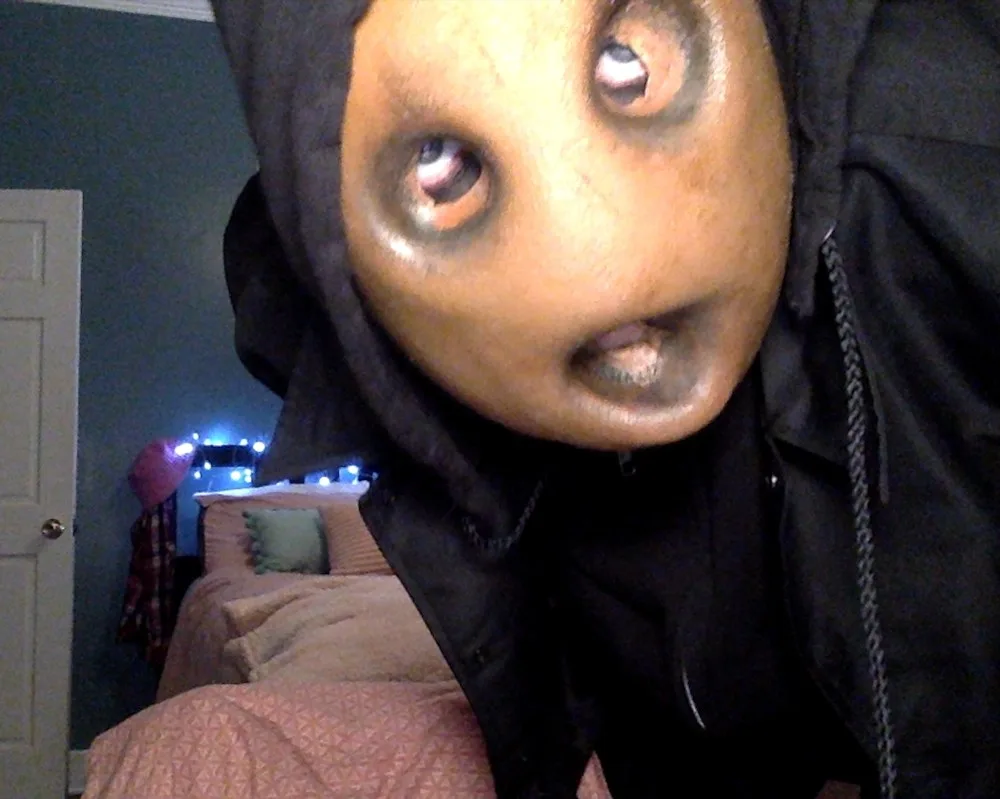
Yet that was the end of it, until the much-later family slaughter that appeared far more painstakingly planned and executed than those 'sloppy' original killings. Soon there were more victims, collectively comprising no telltale 'type' at all. But they were united by the meticulousness of their ugly demise (including single body parts removed) and cryptic references to what looked like occult beliefs. In the long layoff between sprees, however, something had changed: Advances in personal and public technology meant there was much more frequently a camera in the vicinity. So despite the masked killer's skill at rarely leaving fingerprint or DNA traces, the authorities begin catching glimpses of him: On surveillance footage invading a donut shop at closing time to attack its lone employee, or making an unwelcome bedroom appearance as a teenage girl recorded an online makeup tutorial.