Louisa Young, niece of the late Elizabeth Jane Howard, has taken on the daunting task of continuing her aunt's beloved Cazalet Chronicles. The first volume of her new trilogy, The Golden Hours, is published on 3 September, with the second, Move on Up, following in September 2027.
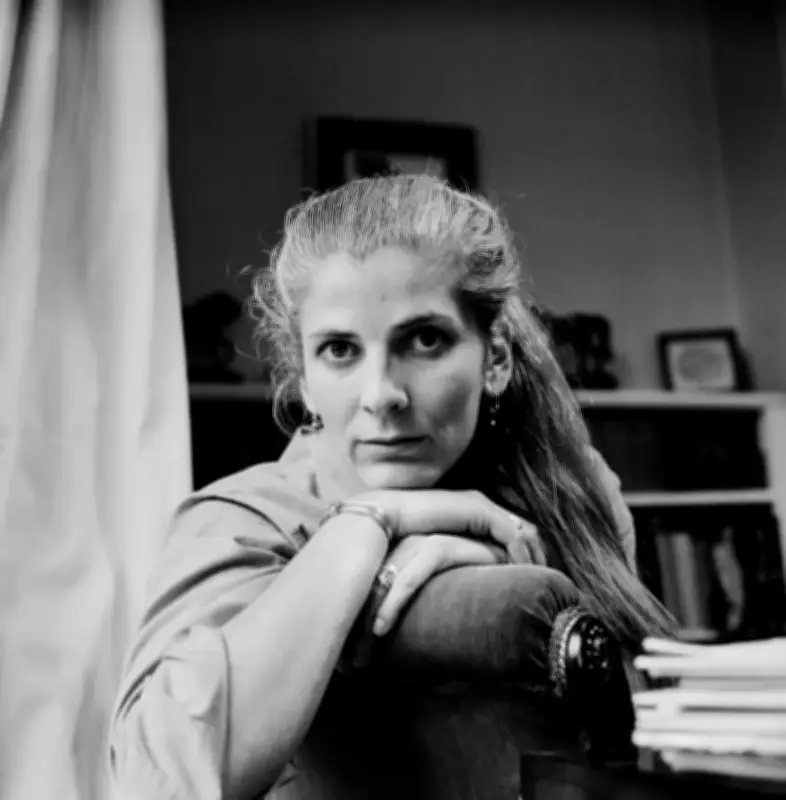
In the late 1980s, Elizabeth Jane Howard, known as Jane, was wondering what to write next. At that time, she was the author of seven novels. Her debut, The Beautiful Visit, had won the John Llewellyn Rhys prize in 1951 when she was 28, and The Long View (1956) was one of the first novels written with reverse chronology. Her talent was somewhat overshadowed by her beauty and her brief stint as an actor, as well as by the famous lovers and husbands she left, including Sir Peter Scott in 1946 and Kingsley Amis in 1983.
From a Joke to a Trilogy
Stuck, she asked her stepson Martin Amis which of two projects she should pursue: an updated version of Sense and Sensibility, or a family saga based on her own life. He advised the family saga. That project became the Cazalet Chronicles: five volumes fictionalising her life's experience, divided between three young female cousins—Polly, Clary, and Louise—and a cast of 52 more named characters, set between London and a grandparental family home in Sussex.

The first volume, The Light Years (1990), opens in 1937, and the series closes in 1958. From a slow beginning, the Cazalets grew into a worldwide phenomenon, selling millions of copies and remaining in print ever since.
Young, who was writing a biography of her grandmother Kathleen Scott—Jane's mother-in-law—at the time, recalls the peculiar overlap of their work. Jane, in her 60s, was writing a fictional version of the life she had lived, while Young, at 29, was writing a factual version of the same events. Jane gave her one version of family stories; her brother Colin, known as Monkey, gave another.
Continuing the Saga
The idea to continue the series came as a joke in an email to her agent, appended to a list of bad ideas: "Or I could always try to continue the Cazalet Chronicles." But it became real when Jane's daughter gave her blessing, and Jane's own publishers and editors came on board. They decided on three volumes: one would be silly, and more than three was too far ahead to see.
Young read the books again, considering loose ends. The unsettling incestuous romance between half-siblings Juliet and Neville needed closure. Villy, Louise's mother, deserved a better ending than being dumped and disliked by her four children. Virtuous, kind Rachel, who for years didn't realise she was a lesbian, deserved better too. And there was the unresolved issue of Louise's abandoned son, Sebastian, which Jane had found too close to home to address in fiction.
The fifth Cazalet book, All Change, ends at Christmas 1958. Young was born three months later. "I was there!" she writes. The characters, she says, were all still there, their lives continuing just off-stage. She makes it seamless for the reader by continuing Jane's elegant structure of tessellated sections, each from one person's point of view, but allows her own writing style and generation's use of language to bring things forward in time.
A Living Story
Young, now the age Jane was when she was writing the fictionalised account, reflects on whether these three novels can count as hers. "I'm not sure that's answerable," she writes. But by bringing these characters on, she makes them hers. "Because this isn't a pastiche, an imitation, or a homage. It's a living story." The family chronicle rolls on through time in reality as it does on the page.