A man washes up at the harbour of a small coastal village, his memories vague, an eerie sea fog rolling in all around him. As beginnings go, this couldn't be more Silent Hill – an amnesiac loner drawn to a remote town for who knows what reason. But this time, we're not in the Pacific Northwest of the original games or the Japan of last year's excellent Silent Hill f. We're on an island off the northern coast of Scotland, and it's 1996. Lead character Simon Ordell knows this place, but isn't sure how – and why does he have an IV cannula stuck in his hand?
Announced back in 2022, Townfall is the work of Glasgow-based studio Screen Burn, previously responsible for tense horror adventure titles Stories Untold and Observation. Like Silent Hill f, it moves the setting far out of Silent Hill itself: St Amelia is a fishing town, inspired by St Monans and dozens of other seafront towns the team visited and extensively photographed.
A new interpretation of Silent Hill
Why make that geographical change? “We felt that players were starting to become a little fatigued,” says series producer Motoi Okamoto. “Silent Hill was becoming slightly repetitive, we were using similar locations, the gameplay felt the same. We wanted to refresh the series and create a new sort of experience by interpreting Silent Hill not as a physical location but as a phenomenon, a state of mind.”
During a preview event at Konami in Tokyo, we played an almost finished version of the game for two hours, and it's clear this is very much a Silent Hill experience, but with a deliciously gloomy British slant. The visual detail is incredible. As Simon, you walk along the harbourside with its stacks of lobster cages, and reach the town itself, a muddle of tiny houses, the grey stone walls worn by sea spray, little shops selling seaside tat, an old British Telecom phone box in the town square. It's familiar but also uncanny because as soon as you arrive, you realise everything has been abandoned. Estate agent signs line every street, the homes are dark, streetlights flicker ominously. There's a suggestion of local anger at a corporation named CEG – street protests have taken place. A note at the police station says there's nothing they can do until help arrives.
Exploring an abandoned town
For the opening hour you're free to explore, letting yourself into any home with an unlocked door, and finding old PCs, horrible bathroom suites and Formica-clad kitchens, and the ordinariness makes it even creepier. As you go, strange little details emerge – Simon was staying in the local hotel, but his room is filled with medical equipment. People have been getting ill, some have disappeared. A male voice on the telephone thanks you for coming back and begs you for help. A little later, you discover a video recording of a woman named Zoe telling Simon, “You can't stay in this room for ever, you have to come back to me.” It's got that slow burn feel of the best Silent Hill titles – clues are dredged out of the world in little snippets.
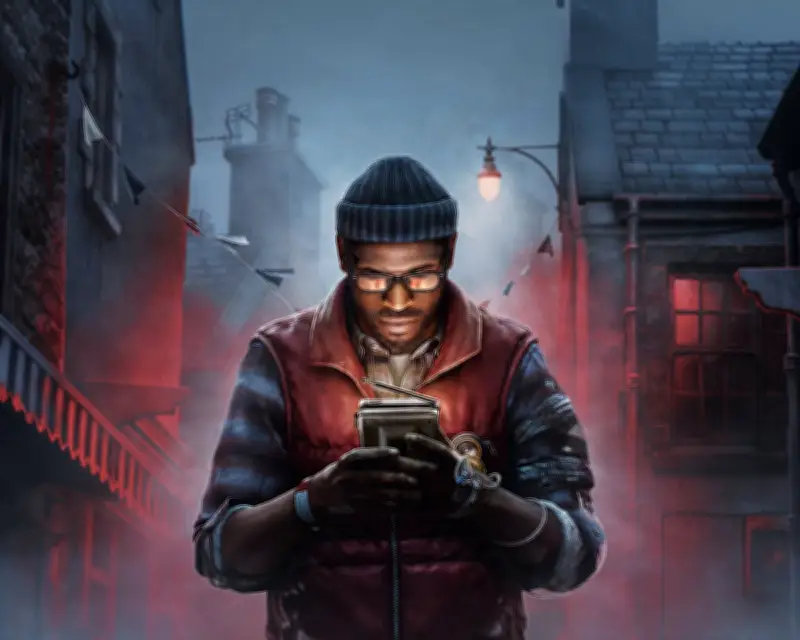
From the start, it's clear both the period and the setting have been intricately built into the gameplay. For one early puzzle you have to use a PC in Zoe's house to check her emails, but to do that, you must restore her electricity by fetching a pre-paid card from the local newsagent and putting it in the meter. It's something a lot of UK gamers will recognise, especially if they were around in the 90s – although apparently, it's confused American and Japanese journalists. Elsewhere, the portable radio from previous titles, which was used to sense incoming enemies, is now a small handheld television, expertly styled to look like one of those Casio mini TVs. In certain places you can tune it in to see hazy, static-filled images or video clips that act as puzzle clues; but when monsters are near, it can track their movements through walls.
Analogue tech and horror
This interest in ageing tech is a familiar element of Screen Burn's previous titles. “The tactility is the main reason behind it,” says Jon McKellan, director and writer of Townfall. “It's kind of become our calling card and before Screen Burn I worked on Alien: Isolation and there was a lot of that VHS analogue aesthetic. I like marrying those visual concepts with narrative and UI design. Analogue tech is fragile, it's imperfect, it feels like it could break at any minute – and all those things work really well with horror. You worry that the gadgets in front of you might not be able to save you from whatever's out there. I think if Simon was walking around with a mobile phone and Google Maps it would be a very different experience.”
As your search of the town takes you from houses and shops to the local medical centre, the evidence of some sort of massive cover-up mounts. And naturally, the monsters arrive – strange, tortured humans with axe heads for faces, their arms bound by leather straps. At first you have nothing but planks to defend yourself with and combat is demanding: you can block or strike, but the creatures are fast, deadly and difficult to take down. There's no parry or dodge so if you commit, you need very good timing. The alternative is stealth – the CRTV shows you where enemies are, while a peeking system lets you look out from cover to study their patrol patterns, and the first-person perspective means you rely on these elements much more heavily.
Our time with the game also took in a slightly later section set in a hellish, phantasmagorical underworld of sewers, wire cages and scary red lighting. It could be beneath the town or lodged in Simon's brain, but it's classic Silent Hill territory. This time, however, along with the psychological horror, there are also political undertones – the CEG corporation has exploited and destroyed the village, bringing to mind the plight of towns such as Grangemouth and Mossmoran at the hands of petrochemical giants. Simon's personal story is set to feed into that.
Personal trauma and Silent Hill themes
“We wanted to look at the relationship between the character and the society around them,” says McKellan. “What does it mean for someone to be in a town like this and have an impact on it – what do you do with that? I'm hoping that by the end of the game, people are relating to the decisions, and some of the things Simon has been through. You begin to unravel and process that, and projecting your fears, your inner turmoil on to the world around you is obviously a major Silent Hill component.”
There are questions that will need to be answered before acknowledging Townfall as another successful step in the rejuvenation of the series after Silent Hill f. Right now, the enemy figures we've seen are very familiar versions of Silent Hill archetypes and it's difficult to judge how intuitive the new stealth/peek system will become. But the setting is beautifully realised, while the shadowing of the Silent Hill 2 narrative – a man searching for a woman he seems to have had a relationship with – is intriguing, and from what we've seen, highly likely to be subverted in some horrible way. This is promisingly bleak stuff.
“There is a lot of personal trauma in there – things that have happened to me or members of the team,” says McKellan. “We try to pull reference from real life because usually that's less bombastic and more grounded than Hollywood, and to me that's where the best horror comes from. I'm just channelling all that trauma instead of getting a therapist!” Silent Hill: Townfall will be released on 24 September. Keith Stuart attended a press event in Tokyo with other journalists. Transport and accommodation costs were paid for by Konami.