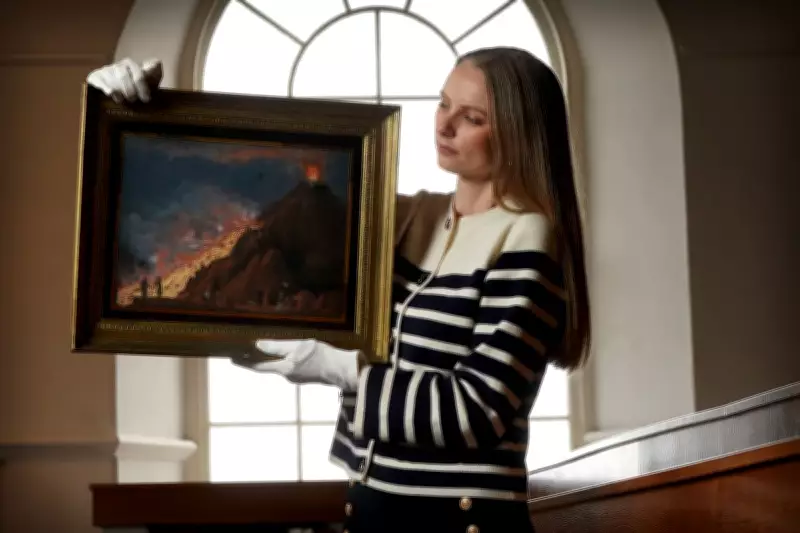
A dramatic painting of Mount Vesuvius erupting in 1774, created by an artist who is believed to have witnessed the event firsthand, has sold for more than £25,000 at auction. The work, titled An Eruption of Vesuvius in 1774, was painted by German landscape artist Jakob Philipp Hackert.
Auction Details
The painting went under the hammer at Lyon & Turnbull in Edinburgh on Wednesday, fetching £25,400 including buyer's premium. It was part of the auction house's two-day Five Centuries sale.
Artist's Connection to the Eruption
According to a biography of Hackert written by his friend, the renowned writer Johann Wolfgang von Goethe, the artist personally witnessed the volcanic eruption in Italy. Goethe noted that Hackert bravely made a series of live sketches and studies of the event. Upon returning to Rome, where he had settled in 1768, Hackert used these references to create his paintings of the scene.

Artistic Significance
Romey Clark, associate fine art specialist at Lyon & Turnbull, commented on the painting's appeal: “Hackert’s depiction is notable for its dramatic immediacy. Flames and molten lava burst violently from the crater while thick clouds of smoke billow upward into the night sky.”
Clark added that Hackert moved away from traditional panoramic views of Vesuvius, instead positioning the viewer close to the action. “He offers a more concentrated and immersive vision of the eruption itself. This compositional decision allows him to incorporate figures in the foreground, most likely Grand Tour travellers accompanied by local guides who observe the spectacle from the slopes of the volcano.”
Historical Context
The 1774 eruption occurred at the height of the Grand Tour's popularity, a journey undertaken by wealthy British and European travellers to visit classical sites across Europe. Travellers often collected souvenirs to remember their experiences, and views of Mount Vesuvius were particularly sought after.
Hackert (1737–1807) produced several paintings of Vesuvius erupting, including the one auctioned on Wednesday, which had been estimated to fetch between £20,000 and £30,000.