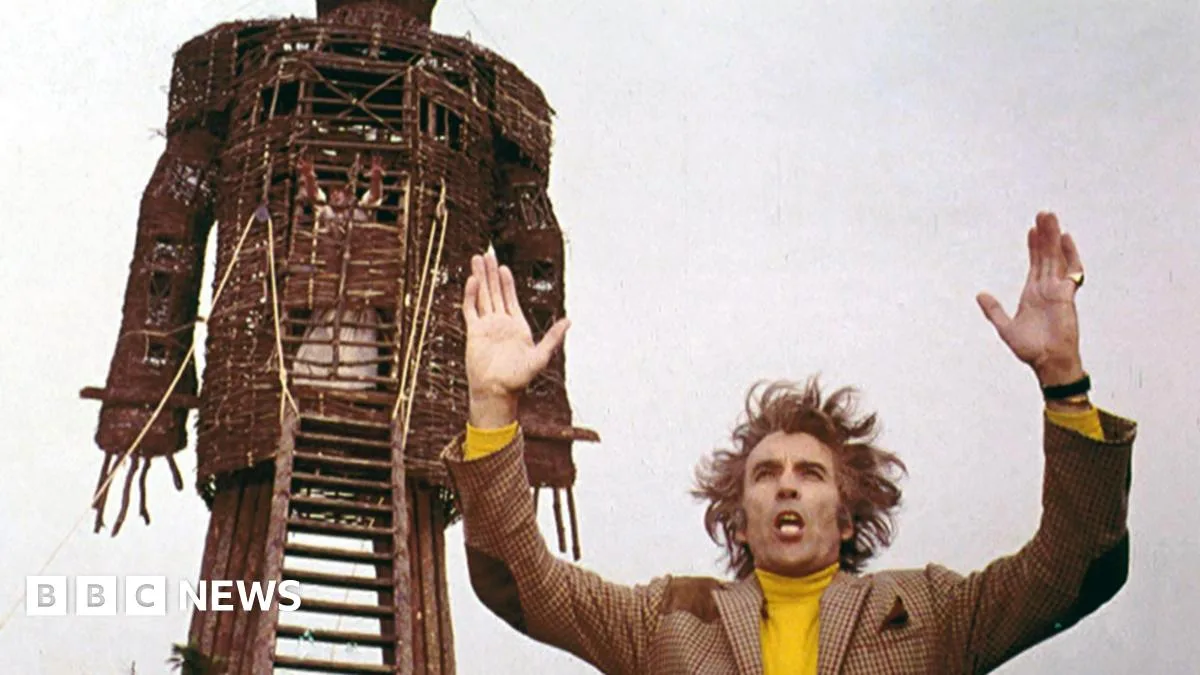
Fifty years after its release, The Wicker Man continues to divide audiences. Described as both 'the Citizen Kane of horror movies' and one of the ten worst films ever made, the story of a Christian police officer investigating a girl's disappearance on a remote Scottish island has achieved cult status.
Written by Anthony Shaffer and starring Christopher Lee, the film faced numerous production challenges. A low budget forced the island setting to be recreated in Galloway, and the spring-themed story had to be shot in October. Editing disputes and a lacklustre release as a B-movie alongside Don't Look Now in 1973 nearly killed the film.
Despite these setbacks, The Wicker Man found new life in small cinemas, on television, and through home video. Its reputation grew as academics and fans explored its themes of paganism, Christianity, and rural isolation. Christopher Lee, who worked for free, championed the film for the rest of his life.

Director Robin Hardy, who died in 2016, had a complicated personal life. His sons Justin and Dominic spoke at a recent screening, revealing their mixed feelings about the film. Justin said, 'I was nine at the time and I only ever saw that film as a bad pagan omen.' Dominic added, 'It felt like a real gut punch.'
To mark the anniversary, a new 15ft Wicker Man was burned at Burrowhead, near Isle of Whithorn, created by artist Amanda Sunderland. Her father Ian, an extra in the film, recalled being cast as a masked villager. 'They brought a choreographer in... he had us sway to the music instead,' he said.