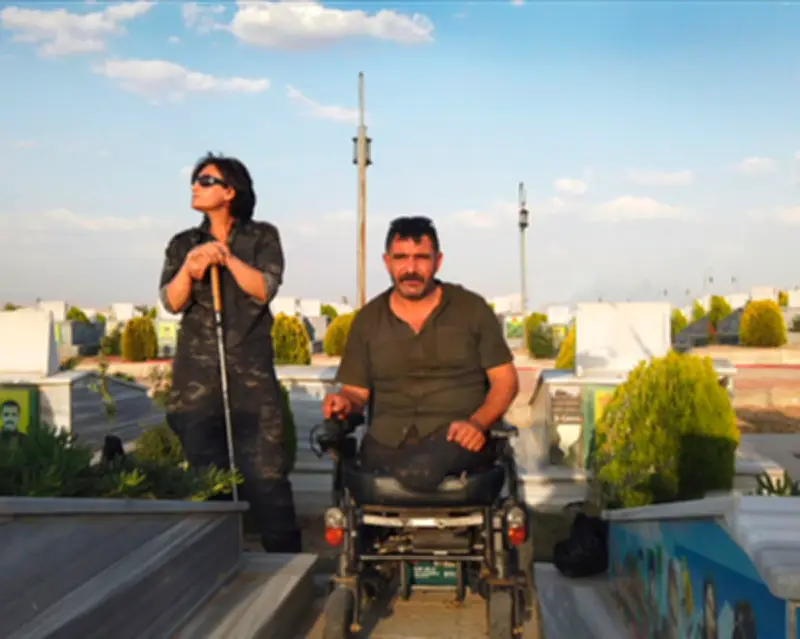
Maryam Ebrahimi’s documentary The Phantom Pain of Rojava takes viewers inside a home for injured army veterans in the Kurdish-led autonomous region of Rojava in northern Syria. The survivors, many of whom fought against Islamic State (IS), include men and women living together.
A Home for Veterans
The house is mixed gender. One resident, Fadakhar, has had both his legs amputated and is haunted at night by phantom itches and pains. But the film’s focus is largely on the female veterans, who made headlines a decade ago for their battlefield courage. Women began leaving their villages to fight IS in 2011, though more background on Kurdish all-female battalions might have been helpful.
The commander in charge of the home is an Iranian Kurd named Sorkhin. Her gentleness and warmth contrast with her reputation; she is famous in Rojava for saving Yazidi women and girls held as slaves by IS. Sorkhin says: “Everything I have done is for women … I want women to live as human beings.” Like many commanders, she lives in a constant state of hyper-vigilance, as drones sent by Turkey target Kurdish military leaders.

Stories of Courage
Another resident is Zarin, an expert sniper who served under Sorkhin and was shot in the head. Her brain injury has mostly robbed her of speech, but she tells the camera with a beaming smile: “I was wounded for democracy.”
The film opens with footage from the funeral of a female army commander, which Ebrahimi notes is the first time she has seen women carrying a coffin in the Middle East. Watching the mourners, she adds: “Their sisterhood amazes me.” At the cemetery, the women dig the soil with their bare hands – a tradition in Rojava, a final act of solidarity with their fallen sister.
The Phantom Pain of Rojava is at Bertha DocHouse, London from 31 July.