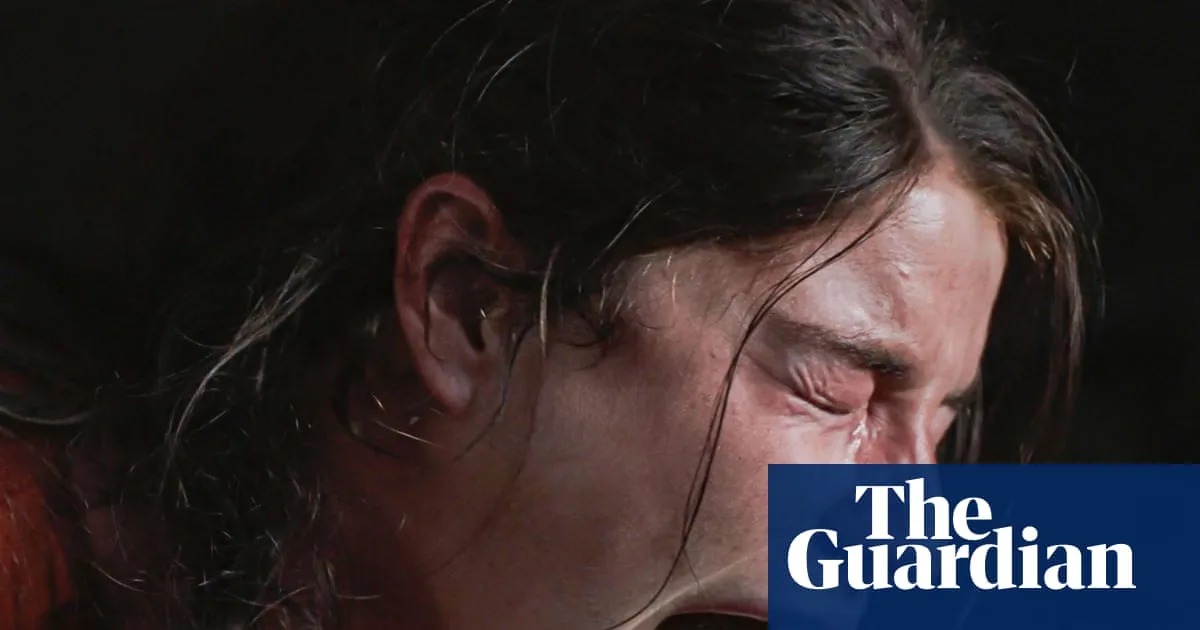
The question 'Is it porn or is it art?' is familiar in discussions of nudity, but 'Is it grief-porn or is it grief-art?' is more vexed. Grief-porn suggests emotional manipulation and formulaic storytelling, while grief-art unleashes universal and true feelings. In a film about grief, the valorised quality is depth of feeling; the audience proves its acuity by mirroring that profundity. If the death left you cold and you found the emotionality manipulative, this logic is annoying.
Hamnet, the dramatisation of Maggie O’Farrell’s 2020 novel, stars Jessie Buckley and Paul Mescal. It tells the story of Hamnet, the only son of William Shakespeare and Agnes Hathaway, who died of plague at age 11. The film is visually sumptuous with spare, intelligent dialogue. However, some principles of screen grief give it intellectual heft: women feel things more deeply than men, particularly parental bonds and connections with the natural world and magic. Buckley’s character curls up in tree roots and has premonitions of death.
Similarly, H Is for Hawk, adapted from Helen Macdonald’s memoir, stars Claire Foy and Brendan Gleeson. After her father dies suddenly, Foy’s character retreats into isolated commune with a bird of prey, refusing to let go. The film suggests that only women know how to truly grieve, stopping all clocks. Yet this emotionality allows no externality; you either feel it unquestioningly or you don’t understand.

Both films feature birds: Agnes has a hawk in Hamnet, and Foy has a hawk in H Is for Hawk. Birders noted that Hamnet used a Harris’s hawk, an ornithological impossibility in 1580s England. In the book, it’s a kestrel symbolising Agnes’s free spirit; in the film, the bird plays a Ted Hughes-lite role, as do birds in other recent films like Tuesday and The Thing With Feathers, all representing death.