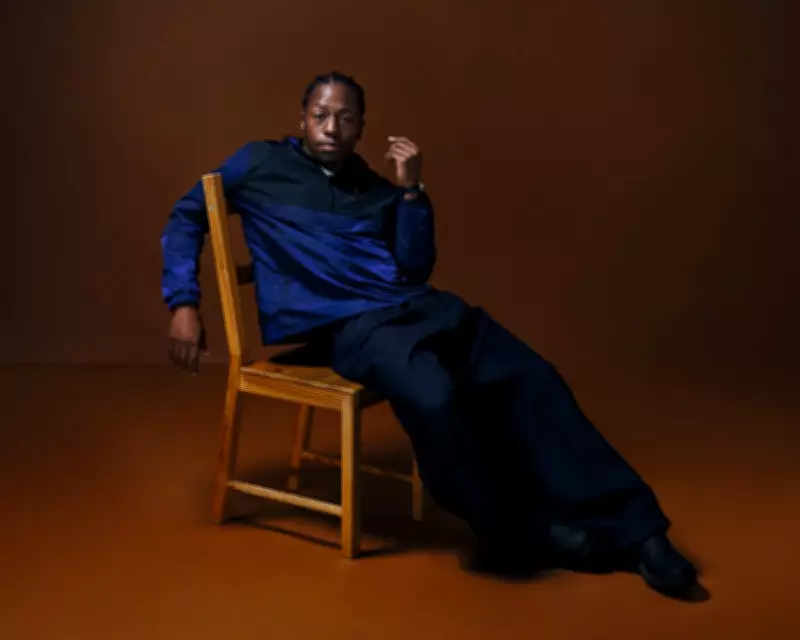
David Jonsson on Embracing Darkness and Defining Black Identity in Film
David Jonsson, the Bafta award-winning star of Alien: Romulus, has captivated audiences with his transformative performances. From a lovestruck south Londoner in Rye Lane to a paranoid android in the sci-fi franchise, he now takes on his most personal role yet in the ultraviolent British prison drama Wasteman. Ahead of the film's release, Jonsson opens up about his journey from a troubled youth in east London to Hollywood success, and the unique pressures he faces as a leading Black British actor.
From Custom House to Critical Acclaim
Growing up in Custom House, East London, Jonsson faced instability early on. His parents separated when he was 11, an event he describes as life-changing. "When you come from a broken home, it changes you," he reflects, noting how this experience informs his portrayal of Taylor, a heroin addict in Wasteman. Expelled from school for fighting, Jonsson surprised his mother, a police officer, by declaring his desire to act. "My parents are hard workers: if you want something then prove it. There's no point talking about it," he says, an ethos that still drives him today.
Wasteman: A Personal and Physical Transformation
In Wasteman, Jonsson plays Taylor, a young father serving 13 years for a teenage crime. The film, which earned five British Independent Film awards nominations, depicts the brutal realities of the British prison system. To embody Taylor's "wasted" physique, Jonsson lost 1.8 stone, describing himself as "mawga, properly skinny." He worked with charities supporting former inmates and watched extensive footage from inside prisons, with many supporting cast members being ex-inmates themselves. "This is the most personal role I've done," Jonsson admits, highlighting the character's proximity to his own life experiences.

Navigating Race and Representation
Jonsson's career has intersected with ongoing debates about diversity in British media. After becoming the first Black actor to lead an Agatha Christie adaptation in Murder Is Easy, he faced criticism in a BBC review warning against "tick box" casting. He responds diplomatically, emphasizing his British roots. "I'm always going to be British. Britain will always be home for me," he states. His casting in Alien: Romulus also sparked backlash, but the film's $351 million box office success validated the decision. Jonsson sees his role as pivotal in shaping perceptions. "Every character I do, no matter what, I'm going to be a Black man first," he asserts, acknowledging the responsibility that comes with visibility.
Faith, Darkness, and Future Projects
Jonsson credits his faith as a guiding force, describing it as his "north star" in navigating the darker themes that interest him. Upcoming projects include The Long Walk, a Stephen King adaptation where he stars opposite Cooper Hoffman, and The Chaperones, a crime comedy reuniting him with Hoffman. He is also filming Scandalous, playing Sammy Davis Jr., and is set to appear in Frank Ocean's directorial debut. Despite his rising fame, Jonsson remains grounded, treating acting as "a job" rather than a calling. "I wish I could say I know what I'm doing," he admits, reflecting on his newfound visibility.
Conclusion: A Reflection on Choices and Consequences
Jonsson's journey from expulsion to Bafta winner underscores the thin line between success and struggle. "I look at myself, someone who got kicked out of school, and I think: one wrong turn – one bad choice – that's all it takes," he says, referencing his character Taylor. With Wasteman, Jonsson not only showcases his acting range but also offers a poignant commentary on rehabilitation, addiction, and the systemic issues facing Black men in Britain. The film releases in UK cinemas on 20 February, marking another milestone in his evolving career.