Exhibition of the Week
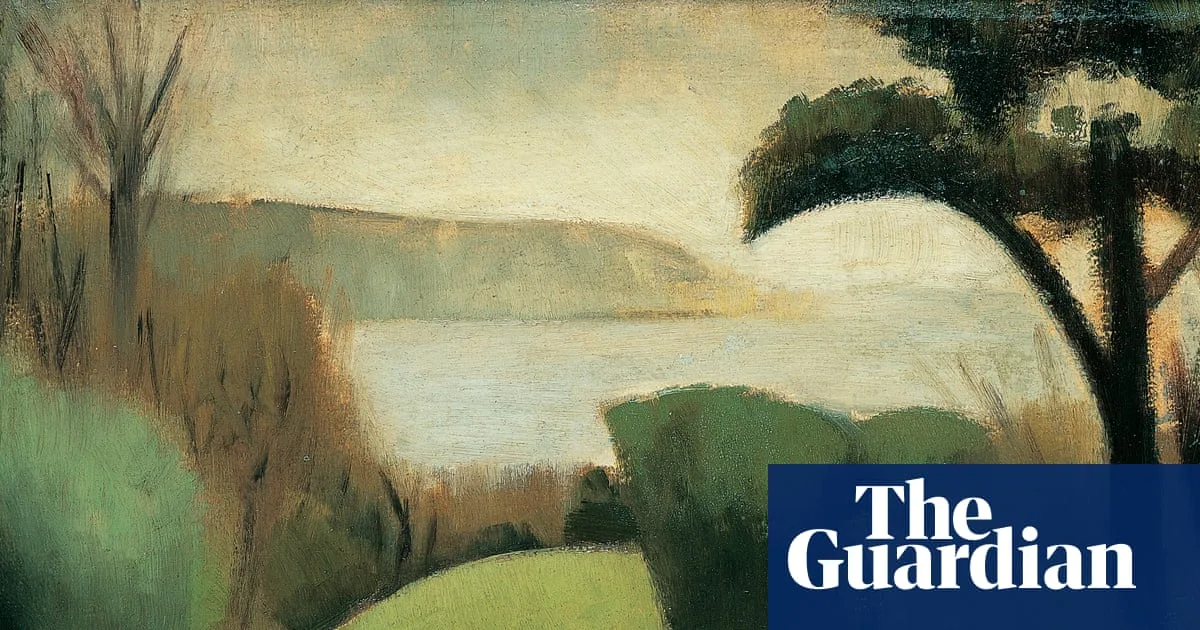
British Landscapes: A Sense of Place
The romance and mystery of Britain’s green and pleasant land, as captured by artists from Gainsborough to Hepworth. Pallant House Gallery, Chichester, from 30 May to 1 November.
Also Showing
Lisa Ivory
Creepy gothic paintings with skeletons and nudes in shadowy landscapes that evoke the history of art, darkly. Gramercy Park Studios, London, until 26 June.
Jack White
Is the Detroit-born musician and, er, upholsterer also a good artist? Damien Hirst’s gallery says yes. Newport Street Gallery, London, until 13 September.
Delaine Le Bas
Mystical new artworks including pieces made in glass at Venice’s Murano workshops. Maureen Paley Gallery, London, from 4 June.
Wendy McMurdo
Portraits that play on the border between reality and digital fantasy in a 30-year survey of this Scottish artist’s work. Portrait, Edinburgh, from 30 May to 25 October.
Image of the Week
Reclusive Canadian painter Steven Shearer usually prefers his work – such as Tokerman shown here – to do the talking. Nevertheless, our writer managed to get him to open up about how his paintings conjure art history through the lens of adolescent ennui and coming-of-age alienation.
What We Learned
- T Venkanna paints joyous carnivals of copulation
- The British abstract painter Tess Jaray has died at the age of 88
- A new artwork will transform preserved wood from the felled Sycamore Gap tree into a “living archive”
- Phyllida Barlow has disrupted a stately home
- Two artists auctioned their works to fund a renewables power plant in Nigel Farage’s Essex seat
- A fraudster trying to sell fake ancient statues to Sotheby’s was foiled over bogus invoices
- Photographer Lee Friedlander could turn “any scrap of junk into a lavish puzzle”
- A Leonora Carrington painting made in a psychiatric hospital is on show for the first time
Masterpiece of the Week
Portrait of a Poet by Palma Vecchio, about 1516
He’s elegant, he’s sensitive and he appears to have a laurel tree growing out of his head. That arboreal sprouting surely symbolises that the sitter was a poet, or wanted to be portrayed as one, for the sharp dark green leaves of the laurel were saturated in poetic associations in Renaissance Italy. In the 14th century the revolutionary love poet Petrarch, who put inner feeling at the heart of the budding Renaissance, dedicated his many sonnets to a woman he calls Laura, knowingly playing on her name and on the ancient myth in which the god Apollo pursued a woman who escaped by becoming a laurel tree. Petrarch’s Laura may or may not have been real, but he sowed the connection of laurels, love and poetry into a new vernacular Italian culture, even being crowned as Rome’s poet laureate. In the 15th century the poet and politician Lorenzo de’ Medici proudly played on his own laurel-like name. But who is this poetic soul? Laurels and sonnets were the food of love, so perhaps Palma Vecchio is celebrating this man’s lyrical passion rather than portraying a particularly famous versifier. National Gallery, London.
If you don’t already receive our regular roundup of art and design news via email, please sign up here. If you have any questions or comments about any of our newsletters please email newsletters@theguardian.com.