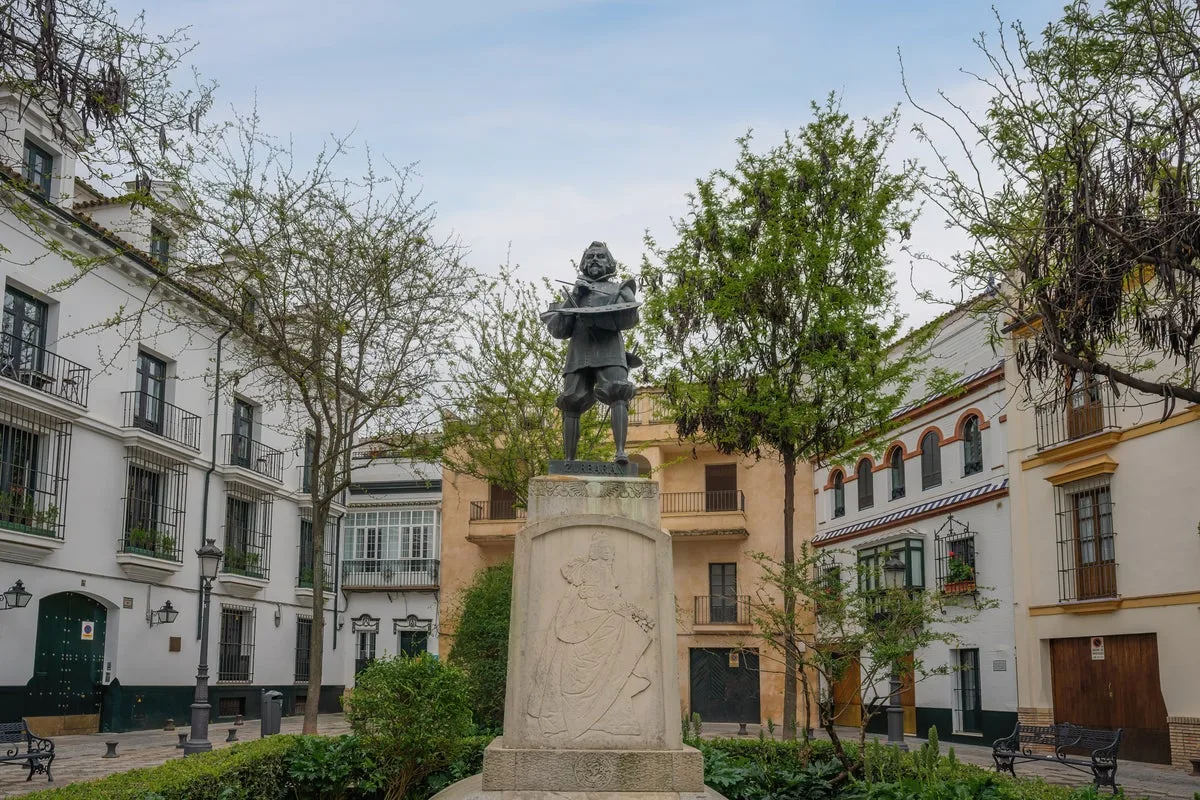
A bronze urn fell from Seville's La Giralda tower days before my arrival, dislodged by storms. The lily-shaped symbol of the Virgin Mary smashed into the plaza below, unharmed. Such signs felt apt for tracing Francisco de Zurbarán, the 17th-century painter known for visions of monks and martyrs. His major London National Gallery show opens in May, prompting my mini-pilgrimage through Andalusia.
At Seville Cathedral, I found Zurbarán's Immaculate Conception (1630) in the chapel of San Pedro. The Virgin floats in salmon pink and green over a cityscape. Later, by the Guadalquivir River, I spotted the Torre del Oro, depicted in that painting. At the Museum of Fine Arts, a Zurbarán crucifixion impressed with its focus on cloth folds. The museum, once a Mercedarian monastery, houses his martyr paintings in upstairs galleries. Entry costs €1.50 (£1.30).
Seville endures despite floods, heat, and mass tourism. I ate prawns at Cervicia la Mar de Fresquita on Calle San Eloy. At Hotel Colon, a sherry Bloody Mary offered a local twist; my door bore a Velázquez dwarf. Breakfast under a 1920s stained-glass skylight preceded a drive to the monastery of Santa Maria de la Defension near Jerez. There, Zurbarán painted for a lost gold altarpiece. Napoleon's troops used the cloisters as barracks, burning a Zurbarán panel as firewood.

Now quiet, with only a hawk's cry, the secret chapel behind the altarpiece survives. Narrow as a corridor, it once held Zurbarán's Carthusian saints in candlelight. Using my mobile for light, I felt a prickling sense of unseen forces. Most of those saints are now in the Museo de Cadiz.