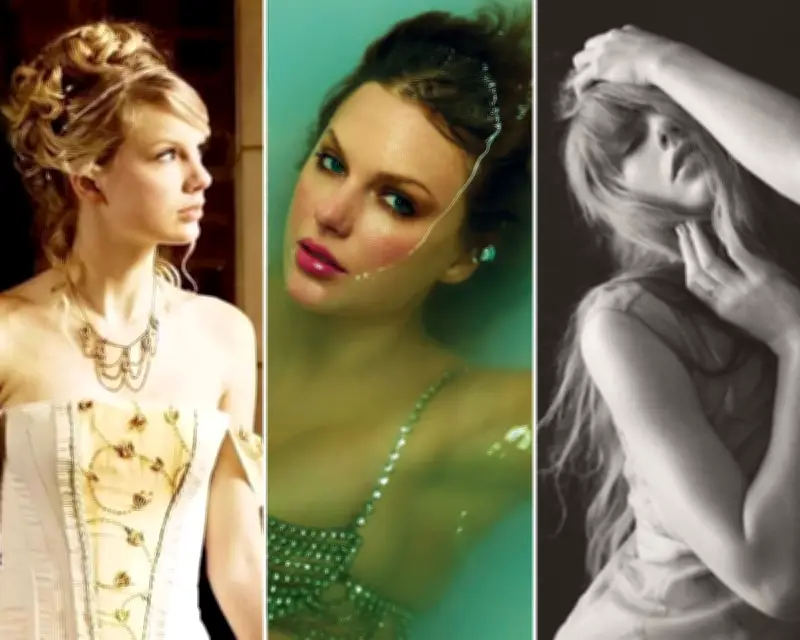
When she was 19 and already had her second album under her belt, Taylor Swift made a point of telling a would-be beau he was all wrong for her: “I’m not your princess, this ain’t our fairytale … It’s too late for you and your white horse to catch me now,” she sang in her 2008 song White Horse. Then as now, Swift liked a happy ending: she had no qualms rewriting Romeo and Juliet to end with marriage in Love Story, or imagining stealing a boy from his no-good girlfriend in You Belong With Me, both from the same album as White Horse. She just didn’t want a guy to come and rescue her from the messiness of life, like a prince in an early Disney movie whose appearance signals marriage, a happily-ever-after and, effectively, the end of a young girl’s life.
Rejecting the Fairytale Ending
This story has always been an easy one to reject; even Disney was poking fun at it as early as Sleeping Beauty. And like many women of her generation, Swift has had a complicated relationship with all that marriage implies, at least in how she’s written about it. When she met Travis Kelce, the man she is now set to marry, she was fresh from her 2022 album Midnights, in which she made it repeatedly clear she can and will ditch any man, even a perfectly nice one, who stands between her and her ambition. “He wanted a bride / I was making my own name,” she sang on Midnight Rain. In Bejeweled, the tone toward a neglectful “baby boy” is even sassier: “I miss you … but I miss sparkling.” No man is going to end the Taylor Swift story, because there are only two forces that can end the unfolding of that story. One is God; the other is Taylor Swift.
Running from Domesticity
Swift’s narrators and heroines, faced with story-ending domesticity, inevitably run, even if they don’t really know why. “Sometimes you just don’t know the answer ’til someone’s on his knees and asks you,” broods the narrator of her 2020 track Champagne Problems. She imagines her jilted lover’s family and friends telling him “what a shame she’s fucked in the head”, and it doesn’t seem as if she really disagrees with that assessment. She just knows that she couldn’t say yes. At the same time, the permanent bond of marriage is something that runs through her songs as a real goal: from early tracks such as Mary’s Song (2006), to the lover you can trust “like a brother” in Call It What You Want (2017), to the multiple proposals of and allusions to marriage on her 2019 album Lover. These would represent a kind of domesticity in which no story ends, you have simply entered a new chapter.
The Fantasy of Hard-Won Love
But there’s another kind of fairytale that girls internalise from pop culture, and it goes like this: you meet a guy. You like him. He seems to like you. Then, inevitably, he hurts you. Still, you’re no angel yourself, and love is work, so you work at it. The more you work at it, the more you reaffirm how worthwhile this love is. The more you fight, the more you’re emphasising your unbreakable bond. And maybe the guy does something bad, but he comes back and he wants to make it better. Isn’t that what counts?
The female fantasy these stories capture is not that you will exit the general struggle of life into wedded bliss but that somebody who hurts you will care enough to try to change. This other kind of fairytale love is much more seductive, because it feels more realistic. You’re not asking for something perfect. You’re asking for something mutual. You get that there are a lot of things – social, political, quirks of personality – that might make it hard for a man to relate to you. That’s fine! You want Prince Who’s Really Trying (Really, He Is) (It’s Not Like I Make It Easy).
Conflict as a Core Theme
This subtler story is the fantasy Swift has chased and perfected throughout most of her songwriting. She has always been as interested in life after the wedding as the courtship or the first meeting, but she’s imagined that life as one of conflict. Even on Mine, a track from 2010’s Speak Now that depicts a happy relationship, she portrays a late-night fight that ends with her heroine running out into the street. If her songs had been Instagram posts, many of them, particularly on Lover, would have been the equivalent of the girlfriend that posts on her anniversary about how she and her boyfriend fight constantly and want to kill each other three times a day, but they wouldn’t change things for the world.
In Love Story, Swift sang: “This love is difficult / But it is real.” That real and difficult love remained her ideal across most of her 12 albums. Love you chase, love you let go; love that heals you and breaks you; love the false god, love the king of your heart; love as freedom, love as prison; but never, never, easy love. I’ve always liked this side of Swift, this scheming screwball heroine who wears a thousand disguises to pursue a man so that she can reveal that she is, as one of the great screwball movies says, “positively the same dame”. The twist in the songs, though, unlike the movies, was that the guy always knew. It made Swift’s stories truly emotionally satisfying – that the hard work was a true labour of love because it was also completely unnecessary. That’s the thing about Americans, of which Taylor Swift is a superlative example: we don’t really trust anything that is not hard work. She wants us to know she has guitar string scars on her hand.
A New Theme: Easy Love?
That’s why it was so surprising, when Swift was inducted into the Songwriters Hall of Fame in January, that she quoted Kate Capshaw, Steven Spielberg’s wife, saying that “good and true things are easy”. This is, for Swift, a new theme.
Even in Swift’s sweetest love songs, there’s an unmistakable trace of doom. She was always looking over her shoulder. Maybe there was an external threat, as in Love Story. Maybe there was too much baggage from the past, as in 2012’s Begin Again, where the song’s narrator muses: “I think it’s strange you think I’m funny ’cause / He never did.” Even on Lover, superficially the most likely candidate for a first dance, we’re told: “I’m highly suspicious that everyone who sees you wants you.” Across 12 albums’ worth of songs, she has maybe a dozen love songs I’d call secure and un-haunted.
So High School and Tortured Poets
One is So High School, from 2024’s The Tortured Poets Department, a giddy Sixpence None the Richer–esque creation about the pleasures of letting a gigantic man be really nice to you. Swift uses internal rhyme (in the pre-chorus alone: “blink,” “crinklin’”, “sinkin’”, “pink”, “twinklin’”, “drink”, “think”, “brink”, “wrinkle”) to construct a sonic space where everything feels magical and interrelated. She says she’s drunk and high on these feelings and she sounds like it. And if you think this song sounds a little stupid, she knows, and maintains steady eye contact as she rhymes “Grand Theft Auto”, “you know how to ball”, and “full throttle” with “Aristotle”. What are you gonna do about it? Make a little post online?
Tortured Poets, though divisive upon release, was the album I’d always wanted Swift to make: bold, angry, heartbroken, Swift waging war on her public self through songs in which she inhabits various personae, such as a woman who has probably murdered her husband and is on the run to Florida. She even revisited Love Story with the updated and embittered But Daddy I Love Him, in which love still brings marriage but also a definite middle finger to expectations. In that song, she included what could be the album’s thesis statement, that “growin’ up precocious sometimes means / Not growin’ up at all”.
Dismantling Precocious Dreams
Throughout Tortured Poets, Swift returned to her precocious dreams and dismantled them. The lover who left but promised to come back for you? He’s Peter Pan. Those men who told you how great and mature you were for your age? That was just a line, one they feed to all the girls. The guy who swears it’s going to be different this time? “A con man sells a fool a get-love-quick scheme.” The song Robin shows Swift watching a child play: she comes to understand that her precocity cost her this kind of unselfconsciousness. The last and most imprisoning illusion to overcome, in this album, turns out to be the belief that you are a sensible person without illusions. Real adult life, and real adult love, and real adult happiness, could only be gained through destroying the false maturity that made a wise-beyond-her-years teenager so easy to praise.
The Challenge of Writing About Happiness
If good and true things are supposedly easy, Swift did not do a terribly convincing job of it on last year’s The Life of a Showgirl. On an album supposedly about finding love with her now-fiance, Swift struggled to depict happiness, and often fell back on manufactured conflicts – positioning herself against mean girls in the bathroom, crass materialism, online hate campaigns – on songs that were meant to highlight her newfound emotional ease. Some of those songs were good: the upbeat Opalite is about finding happiness after mismatched relationships – but much like Begin Again, it relies on the bad relationships to describe the good one. Swift isn’t blind to this trope: Eldest Daughter explicitly confronts the problem of how to write about joy after spending so much of her life on the defensive. It’s about how Swift isn’t very cool and acts tough, but now she’s found real love she can drop the act. It has a beautiful bridge painting a picture of a love that is “ferris wheels, kisses, and lilacs”. To get to that bridge, however, you have to sit through Swift wistfully singing: “I’m not a bad bitch.” It feels like an air horn every time, albeit an interesting wrinkle in a feeling being puzzled out, if not fully realised. If real love feels easy, maintaining that sense of uncomplicated joy in music is not.
Marriage as a New Beginning
There’s a certain kind of fan that’s convinced marriage is the end of Swift’s story; that her next album, being her lucky number 13, will be her last. I doubt it. What’s more likely is that for some of those fans, marriage is the end of their interest: that once Taylor Swift is definitely married to a definite man, she’ll cease to reflect their own life back to them. But, for Swift, marriage has always been about the beginning of another story. She’s not going to give up on telling her new love story after one failed try. She can and she hopefully will write an album rendering happiness in all its complexity. Sometimes a prince really does show up on a white horse. But there’s no telling where that horse will travel. Giddy up and go.