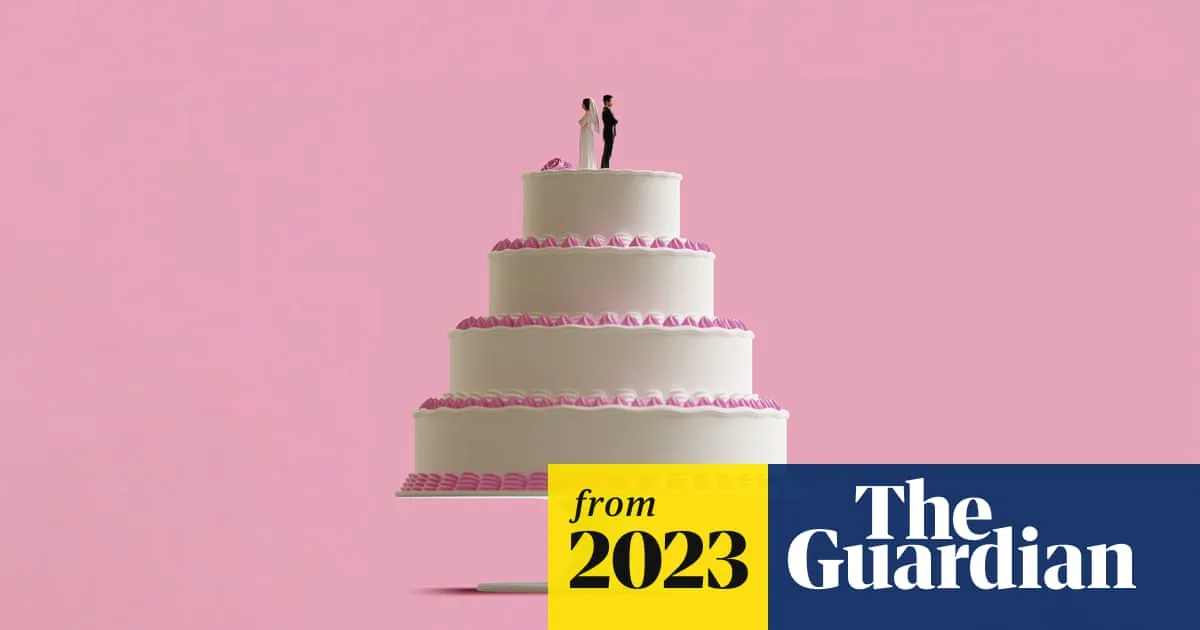
When Joanna Biggs split up with her husband seven years ago at the age of 34, she stepped off a conventional path into what seemed like chaos. Rather than throwing a party or ordering a cake iced with 'Boy, bye', she felt a sense of plotlessness. 'I had chosen to come off the conventional path. What next? Not this, I kept saying,' she recalls.
Biggs began working her way slowly towards things that felt right, starting with selling her wedding dress. She bought a new dress in silk jersey, covered in poppies, primroses and blue hydrangeas. She also deleted her Facebook profile, propped up the bar, dated chaotically, and talked endlessly about herself. 'Post-marriage, I was a teenager again,' she says, recognising her behaviour in Annie Ernaux's The Years.
From a distance, Biggs now sees that she was trying to keep a space open, not to decide quite yet. For so long she had been in the grip of the marriage plot, the from-ballroom-to-altar storyline developed in 18th- and 19th-century novels. 'My marriage could have been anything I wanted it to be if I'd had the imagination, but imperceptibly it reverted to the mean, and I felt trapped,' she writes.
Biggs references Vivian Gornick's The End of the Novel of Love, which groups together heroines 'in whom the need to own her soul is more imperative than the need to love'. Gornick writes that love cannot do the job of climbing out of our shame for us; that effort is solitary, more akin to making art than making a family. Biggs asks: 'Is the end of the marriage plot the beginning of a woman's self-knowledge?'