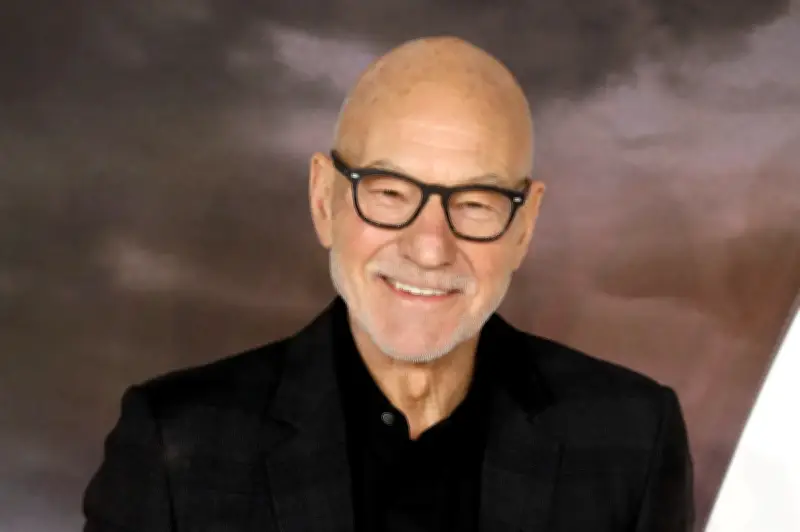
Sir Patrick Stewart's cause of death has been revealed three weeks after the acclaimed British actor died aged 86 following a previously undisclosed battle with dementia. According to TMZ, which obtained a copy of his death certificate, the document lists cardiopulmonary arrest and a neurocognitive disorder with Lewy bodies as causes of death.
Death at Home in Los Angeles
The Star Trek and X-Men star died at his home in Los Angeles on October 28, with his death announced the following day. The actor's family had previously confirmed that he had been living with Alzheimer's disease and Lewy body dementia.
A statement shared on Stewart's official social media accounts following his death said: "We announce with great sorrow the passing of Sir Patrick Stewart yesterday at his home in Los Angeles, in the loving care of his beloved wife Sunny, following a brief and poignant journey with Alzheimer's Disease and Lewy Body Dementia."
Family Statement and Tributes
The statement continued: "He has been held in the warm embrace of family and friends, surrounded by live music, prayer, tears, laughter, and the kind of profound emotion that only he could inspire after a lifetime of devotion to us all." It added: "We will forever cherish the peaceful ease and reflection on his face, an enduring reminder of his invincible grace." Stewart's diagnosis had not been made public before his death.
Lewy body dementia is a progressive neurological condition that can affect a person's memory, thinking, behaviour and movement. Alzheimer's disease is another progressive form of dementia, and both can affect how a person experiences and interacts with the world around them.
Final Arrangements and Career Legacy
The death certificate also reportedly revealed that Stewart's remains underwent alkaline hydrolysis on November 3. Also known as water cremation, the process uses water, alkaline chemicals and heat to accelerate the natural breakdown of the body.
Stewart's death prompted an outpouring of tributes from across the entertainment industry, including from former colleagues in the Star Trek and X-Men franchises. William Shatner, 95, who played Captain James T Kirk in the original Star Trek television series, wrote on X: "Sir Patrick Stewart was a friend, a colleague, and a magnificent actor." He added: "From the stage to the bridge of the Enterprise, he brought intelligence, grace, and a deep sense of humanity to everything he did."
Shatner continued: "Captain Picard stood for the best of us, and so did the man who played him. I was filled with affection and admiration for him and his work." Ian McKellen, 87, who portrayed Magneto opposite Stewart's Professor Charles Xavier, remembered his longtime friend and fellow Shakespearean actor. He said: "He wore his heart on his sleeve, which made him a man to rely on, to admire and in my case, love."
The pair shared a friendship spanning decades, appearing together in the X-Men franchise and on stage in productions including Waiting for Godot and No Man's Land. They were also set to reunite in the forthcoming Marvel film Avengers: Doomsday, scheduled for release in December 2026.
Stewart became internationally renowned for playing Professor Charles Xavier in the X-Men franchise, first appearing as the character in the 2000 film. He went on to reprise the role in X2, X-Men: The Last Stand, X-Men: Days of Future Past and Logan, as well as making an appearance in Doctor Strange in the Multiverse of Madness. However, he was perhaps equally celebrated for his portrayal of Captain Jean-Luc Picard in Star Trek: The Next Generation, which began in 1987 and ran for seven seasons.
He later returned to the role in several Star Trek films and the television series Star Trek: Picard, which concluded in 2023. Before achieving international fame, Stewart had established himself as a distinguished classical actor, spending more than 15 years with the Royal Shakespeare Company and appearing in productions of Hamlet, Macbeth and The Tempest. His contribution to drama was recognised with a knighthood, formally bestowed by Queen Elizabeth II in 2010.