Sir Chris Hoy has taken on a new broadcasting job for the Commonwealth Games, which begins on Thursday. It comes as the British Olympic hero continues his battle against cancer, having been diagnosed with prostate cancer in 2024.
Sir Chris' cancer metastasised to his bones and he was warned by doctors that he had between two and four years to live. The 50-year-old won 37 medals across a stunning career as a track cyclist, including six Olympic golds.
Sir Chris Hoy's new job
Sir Chris will be busy this summer after landing a TNT Sports reporting role for the Commonwealth Games in Glasgow where cycling will be one of the events. TNT Sports has taken over full coverage of the Commonwealth Games from the BBC, which had previously been the home of the event.
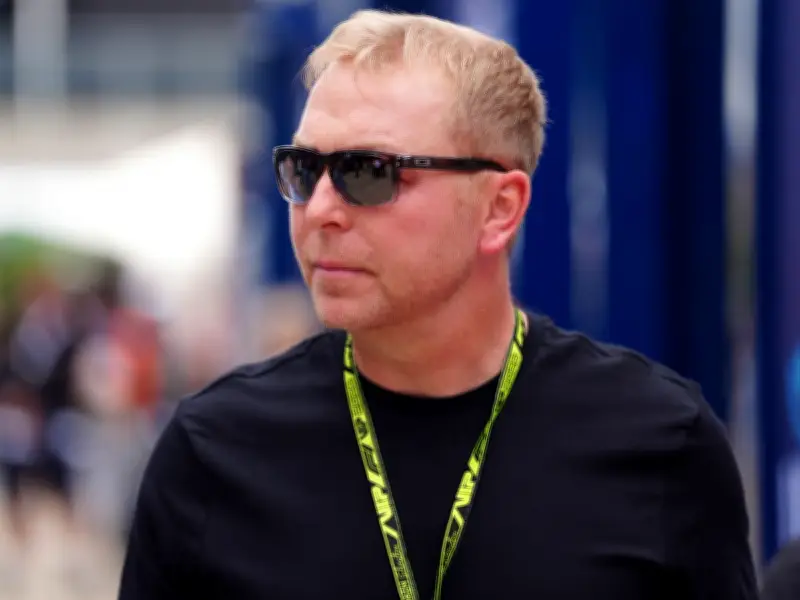
Scott Young, executive vice president of WBD Sports Europe, TNT Sports' parent company, said via The Sun: 'Our company has a great relationship with Sir Chris Hoy. We reached out to him to see if he would like to be a part of what we were doing, and we're delighted we’re working together again. I can't speak for his emotion, but we're delighted he is part of the team. He was a phenomenal athlete, a great ambassador for the sport and a fantastic bloke.'
Young said Sir Chris' work will see him cover events beyond cycling. He added: 'He will be everywhere, not just at the cycling. It's one of our reasons for having our studio based up in Glasgow. So that people like Chris Hoy can not only be in the studio there and telling the story of the Games, as we lead up to track cycling, but then be in the venue and on the ground and able to help bring that to life. This was his decision. And we fully support any other decision he needs to make [health-wise] during the Games.'
The cycling hero has fond memories of the Games after winning two gold and two bronze medals at the Games in Manchester in 2002 and Melbourne in 2006.
Current health status
Speaking in June, Sir Chris revealed that he is currently in good spirits. 'I'm doing fine, thanks,' he told the Press Association. He added: 'It's trying to demonstrate, rather than just talking about it, that all these people who are in a similar situation to me - living with stage four cancer - that there's plenty of life left in us, and we're determined to make the most of it, and not have cancer define who you are.'
Last year, the Olympic icon suffered a serious mountain bike crash, which he described as 'the worst crash I've ever had' and left him with a badly broken leg. Speaking to The Times recently, he disclosed that keeping active helps him steer his focus away from his diagnosis, while discussing how recovering from his injury has taken some time.
'It’s served me well in my life to try and challenge myself, so if you’re going to do something, make the most of it,' he said. Elaborating on the crash in November 2025, which happened in South Wales while mountain-biking with friends, he claimed: 'My lower leg kind of went with it. Basically, the top of my leg was detached from the bottom half. I was, like, what have you done to yourself? You’ve smashed your leg up, you’re never going to be able to walk again properly and you’ve potentially set yourself back with your treatment. I’d look at the reflection and it looks like both legs are going the whole way. Strength comes from the neural link — how efficient your brain is at recruiting as many of the muscle fibres as possible. So that’s one of the little tricks we used to do to try and keep that mind-muscle connection. It does feel at times like you’re in a boat with a few holes and the boat is sinking, and you’re trying to bail the water out with a bucket. But you know it would be going down a lot faster if you weren’t doing the exercise. I often think, with the work I’m putting in, if I wasn’t on these [cancer] meds I’d probably be feeling superhuman right now.'