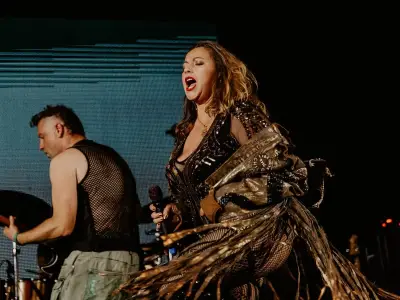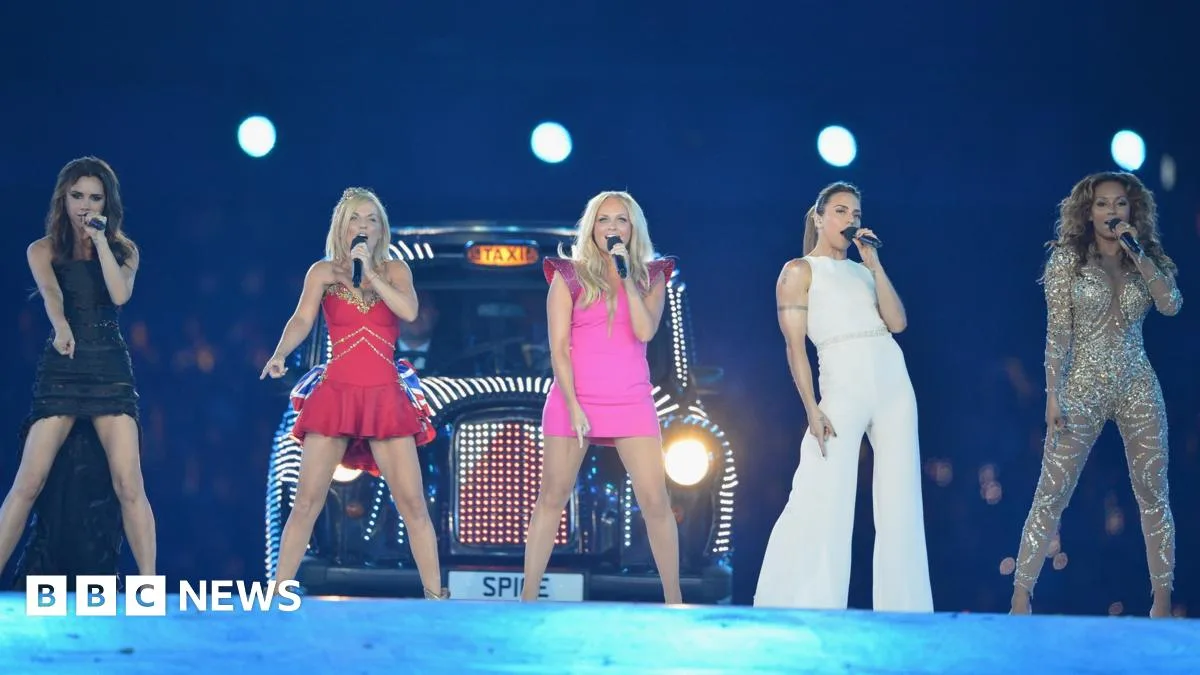
The Spice Girls have launched their UK and Ireland reunion tour in Dublin, performing for the first time without Victoria Beckham. The remaining four members – Melanie Brown, Emma Bunton, Geri Horner and Melanie Chisholm – are playing a string of dates, with multiple shows including three nights at Wembley already sold out. The tour has revived interest in the group's 1996 breakthrough single Wannabe, whose lyric about friendship captured their self-styled "Girl Power" mantra.
The origins of the phrase lie earlier, in the Riot grrrl feminist punk movement that spread across America in the early 1990s. Bikini Kill released a zine called Girl Power in 1991, reflecting the approach of frontwoman Kathleen Hanna, who famously called for "girls to the front" at gigs. NME's El Hunt says Riot grrrl bands were focused on making space for women at gigs and understood the importance of giving women a platform to speak out against abusers. "For a lot of young women and girls, who probably weren't following the Riot grrrl scene at all, The Spice Girls brought this spirit into the mainstream and made it accessible," she says.
The Spice Girls' version of Girl Power emerged at a time when lad rock dominated the charts and men's magazines that openly objectified women were peaking. Geri Horner promised to give feminism a "kick up the arse". Asked in 1997 what the term meant, Melanie Brown said it was about spreading a positive vibe and that "we don't need men to control our life. We control our lives anyway." In the film Spice World, Horner's character scares off a potential lover by mentioning feminism. Hunt says the group showed an alternative and parodied rock and roll cliches "in a very progressive and humorous way".
For many young fans, the appeal was simpler. Harriet Allen, who attended a Wembley show as a child in 1998, remembers that everyone had a Spice Girl they wanted to be; she was Baby because she was the youngest. "They were the big sisters I never had," she says. The Independent's music correspondent, Roisin O'Connor, says the songs contained "genuinely empowering messages about friendship and sisterhood", spanning from Wannabe to messages of self-respect and sexual consent in Stop and 2 Become 1.
Critics, however, have viewed the group's Girl Power as a commercial product created by men to sell an illusion of feminism. In 2016, Garbage's Shirley Manson told Vice she found The Spice Girls "abhorrent" at the time. "I always hated the term Girl Power. It was pretending to be women taking control, but none of them took control, they weren't writing, they weren't producing, they weren't playing…I found it a sham," she said.