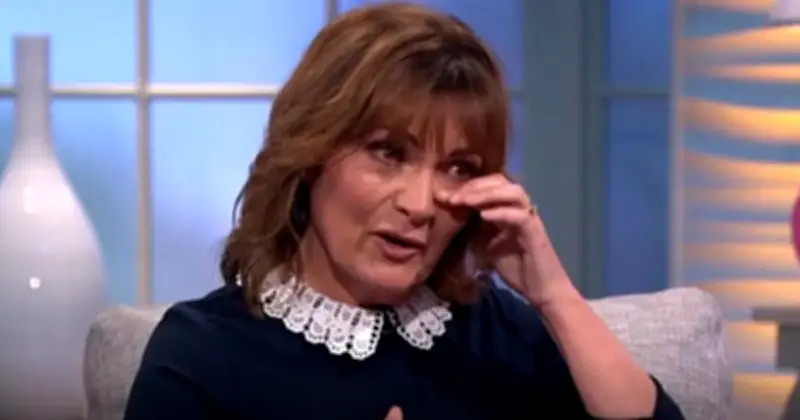
Lorraine Kelly became emotional at a BFI event celebrating the history of TV-am, the UK's first commercial national breakfast television operator, as she credited two former co-stars for her career.
At the event on Tuesday (November 24), Kelly, 66, praised Nick Owen, 79, and Anne Diamond, 72, for the kindness they showed her when she joined the broadcaster in 1984 as an on-screen reporter covering Scottish news.
Emotional tribute to co-stars
Moments after taking to the stage, Kelly said: "These two [Nick and Anne] were so kind to me. I'm going to cry!"
She added: "Thank you for looking after me, and if it wasn't for you, I wouldn't be sitting here."
Kelly continued: "The best. We all want to be as good as you were and as you are because you're amazing."
Accent setback and TV-am rise
Kelly revealed she applied for a job at TV-am after a BBC Scotland boss told her she would never succeed in the industry because of her accent.
"The reason I applied for a job at TV-am was I was told by the voice of BBC Scotland that I would never make it because of my accent," she said. "And this was coming from BBC Scotland! But TV-am took a chance on me."
Her coverage of the Lockerbie tragedy in 1988 set her on the path to national stardom, and she became one of the main presenters on the show in 1990.
TV-am's rocky start and legacy
TV-am launched in February 1983 from the Breakfast Television Centre in Camden Town, London, with David Frost, Anna Ford, Michael Parkinson, Angela Rippon and Robert Kee initially fronting the station. However, due to declining ratings and a shift in the programme's format, everyone except Frost was gone within a year of launch.
Owen, initially a sports presenter, took over from Frost as a main presenter in early April 1983. He recalled that big names such as Michael Aspel and Terry Wogan were asked to take the job but turned it down because TV-am was a "laughing stock" at that point.
"It was a real struggle. It was really difficult and we were the butt of comedians' jokes. We were easy meat because we were in such dire straits," Owen admitted.
Diamond, who worked for the BBC before joining TV-am, recalled what the head of BBC One told her about the move: "If you go to that laughing stock, you will never darken the doors of the BBC again and you will never be welcomed back. That’s how awful it was. Everybody looked down on it. It was a big risk."
Despite the difficult start, TV-am reached a daily peak of around 2.3 million viewers within its first two years. The station lost its ITV breakfast licence and closed in 1992.
The event also marked the launch of The BFI Collections Fund, which is helping to preserve around 10,000 hours of programming from TV-am during its run.