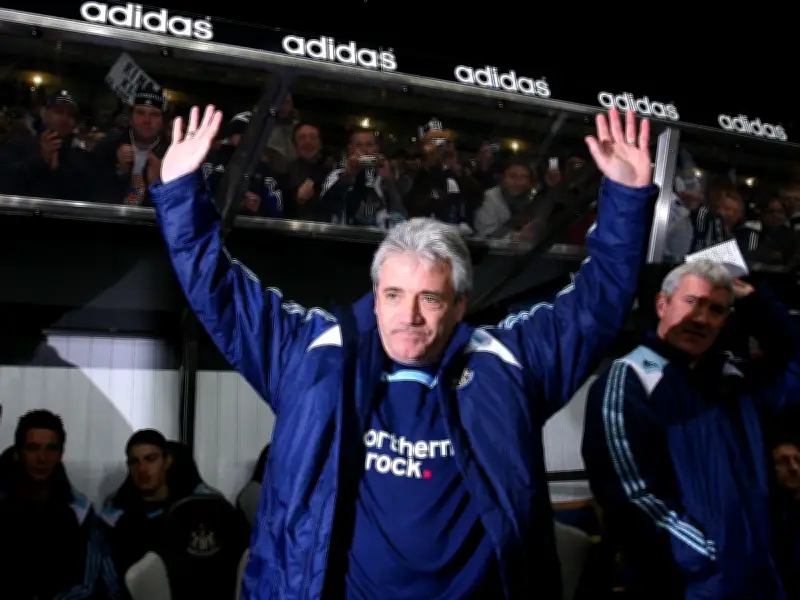
Kevin Keegan, one of English football's all-time greats, has died at the age of 75, leaving the sport in mourning. The two-time Ballon d'Or winner was a trailblazer who achieved legendary status with Liverpool, Newcastle, and Hamburg, and was a household name thanks to his starring role on the 1970s TV show Superstars. His international career, both as a player and manager, was unforgettable, though marked by what-ifs. Keegan scored 21 goals in 63 appearances for England from 1972 to 1982, but England failed to qualify for the 1974 and 1978 World Cups when he was at his peak. By the 1982 World Cup, a back injury limited his impact, and he famously missed a late header against Spain that ended his tournament. He was later dropped by new manager Sir Bobby Robson, which led to his premature retirement from international duty and hastened the end of his playing career at Newcastle at age 33.
Player Career and Achievements
Keegan's playing career was nothing short of remarkable. He won the Ballon d'Or in 1978 and 1979 while at Hamburg, becoming the first English player to win the award twice. At Liverpool, he won three First Division titles, the FA Cup, and the UEFA Cup. After a move to Hamburg, he added another Bundesliga title and reached the European Cup final. He later returned to England to play for Southampton and then Newcastle, where he became a cult hero. His energy, passion, and never-say-die attitude earned him the nickname 'King Kev' and drew comparisons to the fictional comic strip character Roy of the Rovers. According to Daniel Marsh, Senior Sports Reporter for the Mirror, 'Keegan was a real Roy of the Rovers player who gave absolutely everything on the pitch.'
England Managerial Tenure
Keegan's stint as England manager from 1999 to 2000 was brief and turbulent. He famously resigned in the toilets at Wembley after a 1-0 defeat to Germany in October 2000, admitting he fell short of what was needed to manage his beloved country. Despite his shortcomings as a tactician, he was a passionate motivator, and there was huge public clamour for him to take the job after his successful spells at Newcastle and Fulham. Marsh noted, 'The revisionism about his shortcomings must be put into context. We all wanted him because we loved King Kev.' Keegan's relationship with the press was often strained during his England reign; he hated criticism and was deeply sensitive. Marsh recalled an interview where Keegan turned the tables and questioned him about the fairness of media coverage.
Tributes and Legacy
Tributes have poured in from across the football world. Alan Shearer, who played under Keegan at Newcastle, sent an emotional goodbye to his 'hero.' Keegan's family, fans, and former players have all paid their respects. Despite the disappointments, Keegan's love for football remained pure. Marsh, who met him years later in Doha, said, 'If anyone shared his passion and love of the game then he’d just get carried away and lose himself all over again. That was the thing with Keegan. His love of football was pure. He was one of the most passionate people I’ve ever met. And that mix made him King Kev.'
Impact on English Football
Keegan's influence on English football is immeasurable. He was an icon who was back page gold because of his huge ability, his personality, and his willingness to speak his mind. His bust-up with Sir Bobby Robson, which ended his England career prematurely, is often forgotten, but it highlights his fiery temperament. Keegan quit as a player at Newcastle aged 33 after learning of his international exile second-hand. 'I’m finished with England. I’ll never kick a ball for my country again,' he reportedly ranted. His playing career wound down soon after. Yet, for all the regrets, Keegan remains one of the greatest players England has ever produced, and his legacy will endure.