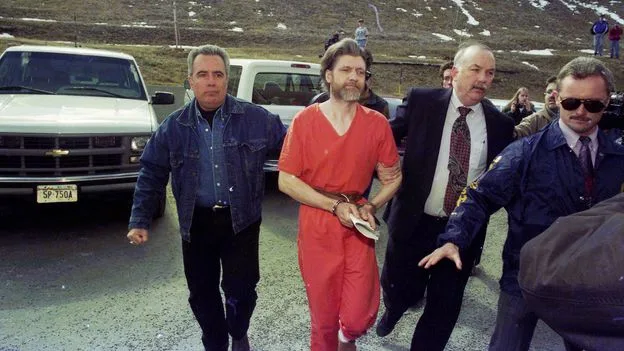
On 3 April 1996, US federal agents arrested Theodore 'Ted' Kaczynski at his remote log cabin in Montana, ending an 18-year hunt for the Unabomber. The mathematician, who had evaded capture through a campaign of parcel bombs targeting universities and airlines, was finally trapped by his own words.
The Unabomber's spree began in May 1978 with a bomb at Northwestern University. Over the years, he killed three people: computer rental shop-owner Hugh Scrutton, advertising executive Thomas Mosser, and timber industry lobbyist Gilbert Murray. His bombs, made from common items like wood and lamp cords, left investigators with few clues.
In April 1995, Kaczynski sent a 35,000-word manifesto, 'Industrial Society and its Future,' to the New York Times and Washington Post, offering to stop killing if it was published. After three months of deliberation, the newspapers complied on FBI advice, hoping someone would recognise the author's voice.
The breakthrough came when Kaczynski's brother's wife, who had never met him, identified his distinctive writing style. The FBI's $1m reward hotline received over 50,000 tips, and the manifesto helped narrow down suspects. As BBC Newsnight's Krishnan Guru-Murthy noted, 'The Unabomber's ego may have led to his downfall.'