Robin Farquharson, a prize-winning game theorist, anti-apartheid activist and countercultural chaos merchant, died aged just 42 in a squat fire on April Fools' Day 1973. A new biography by M Syd Rosen, International Freak, delves into his extraordinary and erratic life.
Early Life and Oxford Years
Farquharson was born into privilege in South Africa; his father founded a prominent law firm in Pretoria, and high-ranking politicians were regular dinner guests. He attended elite private schools alongside future novelist Wilbur Smith and Elon Musk, earned a pilot's licence before turning 16, and entered Oxford to study PPE. There he befriended Bertrand Russell and Rupert Murdoch (then a self-declared Marxist), and shared lodgings with future chancellor Nigel Lawson. Despite being regarded as intellectually brilliant, he sabotaged a fellowship at All Souls College by phoning the warden to share a message from God.
Contributions to Game Theory and Voting Systems
Like Lewis Carroll, Farquharson was fascinated by mathematics and voting systems, advocating for direct electorate input over parliamentary representation. His work earned acclaim from philosophers John Searle, Michael Dummett and Amartya Sen, and a major prize from the American Academy of Arts and Sciences. He participated in panels with experts in economics, holography, computer science and artificial intelligence, and played a prominent role in BBC election night coverage in 1955.
Anti-Apartheid Activism
In the early 1960s, Farquharson became a leading figure in South Africa's Liberal party, helped novelist Bessie Head and her journalist husband find publishing outlets, and conspired with poet-activist Dennis Brutus to get South Africa banned from international sports. He kept non-segregated company, refused to hide his homosexuality, and was harassed by police seeking to revoke his passport. Later in London, he squandered much of his inheritance attempting to fund a guerrilla army to invade apartheid South Africa, but was swindled by drinkers at his local Irish pub who promised grenades and dynamite.
Countercultural Exploits
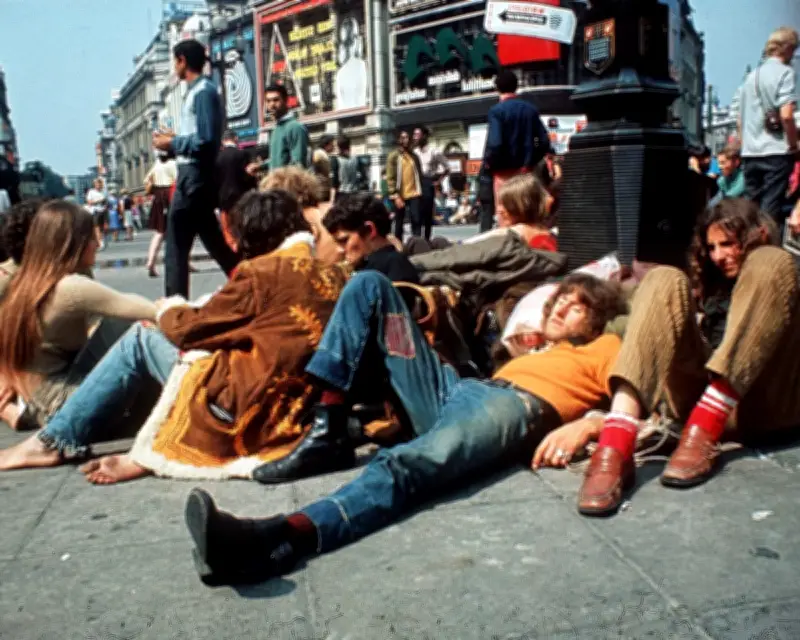
Rosen's meticulously researched biography places Farquharson at the heart of 1960s and early 1970s counterculture. He attended seminars with Nobel laureates and defence department employees, mingled with occultist Frater Choronzon and dianetics promoter George Hay, and frequented the Arts Lab on Drury Lane. He explained the cult of Rupert Bear to a Sunday Times reporter, founded the Situationists Housing Association, and made an experimental pro-Palestinian film that, according to Rosen, ended 'with Israel pinning Palestine to the ground and making thrusting buttocks movements'.
Mental Health and Decline
Farquharson's 1968 memoir, Drop Out!, recounts being attacked by teenagers: 'Now I was a Negro. Now I was a Jew. At last, at last.' He suffered from mental illness, poorly treated by psychiatric institutions, claiming to be king of Zembla (a fictional nation from Nabokov's Pale Fire), was arrested naked at Didcot station, and had no compunction about punching policemen or friends while stoned. The poet Aidan Andrew Dun called him an 'outsider among outsiders … a luminous ruin of a man', and anti-psychiatrist RD Laing described him as 'very intelligent and totally out of his fucking mind'.
Legacy and Biography
Rosen, co-founder of Jargon, a project exploring forgotten aspects of the Jewish diaspora, first heard of Farquharson from a random drinker in a London pub. 'I was drawn to the story and repulsed by it,' he writes. Despite the Cambridge college holding Farquharson's papers refusing to release them as 'too distressing', Rosen reconstructs the peripatetic adventures of a 'crazed scholar' who was 'on a trip without a ticket'. Farquharson once wrote, 'I adumbrated vast enterprises' – and indeed he did. International Freak is published by Strange Attractor (£21).