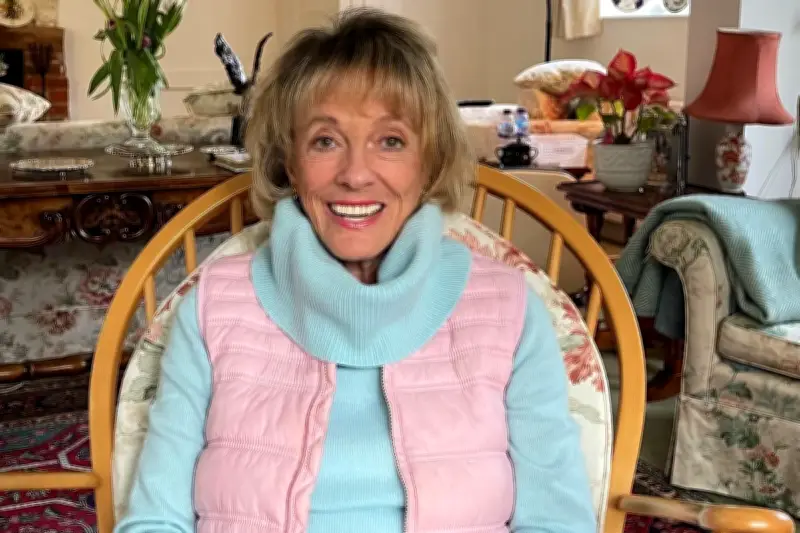
Dame Esther Rantzen was one of the best-known faces of the campaign to legalise assisted dying and had shared her personal health issues as part of a last-ditch plea to MPs to change the law.
It was in December 2023 that she first told how she had joined the Swiss assisted dying clinic Dignitas, in an effort to give herself an option in the face of her diagnosis of stage four cancer. But almost three years later, in September 2026, she confirmed publicly that it was too late to “buzz off” abroad to where it was legal, despite having “spent the money and made the plans”.
A Public Campaign for Choice
The former broadcaster had spoken frequently on an issue which she said was about choice, insisting she was not trying to “impose my choice on anyone else, but I believe they should have no right to impose their choice on me”. Within a year of saying she would hold a free vote on assisted dying if she was prime minister, a Bill passed its first stage in the Commons in what was hailed a historic moment.
The conversation around legalisation had been ramping up already, with moves being considered in other nearby jurisdictions including the Isle of Man and Jersey. And while a range of campaigners had worked to get proposed legislation before the Westminster Parliament, Dame Esther’s public comments on such a sensitive and often divisive topic had undoubtedly made an impact.
Impact on Parliament and Public
In 2023 she told the BBC’s The Today Podcast: “I have joined Dignitas. I have in my brain thought, well, if the next scan says nothing’s working I might buzz off to Zurich – but it puts my family and friends in a difficult position because they would want to go with me.” The revelation made headlines, as she openly talked about the challenges for someone with a terminal diagnosis and the limitations for their loved ones should their relative seek assisted dying.
Her comment that the law as it stands – under which assisted suicide is banned in England, Wales and Northern Ireland with a maximum prison sentence of 14 years – was “not really working” resonated with many. A debate in Parliament in April 2024 – months before a Bill was introduced – saw Dame Esther singled out for the contribution she had made to the public conversation.
Labour’s Tonia Antoniazzi told fellow MPs that day at Westminster Hall she had no doubt that the broadcaster had contributed to a “heightened awareness of assisted dying”. She added: “By her own admission in our discussion, she didn’t realise that speaking out about her personal choice would have had the impact that it has.”
Political Promises and Legislative Progress
Dame Esther’s comment on having a free vote on assisted dying later led to a conversation with Labour leader Sir Keir Starmer before he became prime minister, in which he had promised he would make time for a debate and vote if he was elected. And so it was that 11 months after her initial call for a vote, the Terminally Ill Adults (End of Life) Bill cleared its first parliamentary hurdle in November 2024 by a majority of 55.
The legislation proposed making assisted dying available to adults in England and Wales with a terminal diagnosis of less than six months to live. Dame Esther’s role in the public consciousness was such that “for many people she was part of the family”, according to Conservative MP and assisted dying supporter Kit Malthouse, who added that her case had made people listen and left many wondering why MPs “stand for the status quo”.
Of all the achievements in the popular television personality’s career – which saw her found charity phonelines Childline and The Silver Line – “there can surely be none which has touched a nerve with the British public” in the way her part in the campaign to legalise assisted dying did, Liberal Democrat MP Christine Jardine said.
Opposition and Final Votes
While the Government maintained a neutral stance on the Bill, Sir Keir was open about his personal support for assisted dying and, in a sign of her contribution to the debate, said he was “very pleased” to be able to “make good on the promise I made to Esther Rantzen”. In the face of strong opposing views, Dame Esther was not afraid to speak her mind – demonstrated by her sharp criticism of comments by a senior UK Catholic leader.
Then-archbishop of Westminster Cardinal Vincent Nichols had written letters to be read in churches as the Bill progressed through Parliament, encouraging Catholics to write to their MPs urging them to vote it down. Cardinal Nichols, who was leader of Catholics in England and Wales, warned that changing the law could result in those who are near to death feeling pressured to end their lives to relieve family members of a “perceived burden of care”, to avoid pain or “for the sake of inheritance”.
In a letter read out in the churches of his diocese, the cardinal also said: “He (God) brings our humanity to its full glory precisely through the gateway of suffering and death.” Dame Esther said she had been left “deeply disappointed” in his words, arguing that while he is entitled to express his views based on his faith, it appeared to be more a “political campaign rather than an expression of religious principles”. She added: “And of course many people who are not Catholics will be affected by the denial of their personal choice if the new Bill is defeated.”
Dame Esther watched the November 2024 vote, saying she was “absolutely thrilled” it had passed its first stage. She then shared her “enormous relief” as it passed a further stage in the Commons – albeit with a narrower majority of 23 MPs in June 2025. Just days after that vote, Dame Esther celebrated her 85th birthday at home with family, and was pictured smiling as she ate and enjoyed the sunshine.
But the Bill fell in the Lords when it ran out of time in April 2026 after peers tabled more than 1,000 amendments, effectively talking it out. Dame Esther accused peers opposed to the Bill of “condemning generations of terminally ill patients to die in agony” and said some of those sitting in the House of Lords had “conspired to sabotage our democracy”.
Final Plea and Defeat
The re-introduction to Parliament of a near-identical assisted dying Bill for a new session later that year was welcomed by Dame Esther, and ahead of its first vote in the Commons in September 2026, she shared an update on her health. In a statement issued to the Press Association, she told how despite having “spent the money and made the plans” to go to Dignitas, she was now at the point where she was “too physically fragile to make the journey”.
She shared her anguish at loved ones seeing her “suffering pain or indignity” as she received end-of-life care. Dame Esther said: “Everything I didn’t want to happen I’m having to go through now, which means that the people I love and care about either cannot visit me, or when they do, see me suffering pain or indignity which will inevitably get between them and our shared happy memories, and may even overwhelm the way they think of me.
“Obviously, I would prefer that my end could be swift and painless and I could ask for help now I’m dying. But I can’t. I knew it would be like this if I died in this country because the current criminal law preventing anyone to help me shorten my death is messy and cruel.” She said that she would have had to travel to Dignitas alone, and before she became too ill, but that time had since passed.
She explained: “Why did I not buzz off to Zurich as I had planned when my life became unbearable? Unfortunately, when I was strong enough to make the flight and go to Dignitas, my life was not unbearably painful, indeed I was able to relax in my beloved cottage in the New Forest. And by the time life did become unbearable I was too physically fragile to make the journey and go through the Dignitas process.” She argued her experience showed “why it’s so important that future generations will have the choice that is denied to me and other adults”.
But the Bill was voted down in the Commons, by a majority of 16, and Dame Esther – speaking to the BBC on her daughter’s phone as disappointed pro-campaigners gathered outside Parliament, described it as a “tragic day”. Indicating she still had hope for the future, she added that she was “sure a change in the law will come” but was “deeply sad that it won’t come soon enough for many of the people who need it”.