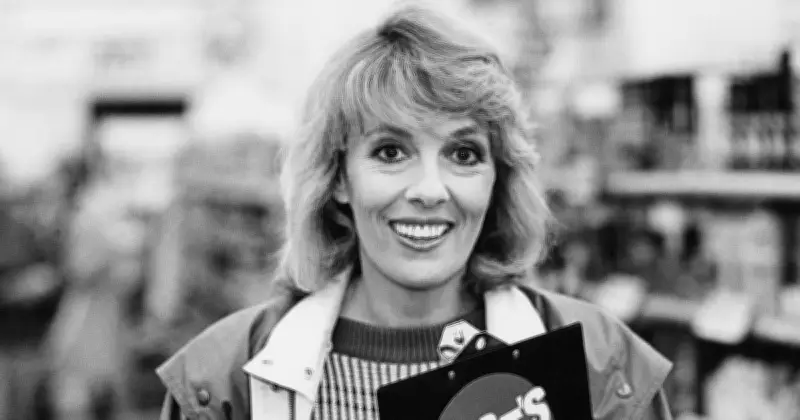
Dame Esther Rantzen, the broadcaster and campaigner who founded Childline, has died at the age of 84. Her greatest achievement was helping combat the abuse of children through the helpline she launched in 1986.
More than half a century of campaigning ended with Dame Esther's death. Young and old alike benefited from her indefatigability.
From That's Life! to Childline
Initially trained as a secretary and later recruited as a BBC sound effects trainee, Dame Esther rose to national prominence as presenter of That's Life!, which ran for 21 years and drew audiences of 18 million, making it a bigger draw than Coronation Street.
The subject matter was often heavy and moving, including life-and-death issues like organ donors and sexual abuse, but it was delivered with a deft touch. The show made her a household name and flipped a switch within her.
In a familiar thread that ran throughout her quest for justice, Dame Esther boldly suggested the BBC should dedicate a programme to preventing child abuse. The resulting breakthrough, Childwatch, was screened with the aim of detecting and protecting as many children as possible before their lives were in danger.
Childline's launch and impact
In 1986 Childline was launched on the programme and was immediately swamped with 50,000 calls to a free, 24-hour helpline. The freephone number 0800 1111 was selected because it was simple enough to be instantly memorable and accessible even to children of five or six years old.
Dame Esther revealed the most rewarding moments of her life were meeting adults who said they used Childline when they were young. One lived with an alcoholic stepfather who regularly beat her mother and step-sister. He threatened to kill her if she ever reported what he was doing. It took her 10 attempts to call Childline, but she eventually plucked up the courage. As a result, the violent abuse stopped. She then joined Childline's staff and today helps protect and support children as vulnerable as she once was herself.
Dame Esther said: "This is proof of what I call the upward spiral. Children who have received timely and effective help when they needed it most never forget it, and want to give back. Saved children save other children. I believe the work Childline does day in, day out, will rescue future generations of children from despair. Childline has been home to thousands of passionate, committed, professional and skilled volunteers. They are responsible for the transformation in millions of children's lives. I may have been lucky enough to have had a lightbulb moment and come up with the idea, but I cannot claim anything more than that. Childline has always had a very special place in my heart."
Personal life and The Silver Line
Born in Berkhamsted, Hertfordshire, to Katherine and Henry Rantzen, Dame Esther was educated at North London Collegiate School and studied English at Somerville College, Oxford.
In 1968, she started an affair with Desmond Wilcox, her boss at the BBC who was married to her friend. The pair married in December 1977 and Dame Esther described "my Desi", with whom she had three children, Rebecca, Joshua and Miriam, as the love of her life.
After his slow and painful death from heart disease in 2000, she was plagued by 25 years of searing loneliness. But from losing her spouse came the inspiration for The Silver Line. In 2013 she launched Britain's only free and confidential telephone service offering older people friendship, advice and information.
She said: "I think sometimes the experience of an unhappy moment in your life does stay with you and make you try and protect other people. Certainly the people who wrote to us on That's Life! were motivated by wanting to protect people from going through what they had been through. And so I think it could have been. I also think it could have helped being Jewish because it taught me how much the minority depends on the tolerance, compassion and generosity of the majority, so that was formative too."
She added: "The passage of time doesn't make it any easier. Yes, I am very busy but I still get terribly lonely. Loneliness is about loss. And you can only understand if you have lost a crucial aspect of your life you relied upon, like I did. Loneliness can strike everyone, rich or poor, unknown or famous, but there is a real stigma that stops older people asking for help. They don't want to be a burden. It's very hard to come back to a dark flat and find there is no one to give you a kiss or say, 'How was your day?' or 'Would you like a cup of tea?'"
Final campaign and legacy
Force of nature and grandmother-of-five Dame Esther was patron or vice president of 15 charities. In 2006 Childline became part of the NSPCC, and when Rebecca Wilcox, 45, succeeded her mother as president shortly after her diagnosis, she laid bare the enormity of assuming the mantle.
Rebecca said: "Childline has always been the other member of our family and I feel like I have grown up with it. In fact, it may have been the favourite sibling."
She added: "My brother said living with mum is like living next to a volcano – you don't know whether the flowing lava is going to be flowers and celebrations or explosion. She's never done something to win our approval, it's always because of what is right. Her early adopting of campaigns is probably the most underrated skill she had. She was always on the money and always got it. She was the person I rang several times a day and saw her several times a week."
On taking over as Childline president, she said: "It is such a brilliant charity, it's wholly unique, giving children a voice, and allowing them to speak. Her insights from sitting in on counselling sessions were such a precious resource. I cannot imagine living without them and cannot express how much I will need this in the future. It seems unfathomable to do this without her and her knowledge. I will feel like a pale ghost in comparison, but there is no way I could say no. I would have hugely regretted it."
Before she was diagnosed with stage 4 lung cancer in 2023, Dame Esther said she had one last campaign up her sleeve. Despite being ravaged by an advancing illness, she was full of mischief and humour, admitting she had become a fully paid up member of Swiss suicide clinic Dignitas and that she might "buzz off" to Zurich if she felt she could no longer cope.
Dame Esther was resolute in her belief on living life on her terms, and her death would be no different. So she used her final years to campaign with vigour, and dark humour, for a new law to allow assisted dying. Although she did not live to see it on the statute books, it will be her greatest legacy.
She received an OBE for services to broadcasting in 1991, a CBE for services to children in 2006, and was made a dame in 2015 in recognition of Childline and The Silver Line.
In a rare moment of contemplation, she told the Express: "My diagnosis made me realise how very lucky I've been in my life, working with Childline and The Silver Line, and meeting so many fascinating and inspiring people. I'm not good at regrets. What I have treasured most are my family and the fantastic friendships I have made thanks to That's Life! during the last 50 years, the people I met, and the team who worked so hard, and laughed so hard, together for so long."