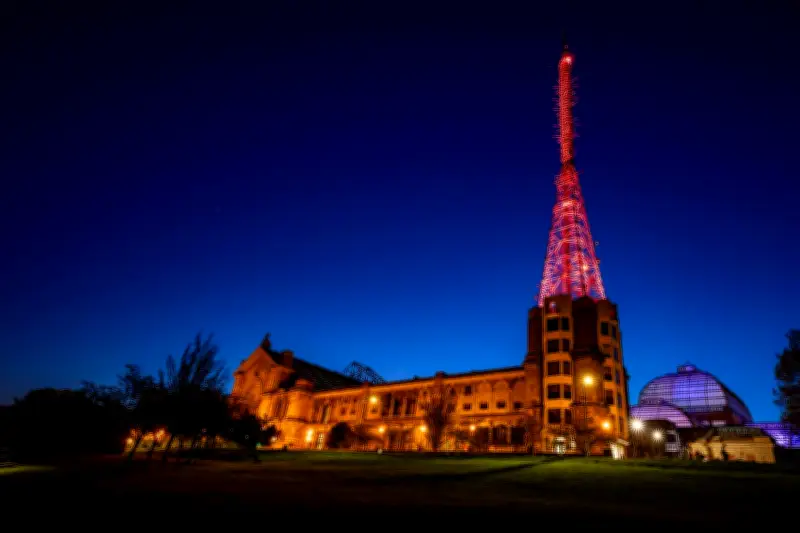
A new programme at Alexandra Palace has been announced to mark 90 years since it hosted the first ever BBC television broadcast.
The broadcast, on November 2, 1936, saw presenter Leslie Mitchell welcome audiences in their homes for the very first time with the words: "This is direct television from the studios at Alexandra Palace."
BBC TV 90 at Ally Pally programme revealed
Alexandra Park and Palace Charitable Trust announced on Thursday a new autumn season of events, BBC TV 90 at Ally Pally, to commemorate the people and the place where the world's first high-definition television service was launched.

Emma Dagnes, chief executive of Alexandra Park and Palace Charitable Trust, said: "Alexandra Palace has always been a place where innovation meets entertainment.
"Ninety years ago, television changed forever, shaping the modern world as we know it today.
"BBC TV 90 at Ally Pally celebrates that pioneering spirit and we're looking forward to sharing the remarkable people, ideas and creativity that put Alexandra Palace at the heart of one of the greatest innovations of the 20th century."
Talks and events exploring television history
The programme will run from September 19 until November 19 and feature talks, screenings, performances and special events, drawing from the Alexandra Palace Television Society archive.
The talks will explore themes including children's television, women pioneers, education, LGBTQ+ broadcasting and black representation, bringing together broadcasters, historians, academics and industry professionals to reflect on television's continuing role in informing, educating and entertaining audiences.
Visitors will also be able to discover the people, ideas and ground-breaking ambition in broadcasting history and the pioneers who shaped it.
Creative productions and heritage engagement
As part of the season, Alexandra Palace's Creative Learning team will present original productions inspired by the Palace's broadcasting heritage.
Kirsten Forrest, curatorial and interpretation manager, added: "From delving into the archives to shed new light on television's trailblazers, to talks, performances and digital exhibitions, we want to inspire curiosity, spark conversations about the remarkable role that Alexandra Palace played in shaping small screen culture as we know it.
"As custodians of this extraordinary building and parkland, creating opportunities for people to engage with our heritage is central to our vision for the future."
Alexandra Palace became home to the BBC's television studios in 1935, where engineers, producers, presenters and performers shaped an entirely new medium. Alongside its studios, the Palace housed BBC offices, dressing rooms, scenery stores, and props and technical facilities, while the East Court housed a fleet of BBC broadcast vehicles.