David Thomson, the prolific film critic and historian with over 40 books to his name, delivers another masterful work in 'A Sudden Flicker of Light: A Revisionist History of the Movies.' The book is a three-hour free jazz solo on cinema, performed with the magnificent elan of a 1940s big band leader. Thomson is as brilliant, eccentric, exasperating, and absorbing as ever.
A Journey Through Cinema's Golden Age and Beyond
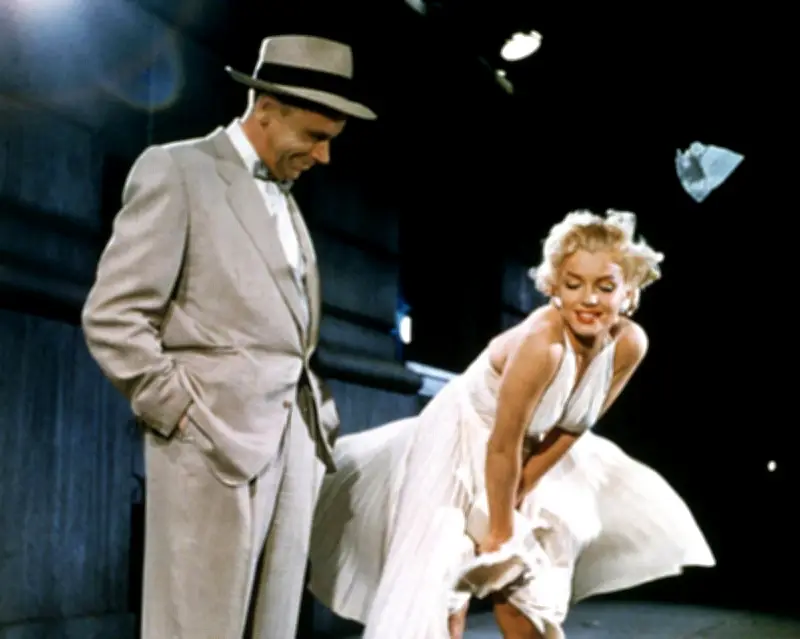
Thomson's history focuses primarily on Hollywood, with side trips into established European and East Asian arthouse cinema. He traces the medium from the cine-prehistory of photographer Eadweard Muybridge to Fritz Lang's 'Metropolis,' D.W. Griffith's 'Birth of a Nation' (with its sinister Ku Klux Klan hero-worship), and the works of Chaplin, Stroheim, Hitchcock, Capra, Renoir, and Bogart. He covers Marilyn Monroe in 'The Seven-Year Itch,' Monroe Stahr in 'The Last Tycoon,' Scorsese's 'GoodFellas,' David Lynch's 'Mulholland Drive,' Kirk Douglas and his alleged rape of Natalie Wood, Barbara Loden's 'Wanda,' Sean Baker's 'Anora,' and Tracey Emin's 'Why I Never Became a Dancer,' among many others.
Revisionist or Rhapsodic?
The subtitle promises a 'revisionist' history, and Thomson delivers wintry ponderings on the movies' tendency to coarsen and cheapen, enforcing cultural mob-rule. He cites King Vidor's 1928 film 'The Crowd,' starring James Murray, a former extra plucked from the ranks who descended into alcoholism and homelessness. Thomson emphasizes the movies' amazing populist-democratic power, noting that unlike theatre or concert halls, a film's action cannot be stopped or affected by the crowd. Like a theologian dragged by doubts to the foot of the cross, he wonders if movies will always lack literature's way of enlarging our imaginations, as opposed to forcing submission to the screen.
Yet the book's body language is non-revisionist: it is a straightforwardly rapturous, rhapsodic celebration of cinema's extraordinary adventure in the 20th century and beyond, with an old-fashioned feel. Thomson is a great believer in the importance of profits and grosses, telling readers how much key films made, and he respects the Sight and Sound magazine's decennial Greatest Film of All Time poll.
Provocative Opinions and Gags
Thomson rockets through his story while firing off provocative generalisations, opinions, gags, and barbs. He contrasts the darker moods of the American New Wave with the sunlit positivity of Steven Spielberg, whom he calls 'the most decisive figure in the history of film, a guy who came upon an art experimenting with difficulty or doubt and talked it in off the ledge.' He says the film industry's pious dedication to the concept of 'love' has brought it to an evolutionary crisis: 'The species is at a point where LOVE can start to feel as hollow as HOLLYWOOD above Los Angeles.'
Thomson descants on the triumph of Stephen Graham's Netflix drama 'Adolescence,' using it to suggest that the big-screen theatrical experience may be on the way out. He claims 'the image on our home screens is brighter and more transporting. If you are inclined to dispute that, look very closely.' While this contrarian opinion is refreshing, it is debatable.
The Title's Origin and Flickering Moments
The title comes from Henry James's 1881 novel 'The Portrait of a Lady,' which Thomson regards as a classic proto-cinematic revelation. The moment when Isabel Archer finds Madame Merle and Gilbert Osmond in an attitude of intimacy—'the thing made an image, lasting only a moment, like a sudden flicker of light'—inspires Thomson to enthuse about James's mastery of cinematographer, director, and editor. He whimsically adds, 'I want to bring this scene to life, with maybe Meryl Streep as Madame Merle, and who would you like as Osmond?' This disregards Jane Campion's excellent film version with John Malkovich and Barbara Hershey, which does not include that flickering moment.
The Future of Cinema
Thomson avoids the tiresome cinephile affectation of declaring the end of cinema. However, he raises flickers of anxiety: while discussing Sergei Eisenstein, he remarks, 'That longing lasted until … well, the end of the century? But I think it's in retreat now. Do we feel we've seen it all?' This throwaway lands in the reader's lap, and one wishes he had pursued the point more rigorously.
The book may not be a conventional critical work but rather quasi-fictional, like an action painting made from melted celluloid, with Thomson as the creator-hero. He alludes repeatedly to E.L. Doctorow's 'Ragtime,' which mixes real figures with imaginary ones. Here, Thomson is both narrator and underdog, meeting legends in the crowded streets of Los Angeles or New York, feeling their pain, sensing their euphoria, foretelling their downfall or triumph.