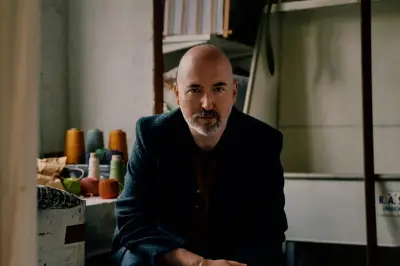
Witches were not the cackling, pointy-hatted figures of fairy tales but healers, psychologists and marriage counsellors, according to author Christopher Horlock, whose new book Witchcraft in Sussex sets out to correct their "very bad rap".
"People think of the caricature. When they hear witch they immediately think of hubble, bubble toil and trouble. It's just myth and fairy tale," Horlock says. "They were healers, psychologists, marriage counsellors and many other things besides. Witches wore many hats. None of them were pointy."
Harsh punishments under Tudor law
Witchcraft became a capital offence in England in 1542 under Henry VIII, but it had to be proven that the witch had deliberately caused harm. Around 500 people were executed for witchcraft in England, always by hanging, with the last hangings at Exeter in 1682 and 1685. In Scotland, witches were burnt at the stake, often after being strangled.
Focusing on one county, Horlock tells of the fate of its witches. Margery Smythe, of Battle, who in 1565 was found guilty at Lewes Assizes of making two toads suckle a red cow, which died in three days, was imprisoned for a year. W. Albery wrote in a 1935 Sussex County Magazine article that 33 witches were indicted. Only four cases are believed to have reached a jury, resulting in three prison sentences and one hanging. Margaret Cooper, the wife of a surgeon from Kirdeforde, was sentenced to hang at East Grinstead Assizes in 1575, after being accused of bewitching three people to death.
A Sussex herbalist's practical wisdom
Away from the horror stories, the book focuses on Sussex folk who practised witchcraft in peace. The book's star is Susannah Stacey, a herbalist born in 1814, who was a regular churchgoer and great friends with the vicar. Horlock says: "She had a lot of social standing in the community. Best mates with everybody. She was a matchmaker. She made cosmetics. She was a bit of a veterinarian. I'm sure people went to her with all sorts of problems. Even a bit of a psychologist, too. There's a family dispute - 'What do you think we should do, Susannah?' She had her surgeon's kit. And again, you see, that is directly at odds with the caricature. Imagine a Disney [witch] cartoon which suddenly gets out a surgeon's kit!"
When a patient named Tom came to her complaining of lumbago, Susannah's grandson recorded her saying: "I am not surprised, seeing how you sleep in your hut in the woods in your wet clothes. You having no wife now to keep you clean and dry. Get some small potatoes, boil them till soft in their skins, strain off the water, mash them onto a large piece of flannel, then put it in your bed on a blanket and lie back on the mash. You must always carry one small potato in your pocket."
Witches as early public health providers
There is no record of whether Tom's condition improved - or if he carried a potato - but the interaction shows the mix of superstition and practical advice that witches dispensed. "The knowledge was handed on," Horlock says. "Susannah Stacey, we know that she got it from her mother. And I would think probably chipped in her grandmother and her aunts. So her grandmother and grandmother, if it's them, I'm sure must have had huge knowledge. And she must have just soaked it up like a sponge. She would pass it on to her children. And it would just go like that."
Witches were an important part of public health in Britain, with no welfare state until 1906 and no National Health Service until after the Second World War. Their advice was far cheaper than private medicine. "There were no social services of any kind other than the church," says Horlock. But, as the mashed potato prescription shows, their advice wasn't always very scientific and stirred up a lot of opposition.
The Witchfinder General and modern witchcraft
Matthew Hopkins, the self-appointed Witchfinder General, hunted witches across East Anglia in the 1640s, where possibly 300 people came to trial and about 100 were executed. Horlock says: "We were in the middle of a civil war. Who are we going to blame for the mess of this country? The witches. They were accused of everything. Sinking ships and causing storms and ruining crops. They were scapegoats."
When a new approach to the occult and witchcraft emerged in the mid-20th century - with strong links to Sussex - witches' reputation was threatened with being tarnished further. Dubbed 'The Wickedest Man in The World,' Aleister Crowley, who spent his last years in the county, was a famed occultist, who dabbled in demon-summoning, called himself The Beast 666. "He also was really into yoga," says Horlock. "Bless him. He lived in Hastings. In this boarding house, room 13, of course. He was a crazy man."
Doreen Valiente, described as 'The Queen of Modern Witchcraft', moved to Brighton in 1956 and did not approve of Crowley. Horlock says: "She didn't like him a bit. She was more interested in bringing witchcraft up to date." In her case, that meant going to Ditchling Beacon - the highest point in East Sussex - enjoying the views, hugging the trees and taking her clothes off. Horlock says: "Her writings are very poetic, very grounded in the natural world. It's a bit like reading The Green Party manifesto."
In the last census, 74,000 people in England and Wales stated Pagan as their religion, while 13,000 said Wicca. According to the Office for National Statistics, that's a rise from 56,620 and 11,766 in 2011.
Horlock believes the influence of witchcraft can be seen everywhere. He says: "Those witches from the 1600s who were persecuted would probably be working for the NHS, or in health food stores, or behind the counter in Boots now. You can say to yourself, 'I have no interest in Wicca or any of those ancient beliefs,' but the minute you go buy your herbal tea or your tub of echinacea, you're tapping into all that. The old is new and what's new is old."
Witchcraft in Sussex by Christopher Horlock (Amberley Publishing) is available now, priced £15.99.