Toni Morrison's Dual Legacy: How Editing Shaped Her Nobel-Winning Writing
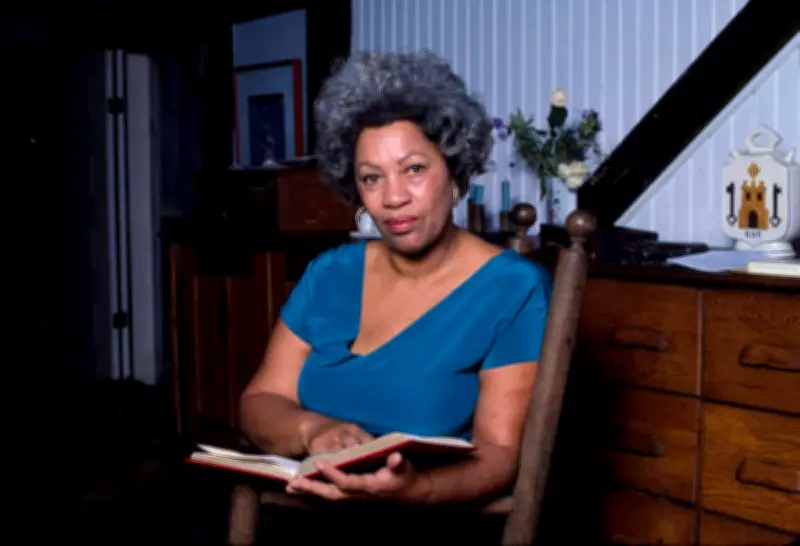
Two recent publications delve into the multifaceted career of Toni Morrison, the acclaimed author who won both the Pulitzer and Nobel prizes. These works aim to unravel her enduring impact as a writer, editor, and profound thinker on Black life. They highlight how Morrison's editorial tenure at Random House seamlessly intertwined with her literary creations, suggesting that her publishing role was foundational to her later accolades.
The Intersection of Editing and Writing
When reflecting on Morrison's novels, one might recall poet Lucille Clifton's heartfelt response to Toni Cade Bambara's debut collection, Gorilla, My Love. Clifton praised it for capturing authentic Black experiences with love and respect, evoking laughter and tears. Published in 1972, this book was edited by Morrison during her 16-year stint at Random House, marking her first fiction acquisition. Both Morrison and Bambara were single mothers balancing literary work, and they quickly formed a close friendship.
The new books, Toni at Random by Dana A Williams and On Morrison by Namwali Serpell, work in tandem to explore this legacy. Williams focuses on Morrison's publishing career, while Serpell analyzes her fiction, criticism, and plays as philosophical endeavors. Together, they reveal that Morrison's editorial and literary efforts were expressions of a unified practice, with her Random House years arguably paving the way for her Pulitzer and Nobel prizes.

A Listening Practice at the Core
Central to Morrison's career was a deep listening practice. She attentively listened to the authors she edited, such as Bambara and Angela Davis, nurturing their voices. She also drew inspiration from her parents' stories, which she interpreted in works like The Black Book and Jazz, and from overheard conversations that sparked ideas for novels like Sula. Morrison aimed to use vernacular language authentically, avoiding exoticism or minstrelsy, to create realistic worlds on the page. This approach is echoed in Clifton's reaction to Morrison's edited works, suggesting a profound love for the community.
Community and Craft in Focus
In Toni at Random, Williams meticulously details Morrison's editorial acquisitions, her role in book promotion, and her efforts to support African American writers. The book offers insights into her process, such as when she hosted Bambara at her home to collaborate on The Salt Eaters, editing chapters together. Similarly, Angela Davis stayed with Morrison while revising her autobiography, with Morrison encouraging a more narrative-driven style. These collaborations sharpened Morrison's own writing craft, as she learned from authors like Leon Forrest and Henry Dumas, who experimented with nonlinear forms.
Serpell's On Morrison teaches readers to engage with Morrison's work seriously, analyzing her critical reviews, like one for a biography of Angela Davis where Morrison critiqued racist assumptions. Serpell examines Morrison's use of wit and literary parody, blending scholarly expertise with cultural signifying. This reading is enriched by Williams's historical context, showing how Morrison's editorial experiences, such as working on Davis's autobiography, informed her growth as a writer.
Blues as a Literary Framework
Serpell interprets Morrison's novels through a blues lens, viewing The Bluest Eye, Sula, Beloved, and especially Jazz as blues narratives. She draws on scholar Clyde Woods's idea of the blues as a "hearth of African American consciousness," a knowledge system rooted in social critique. The blues structure—starting with a problem, revisiting it with variation, and resolving it—mirrors Morrison's method of outlining plots early and revisiting central themes to shift meanings. This approach reflects the collective sensibility of the Black working class, whose rhythms Morrison incorporated into her prose.

Ultimately, these books show that Morrison's legacy cannot be fully understood by separating her editing from her writing. Her three-dimensional listening practice, influenced by the authors she edited and the communities she engaged, filled her pages with depth and authenticity. By blending editorial insight with literary innovation, Toni Morrison created a body of work that continues to resonate, affirming her as a pivotal figure in both publishing and literature.