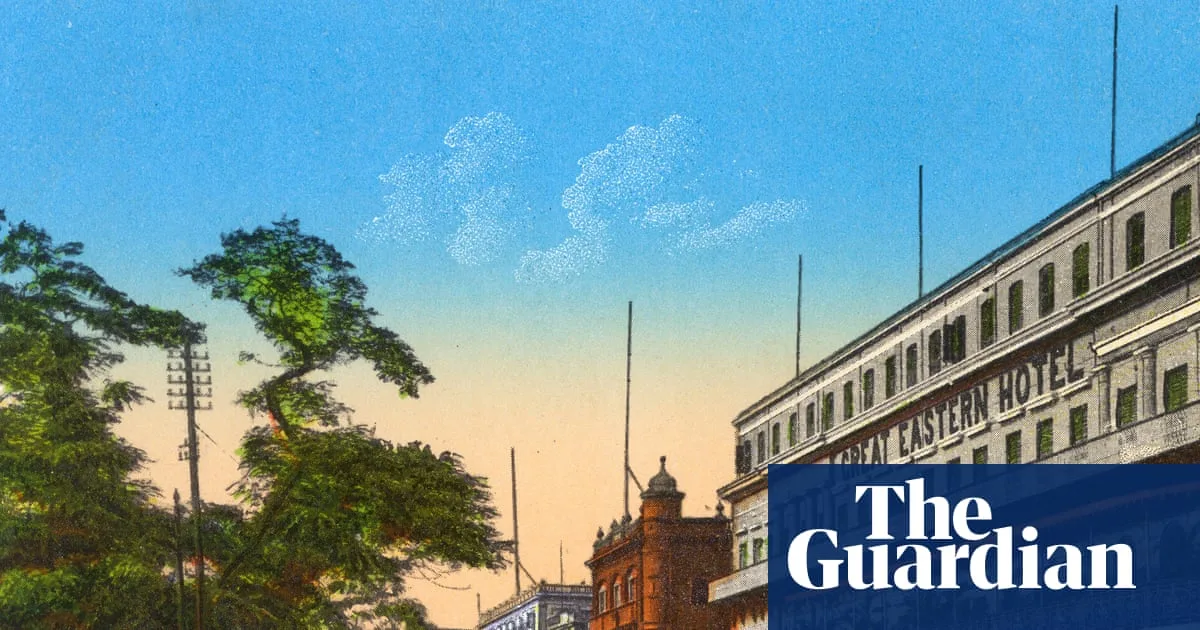
Ruchir Joshi’s second novel, Great Eastern Hotel, is an epic undertaking: 920 pages and over 300,000 words, 25 years in the making. The book centres on the still-standing Great Eastern Hotel in Kolkata, once a confluence for an entire subcontinent where conquerors and subjugated, foreigners and natives met. The novel opens in 1941, depicting whisky, secret societies, spies, and anti-colonial firebrands against the backdrop of the Second World War.
The story revolves around young communist revolutionary Nirupama, whose ill-fated romance with an African American soldier leaves her with a son, Saki, named after Hiroshima. Saki becomes the narrator, assembling history from scraps of memories and inventions. The narrative traces Nirupama's political and emotional development during the Japanese advance through South-East Asia, filtered through Saki’s own struggle as an artist in post-independence India.
Joshi presents a panoramic view of wartime Calcutta, with alcoholic artists, plotting communists, smoky jazz bars and indolent ceiling fans. The Bengal famine lurks in the background as rural peasants stumble into the city. The hotel itself becomes a metaphor for the horrible glamour of life and death, feast and famine, sliding from Bengal to Biafra to Cambodia.
The book took a quarter of a century to write and has been praised for its sensuous, deeply felt prose and evocative phrases. Joshi’s gift for Technicolor description brings the era to life, with doors like “two lovers parting in a puppet opera” and the British as “dried‑up rinds of lime in the evaporated gin and tonic of your Empire”.