Recent Poetry Collections Reviewed: From Somerset Landscapes to Navajo Droughts
Recent Poetry Collections Reviewed: Landscapes to Droughts

Recent Poetry Collections: A Critical Roundup

Five notable poetry collections have recently been published, offering diverse explorations of nature, trauma, displacement, grief, and environmental crisis. This review examines works by Jean Sprackland, Kim Moore, Shannon Kuta Kelly, Michael Symmons Roberts, and Jake Skeets.

Goyle, Chert, Mire by Jean Sprackland

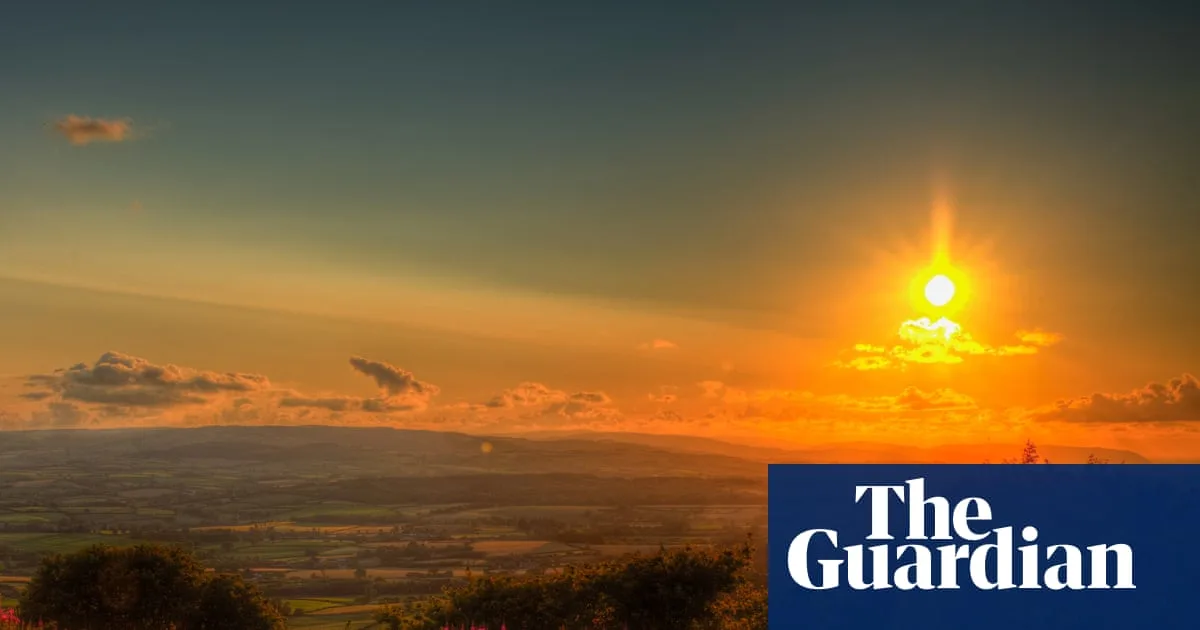
Jean Sprackland's sixth collection, Goyle, Cherit, Mire, published by Jonathan Cape at £13, features 45 unrhymed sonnets organized into three interwoven sequences. Set in the remote Blackdown Hills spanning Somerset and Devon, the poems delve into the tension between artistic expression and articulation, as well as habitat versus inhabitation.

The landscape here is not merely a backdrop but a linguistic phenomenon, with lines like "a drop swells on the lip of a leaf and falls / like a word being said". Sprackland removes the first-person perspective throughout, creating an intimate encounter with the environment. This approach avoids mediation through a speaker's interiority, instead focusing on sensory details such as "mossy silence", "the rumble of the combine harvester", and "the noise / of meltwater hurtling over stones".

Wide Pickt banner — collaborative shopping lists app for Telegram, phone mockup with grocery list

Shadowed by an unnamed illness, the poems carry wounds without overtly broadcasting suffering. This restraint allows for meticulous attention to minute details, from "pilgrim gnats attending the water" to the mire's "long translation from gley to peat". Sprackland skillfully shifts focus between insect life and geological time, illustrating how consciousness navigates different scales.

Unlike many nature poems that risk overanimation or sentimentality, this collection acknowledges the limits of human agency, recognizing that "language itself is prone to collapse". Yet, within this collapse, meaning emerges through the "spiky logic" of natural processes. The consistent sonnet form acts as a courageous, disciplined response to illness and dissolution, imposing order where language threatens to falter. This is a profound and enduring work.

The House of Broken Things by Kim Moore

Kim Moore's new collection, The House of Broken Things from Corsair priced at £14.99, constructs an ambitious framework for examining intergenerational trauma and motherhood. At its strongest, Moore's confessional style shines, as seen in The Black Notices, which catalogues unidentified murdered women, or Giving Birth With Anne Sexton, where literary inheritance meets bodily terror.

However, the commitment to sincerity and transparency sometimes results in poems that feel like pedagogical exercises. For instance, Damaged Cento lists the "eight stages" of domestic homicide, while The Trimesters documents pregnancy's upheavals. The motherhood poems, though deeply emotional, risk predictability by covering familiar topics such as breastfeeding, bedtime routines, and fears of parental loss.

Moore presents the "I" as a site of shared, unpolished vulnerability, prioritizing emotional clarity over lyrical innovation. While this approach fosters connection, it may limit technical novelty in exploring well-trodden themes.

The Tree Is Missing by Shannon Kuta Kelly

Shannon Kuta Kelly's debut, The Tree Is Missing from Faber at £12.99, grapples with uncertainty in geography and intimacy. The poems drift between Polish border towns and shifting seasons, emphasizing disconnection and dissociation. They linger in "the place that is nowhere"—train stations, mirrors, missing trees—creating a mood-board of displacement and memory loss.

Kelly's minimalist style, characterized by end-stopped lines and unrhymed couplets, enforces a sense of stasis, captured in lines like "Time always goes and everyone is waiting". While this restraint can feel prose-like, it is punctuated by tactile details such as "a mummified frog" or "the smell of frying lardons". These atmospheric sketches often keep the reader at a distance, observing haunted materials from behind glass rather than fully inhabiting them.

Pickt after-article banner — collaborative shopping lists app with family illustration

Dog Star by Michael Symmons Roberts

In his ninth collection, Dog Star from Cape at £13, Michael Symmons Roberts continues his existential exploration of the tension between body and soul, now infused with grief and species loss. He writes, "But these words contain their negation. / For every goldfinch put into a poem, / one will vanish from the world outside."

Attentive to humanity's destructive impact, the collection carries a "wild voltage" as it depicts collisions between natural and urban worlds into "a brief coalescence of matter". Symmons Roberts demonstrates a Midas-like gift for metamorphosis, finding kinship between unlikely phenomena, such as "Only the mountain hare has guile and sorcery / to stand tall like a heron in a river."

Although some poems could benefit from tighter distillation, Dog Star showcases the poet's "ungovernable electricity", portraying him as "a primeval singer with a modern / repertoire" who extends his range with confident precision.

Horses by Jake Skeets

Jake Skeets' collection, Horses from Akoya at £14.99, documents the tragic death of 191 wild horses in the Navajo Nation during a 2018 extreme drought. The poems channel haunted animal voices into fast-changing "mineral strata", where a river sounds like "grocery store carts / a freeway a few yards east of us".

Recalling T.S. Eliot's The Waste Land, Skeets recreates a desert landscape visited by ghostly thunder, yet his lines breathe distinctively by pressing indigenous cosmology against consumer modernity in violent contact. Lines like "We become lightning sometimes and there/ only then become song, carry our ache, its kick pull haul hull" mark each syllable as a separate exhalation and loss.

The collection's sharpest grief emerges in discomforting phrases: "there is microplastic in my name / there is a drought in his", before opening into wonder: "there is a meteorite in my hand / a sparrow in yours". This work powerfully intertwines environmental crisis with personal and cultural identity.

Kit Fan's latest poetry collection is The Ink Cloud Reader, and his second novel, Goodbye Chinatown, will be published in June.