Muriel Spark's Extreme Sacrifices for Literary Genius
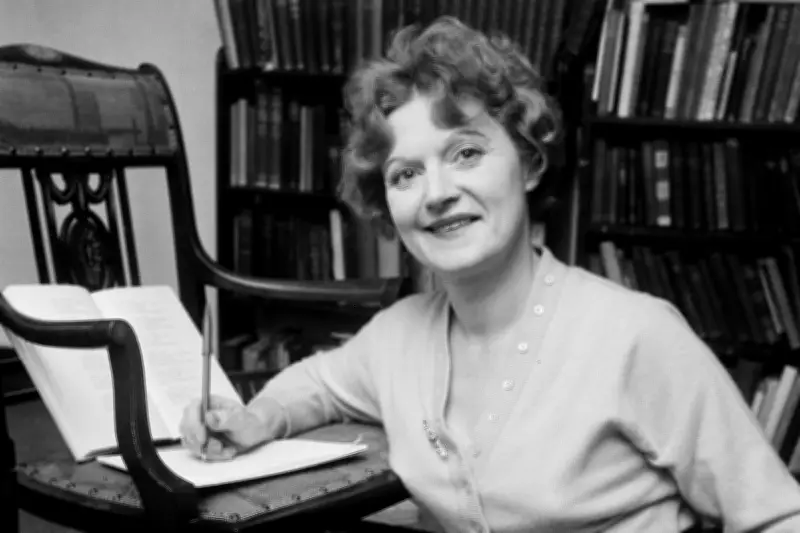
Muriel Spark, the acclaimed Scottish author of The Prime of Miss Jean Brodie and The Girls of Slender Means, crafted novels of singular, idiosyncratic brilliance. Her latest biographer, James Bailey, probes a provocative question: was it her unapologetic decision to elevate writing above motherhood and marriage that enabled such literary achievements?
A Life of Unworldly Observation
At 85, Spark reflected, "I was never really in the world. I was always a writer and reader, and so ideas came first." This statement might surprise those familiar with her adventurous life. At 19, she journeyed alone from Edinburgh to South Africa to marry Sydney Oswald Spark, a math teacher over a decade older. Eager to "experience the war," she left her husband and infant son for England, where she fabricated fake news to undermine Nazi morale. Her success brought glamour: mingling with New York's elite, riding in chauffeured limousines in Rome, receiving fan mail from Liz Taylor, and buying a racehorse from Queen Elizabeth II's stables.
Yet, Spark insisted she was not "in" the world but passed through it like a mobile camera. At social gatherings, she was only half-present, listening for curious phrases and watching for story beginnings. She peered into strangers' shopping bags and observed people from bus seats. This approach made her rootless and alone, a "constitutional exile" answering only to her "queer dictatorial sense." Her unworldliness defined her strange, dark, and often humorous oeuvre.

Literary Inspiration from Life's Fragments
Spark's novels drew directly from her experiences. The Prime of Miss Jean Brodie was inspired by her schoolteacher, Miss Christina Kay. London boarding houses influenced The Girls of Slender Means and The Bachelors. Her years in New York and Rome shaped eccentric mid-career works like The Hothouse by the East River and The Public Image. As her writer-protagonist in Loitering with Intent notes, "I was a magnet for the experiences I needed." This captures Spark's essence: treating life as raw material for fiction.
The High Cost of Artistic Devotion
Spark acknowledged "big sacrifices" for her craft, most notably her relationship with her son, Robin. After leaving Africa for London, she never resumed as his primary caregiver. For seven decades, they orbited each other distantly, their bond marred by media intrusion, mutual recrimination, and failed reconciliations. This led some press to label her a callous "writing monster," viewing others as obstacles to her work. Spark reflected, "Looking back, I often wonder if I could have done more, but I don't really, deeply think I could."
For Spark, writing demanded full commitment. "You're only half there if you're a writer," she said, a stance that hindered motherhood and precluded another marriage. Men in her life, like her volatile ex-husband Sydney or former lover Derek Stanford who sold her letters, often proved unreliable. She asserted, "I have a calling. Writing is a thing I have to do. Not many men will suffer for that and people do come before books, so it's best not to have people in your life. [...] They say sacrifice, but sacrifice for pleasure makes it more pleasurable. If you took the writer away from me, I believe I would not exist at all."
Retreat into Solitude and Feline Companionship
Determined, Spark retreated into what her debut novel's protagonist called the "very remote world" of the artist. In her later years, she lived with companion Penelope Jardine in a Tuscan rectory, where Jardine handled daily tasks so Spark could immerse herself in writing. "When I begin a novel," Spark said, "I want to absorb it through my pores."

Stray cats provided company, wandering into her study as she wrote. Spark appreciated their aloofness, noting cats "prove nothing – they are above all that. They don't even catch a mouse unless it suits them." She likened their whims to her own: "When a cat voluntarily disappears from home, it is merely because the whim has seized it to look for something less boring elsewhere." This mirrored Spark's untethered, aloof nature in life and work, forever seeking a life less ordinary.
James Bailey's biography, Like a Cat Loves a Bird: The Nine Lives of Muriel Spark, published by Sceptre, delves deeper into these themes, exploring the extreme sacrifices behind her literary legacy.