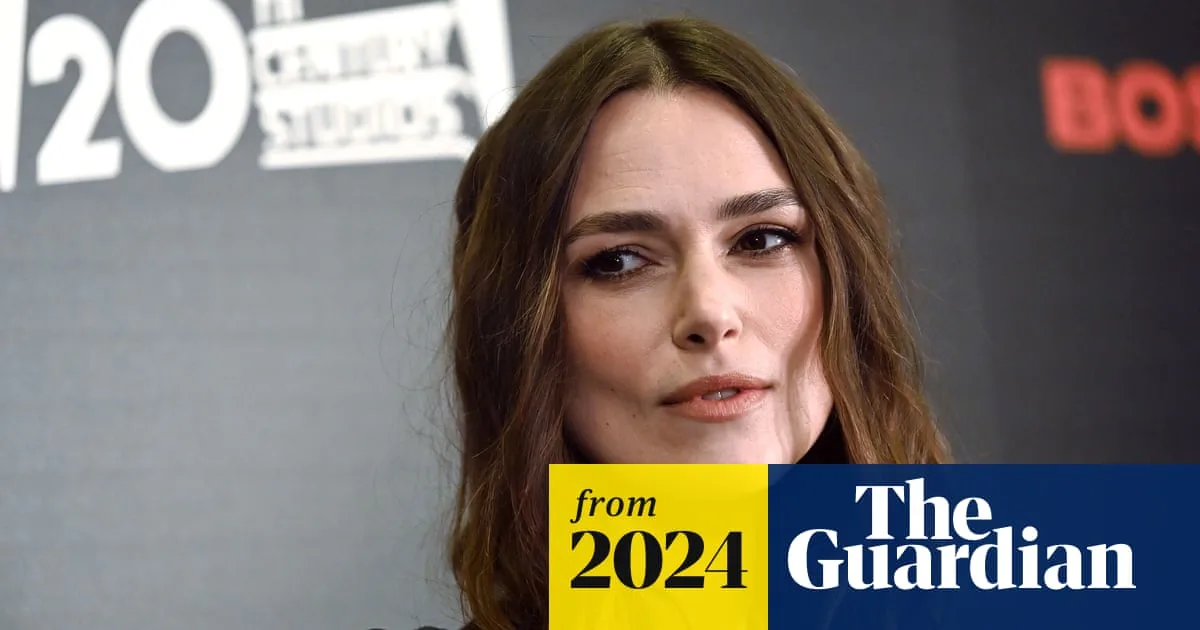
Keira Knightley is the latest celebrity to publish a children's book, but the trend has sparked frustration among established authors who say it sidelines genuine writers and makes it harder to find quality children's fiction. The actor's debut, I Love You Just the Same, is an 80-page volume she both wrote and illustrated, set for release next October. It follows a girl navigating the arrival of a sibling.
Knightley joins a long list of celebrities turning to children's publishing, including McFly's Tom Fletcher and Dougie Poynter, whose latest book The Dinosaur that Pooped Halloween! topped bestseller charts. David Walliams has sold 25 million copies of his children's titles in the UK alone. While celebrity-penned children's books are not new—Julie Andrews published Mandy in 1974 and Madonna released The English Roses in 2003—the landscape has shifted as non-celebrity author incomes decline.
“These celebrities do not need any more money or exposure, but plenty of genuine writers do,” said author Joshua Seigal. When news of Knightley's book deal broke, authors expressed frustration online. Writer Charlotte Levin joked about deciding to become a film star. Seigal added, “Writing for children is an art. It requires skill, practice and discipline. I work really hard on my art, and it’s quite galling that people seem to think it is something that’s easy to do.”
Celebrity authors bypass the “query trenches”—the challenging period of seeking representation—that non-famous writers endure. Author James A Lyons said, “Before landing a publishing deal, I had sent over 180 queries across three manuscripts over four years. Non-celebrities face hundreds of rejections and ghosting, and not a fast-tracked ticket to the front of the queue.” Celebrities also benefit from extensive marketing and media coverage that most children's authors do not receive, noted Helen Tamblyn-Saville, owner of Wonderland bookshop in Retford, Nottinghamshire.
Some argue that celebrity-backed titles help the industry. Author Howard Pearlstein said, “Attention paid to any children’s book creates a rising tide that lifts the entire publishing industry.” Others note that celebrity books can increase representation. However, author Katherine Rundell criticised celebrities who put their names to ghost-written novels: “We would be shocked if you put your name to a concerto you hadn’t composed; we would find it supremely embarrassing if you signed a painting you hadn’t painted. It poisons the water. It makes it harder for parents and teachers to find great children’s fiction.”