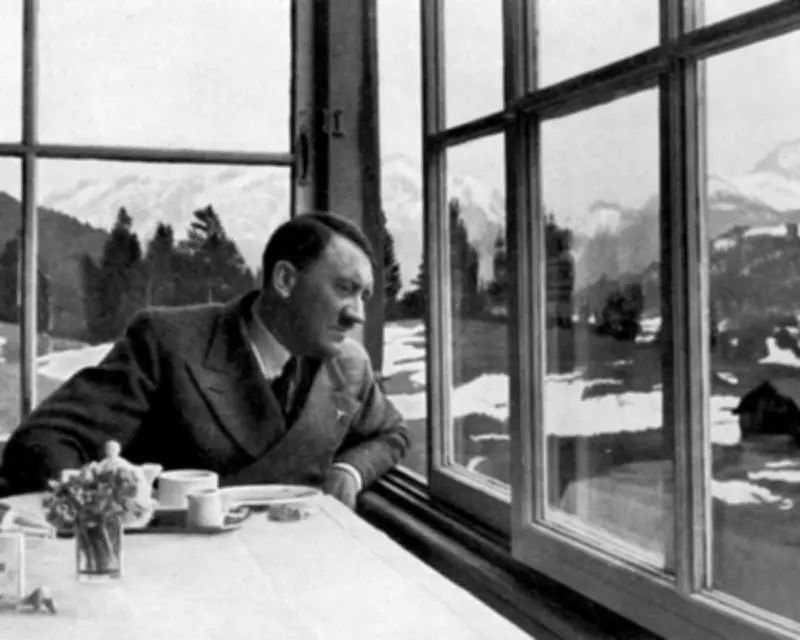
In a new book, German artist and writer Philipp Ruch argues that viewing the ascent of Hitler's NSDAP through the prism of the Third Reich has distorted our understanding of fascism's electoral breakthrough. Ruch, known for his art collective Centre for Political Beauty, spoke to Philip Oltermann about his findings.
The 1930 Elections: A Political Earthquake
Ruch explains that the Reichstag elections of 14 September 1930 were more important than the events of 1932 and 1933. In 1928, the NSDAP received 800,000 votes and 12 seats. By 1930, they had 6.4 million votes and 107 seats – a ninefold increase in two years. "In one night, a small splinter party from the political fringes overtook the three established parties of the right – the Centre Party, the DVP and the DNVP – coming in second place behind the Social Democrats," Ruch says. He calls it "the moment at which a racist sect of loudmouths and club-wielders, a party of absolute cranks, came to be politically legitimised."
Challenging Myths: Hitler's Charisma and Propaganda
Ruch disputes the idea that Hitler's charisma drove the party's success. "I couldn't find any evidence before the 1930 vote to support those theories," he says. He notes that Hitler held only 29 speeches in 1929, half of what was customary, and 21 of them were in Bavaria. Goebbels complained about Hitler's prevaricating, writing sarcastically: "The Reich leadership is at Café Heck or the cinema." Ruch concludes: "In 1930, Hitler wasn't a political genius. He was a lazy criminal who slept in until noon."
Similarly, early Nazi propaganda was ineffective. Ruch describes the party's newspapers as "an embarrassing, amateurish joke" with pathetic sales figures. "Propaganda just doesn't explain the NSDAP's success," he says.
Economic Factors and Voter Behavior
Ruch argues that economic distress does not explain the 1930 breakthrough. "In regions where unemployment was high, the Nazi party performed relatively poorly," he says. The global economic crisis may explain the 1932 doubling of support to 37.3%, but not the 1930 surge. "Wall Street's Black Thursday didn't fully arrive in Germany until July 1931, when several major banks collapsed – 10 months after the Nazis got 107 seats," Ruch notes.
He also points out that the three big rightwing parties had put hardliners in charge between 1928 and 1929, yet voters did not turn to them. "Conservative parties can only win from the centre," he says.
Violence as a Selling Point
Ruch suggests that the Nazis' propensity for violence attracted voters. "Historical fascism's lust for violence didn't make it repulsive but extremely attractive to a lot of German voters," he says. He sees parallels with the AfD today, where "fantasies of violent retribution seem to be integral to campaign events on market squares."
He warns: "If the AfD is voted into power, one of the most highly advanced economies in the world could experience something similar to what happened in Bosnia and Herzegovina."
Philipp Ruch's Der Rückfall (The Relapse) is published by Penguin.