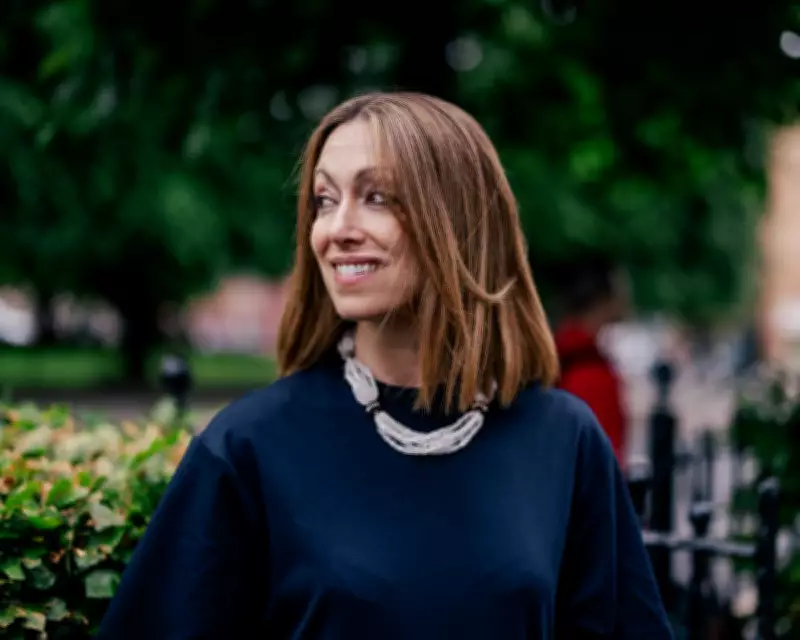
Lucy Caldwell, the Northern Irish writer, returns with her fourth short story collection, Devotions, a stunning assemblage of tales that explore music, family, memory, and duty. The collection offers a subtle continuity with her earlier works—Multitudes, Intimacies, and Openings—while standing firmly on its own merits.
Stories of Family and Memory
The narratives in Devotions often centre on family life or a professional life in the arts, frequently intertwining both. They delve into memory and how individuals manage it. In All Grown Up, Luke returns to his childhood home, only to be gradually reabsorbed by it. He begins clearing the house to sell it, imagining the possibilities that await. Yet, the longer he stays, the less he wants to leave, and the more he remembers—not just his life there, but his life in general. Luke is a 40-year-old divorcee with a bad back, incipient alcoholism, and a child at boarding school. He grapples with divorce, his mother's death, and a sense of entrapment. A one-night stand with his ex-wife's sister does little to help. The title oscillates between bleak irony and an equally bleak optimism as you read.
Hamlet, a Love Story
This title is equally layered with traps. In a New York dive bar after the run of a new play called Choose Your Own Hamlet, playwright Sonya ends up with Callum, who isn't her type. She bets she isn't his either. She reflects on her play's flaw: that Hamlet loops and replays the original text, desperately seeking 'a way out of all that lies ahead.' She realises that choose-your-own-ending texts don't just encourage choice; they reward action. 'Inaction was punished. Your only hope was to … seize the narrative.'

The Lady of the House
This story reads like a classic ghost story, set in a castle gatehouse with old books bearing 'grey blooms of mould on the inner covers' and a curse dating from 1660. Two sisters—one addressed only as 'you,' the other as 'Lou'—seek common ground when one visits the other's partly renovated heritage home in Scotland. Ghosts of memory rise to match the ghost the unnamed sister encounters on her first night in the gatehouse guestroom. Lou, exhausted and exasperated by childcare after seven years of IVF, miscarriages, and financial hardships, admits that 'the most random things have been surfacing lately—things you'd not even call proper memories … just stuff.' She's unsure 'what you're supposed to do with it, with any of it.' The reader suspects she'll manage by moving resolutely forward. What the ghost wants is clearer, with a mix of promise and menace.
Quiet Resilience and Breakable Characters
Caldwell's characters display a quiet resilience, yet they are also breakable. She captures their lives at moments of spiritual and emotional loneliness, supported and simultaneously defeated by the anxious sense that life is important even when it can never be solved. Though overwhelmed by circumstance, they harbour a deep feeling of failing in a duty. In Little Lands, the duty is to one's own future: a shot-by-shot replay of the dance scene from The Sound of Music is paired with the real lives of Christopher Plummer and Julie Andrews, who, we're told, fell in love during filming and regretted never acting on it. For the professional violinist in Harmony Hill, travelling alone by air with an instrument 'older than the United States of America,' duty is what she owes to her talent and especially her teachers: obsession as stewardship. Duty to locality, memory, and origins reaches its climax in All Grown Up when Luke realises that if he's not careful—if he doesn't choose his own ending—his future can only be the past.

Transformational Delight and Threat
These stories are full of transformational delight in life and spirit one moment, and emotional and psychological threat the next. They are considered enough to be savoured one at a time, with attention that responds to the author's intention. In A Family Christmas, the harried, devoted mother thinks, 'We are each of us God, right out on the cutting edge, the universe seeking to know itself. We are an aperture, a point of light, through and by which things can be known.' Caldwell is surely speaking of the devotions of the writer here—of herself, and especially of these kinds of stories.
Realism and Sharp Observation
One of the most attractive features of Devotions is its realism, evident in the panoramic lists of objects in a scene, the sharpness of Caldwell's eye, and her capture of the moment. She describes sleeping in 'the taut stretched acres of an American hotel double, with rolling news on low for company,' and you are instantly there. Elsewhere, she notes, 'A few scraps of sky sheared themselves off and fell as snowflakes.' The tiny events, places, people, relations, and dialogue all seem utterly observed. It is stimulating, frightening, quietly passionate, and somehow comforting too. Never wrenched or overwrought, always an oblique yet perfectly human mix. If you want a window to look at the world through, it is here.
Devotions by Lucy Caldwell is published by Faber (£14.99).