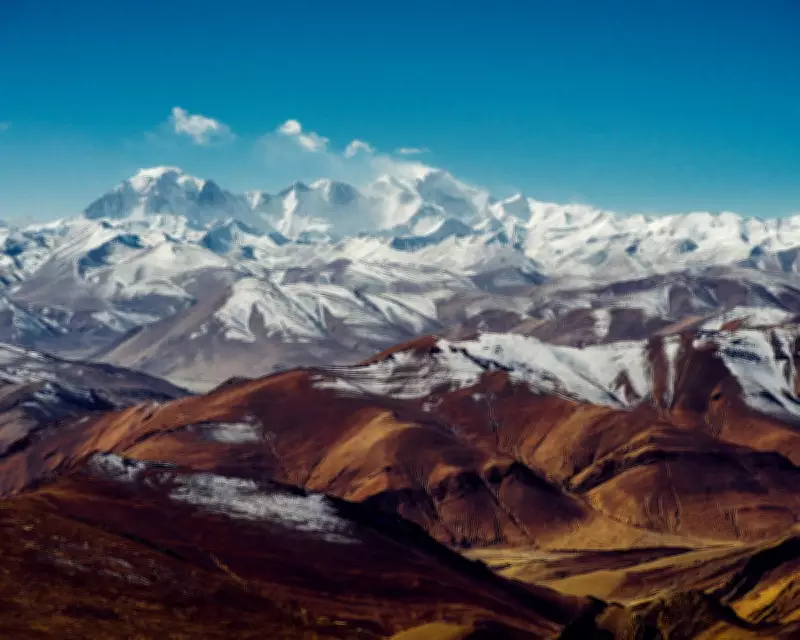
Deepa Anappara's The Last of Earth: A Journey into Tibet's Forbidden Kingdom
With her second novel, The Last of Earth, Deepa Anappara ventures into uncharted literary territory, moving from the Indian shantytown setting of her acclaimed debut, Djinn Patrol on the Purple Line, to the majestic and treacherous Himalayas of mid-19th-century Tibet. This meticulously researched work explores the complex history of colonial exploration through a gripping narrative that questions the very nature of human existence and imperial ambition.
Colonial Intrigue and Perilous Expeditions
Set against the backdrop of a Tibet closed off to European imperialists, the novel intricately weaves together the stories of two protagonists. Balram, an Indian schoolteacher turned surveyor-spy, guides an English captain disguised as a monk, who is determined to chart the revered river Tsangpo and discover its endpoint. Meanwhile, Katherine, a woman of part Indian heritage, embarks on a mission to become the first European woman to reach Lhasa and see the Potala Palace, after being denied entry into the all-male Royal Geographical Society in London.
Their paths cross in a landscape described as "a strange country whose terrain changed every few miles," where they face storms, snow leopards, soldiers, and the relentless forces of nature. The narrative highlights how "at eighteen thousand feet above the level of the sea, here they were closer to gods than mortals, but this proximity to the divine had brought them no blessings, only burdens." This journey is not just physical but emotional, testing themes of hubris, obsession, doubt, power, guilt, and grief.

Critiquing Colonial Enterprise and Historical Truth
Anappara's novel is scrupulous in its excavation of the colonial past, portraying the greedy and dirty enterprise that swallowed communities and landscapes. Through Balram's perspective, it critiques how "the white man had a want and to sate it brown men gave up their lives," referencing the unrecorded deaths of native men in surveys like the Great Trigonometrical Survey. The voices of those left behind, such as Balram's friend Gyan and his family, haunt the narrative, adding depth to the exploration of loss and memory.
Katherine's journey is similarly haunted by the death of her sister Ethel, which motivates her travels and journaling. The novel suggests that history is often deceptive, with maps that can be rendered incoherent by natural forces, as "if the earth shrugged, mountains would cleave, rivers would surge, seas would swallow cities and fields alike." This theme aligns the book with recent works like Janice Pariat's Everything the Light Touches and Kynpham Sing Nongkynrih's Funeral Nights, in its scale and philosophical depth.
Renewal Through Narrative and Reflection
Late in the novel, Balram reflects that "the river wasn't a blue spiral on a map but a living thing, a creature capable of renewal." Anappara uses this metaphor to show that history, too, is a living entity that can be recast in a novelist's light, offering a form of renewal. The Last of Earth is not just a tale of adventure but a profound meditation on how stories can reshape our understanding of the past, revealing its imperfections and spooky realities.
Published by Oneworld at £14.99, this novel stands as a significant contribution to historical fiction, inviting readers to reconsider colonial legacies and the human drive for discovery. Through its immersive plot and alternating perspectives, it captures the epic horizons of both the Himalayas and the human spirit, making it a compelling read for those interested in literature that challenges and enlightens.