Clare Gittings' Pioneering Study on Death's Social Transformation
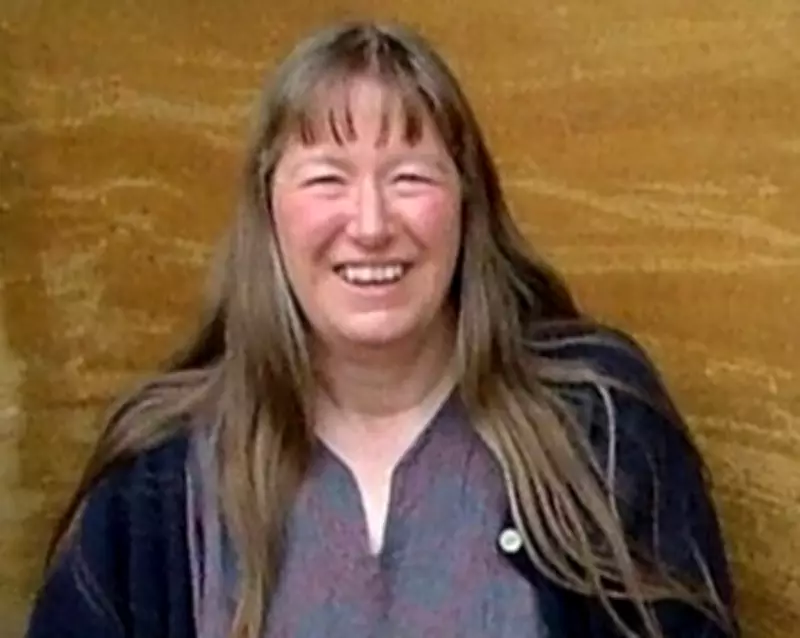
Clare Gittings, who has died of a stroke aged 71, was a sympathetic student from her teenage years of the way that society treats death. Her groundbreaking 1984 study, Death, Burial and the Individual in Early Modern England, revealed how death shifted from a social event often celebrated by 'merry mourners' to a less communal approach.
Early Academic Contributions and Scholarly Focus
At just 16, Clare published a successful guide titled Brasses and Brass Rubbing in 1970, which recorded various forms of memorials from skeletons to the 'wild man of the woods'. After earning an MLitt at Oxford University in 1978, she dedicated her research to understanding societal attitudes toward death.
Her work highlighted the evolution of mourning practices, noting a decline in communal celebrations and a rise in individualised responses. Clare possessed extensive knowledge of church memorials, with a particular interest in verses written with genuine emotion by widows rather than by scholars or priests.

Career at the National Portrait Gallery and Educational Impact
While frequently invited to lecture on death and society, teaching courses at Reading and Bath universities during the 1990s and 2000s, Clare's full-time role from 1989 to 2013 was as education officer and later learning manager at the National Portrait Gallery. She made primary schoolchildren feel welcome, greeting them with 'Hello people!' and discussing paintings on equal terms.
Her scholarship was vast and quietly conveyed, earning praise from colleagues who noted her encyclopaedic knowledge from 'Henry Tudor to Windsor Liz' in verse upon her departure.
Personal Life and Later Research Endeavours
Born in Chichester, West Sussex, Clare grew up in an intensely literary environment with her parents, biographers Robert Gittings and Jo Manton. She attended Midhurst grammar school, studied English and American studies at the University of East Anglia, and completed her master's at St Anne's College, Oxford.
Her career included restless years, such as working with the VSO in the Maldives from 1986 to 1988 alongside her partner, criminologist Malcolm Ramsay. After returning, she taught at Sumners primary school in Harlow, Essex, for seven years but grew frustrated with the increasing emphasis on rote learning.
In retirement in Hertford, Clare researched the town's little-known links to slavery and prepared a lecture series on 'Portraiture in Britain: Highlights Across Six Centuries' for a local group. The series was so well-prepared that Malcolm was able to deliver it after her death.
Clare is survived by Malcolm, her nephews Philip, Danny, Tom, Joe, and Max, niece Katharine, and her sister.