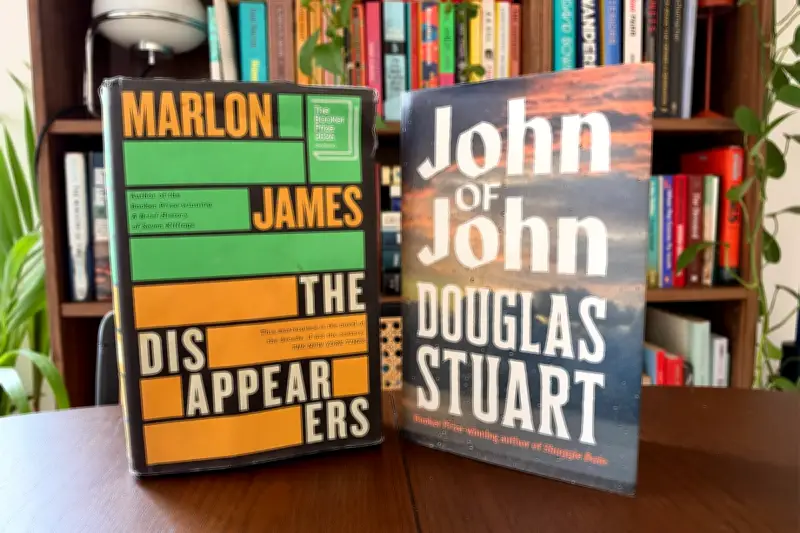
The winner of the 2026 Booker Prize will be announced this evening during the ceremony at London's Old Billingsgate, chaired by head judge Mary Beard. The shortlist, whittled down from the Booker Dozen, includes past winners Marlon James and Douglas Stuart, alongside previous shortlistee Elizabeth Strout. British authors, including science fiction writer M. John Harrison, dominate the list, which also includes two debut novelists, Luke Kennard and Rebecca Perry.
The six titles transport readers around the world and throughout history, from Medieval England to 1990's Isle of Harris, contemporary Maine and 1980's Jamaica. All six novels are entirely different, but connected through masculinity in crisis.
Contenders and Themes
In The Things We Never Say, Artie is a high school history teacher struggling with loneliness and isolation as the US hurtles towards another Trump presidency, while in Black Bag, a struggling, self-deprecating actor finds solace in hiding behind a leather sack in the name of an acting gig. May We Feed The King transports us to a Medieval court where a reluctant king's inaction is at odds with the era's hyper-masculine expectations, while The End of Everything sees men stripped of their economic, paternal and institutional power in the wake of societal collapse.
The Disappearers paints a harrowing portrait of homophobia in 1980's Jamaica and gay men's alienation, while John of John explores a father and son relationship where both are keeping secrets from one another. It's these two epic, sweeping novels that lead the Booker Prize predictions for 2026.
Why John of John Wins
Anyone who's read all six books will struggle to name a winner – all are thoroughly deserving. Black Bag made me laugh out loud with its masterclass in writing surrealist comedy, while The Things We Never Say is Strout at her emotional, observational best. The Disappearers is undoubtedly the most important, prescient book on the list. James is known for his violent stories – he won the Booker in 2015 for A Brief History of Seven Killings – and his latest is no exception.
While 'hard' books are no less rewarding than an 'easier' novel, I'd likely not reread The Disappearers – but I'd pick up John of John again in a heartbeat. A future classic that combines tough themes with humour and brevity, the novel is my winner of the Booker Prize 2026.
The Shortlist in Detail
John of John by Douglas Stuart, published by Picador, is the Scottish author's best yet, exploring his signature themes of masculinity, working-class Scottish life and family relationships; this time on the Isle of Harris. The novel begins with 22-year-old art graduate John-Callum returning home to the isolated fishing, weaving and crofting community. With his dyed red hair, 'strange clothes' and artistic leanings, Cal is an affront to his father John, a devout Protestant, sheep farmer and a deacon in the Presbyterian church.
The Disappearers by Marlon James, published by Hamish Hamilton, is an epic of more than 600 pages. The book focuses on eight gay men targeted in a brutal mob attack during a play rehearsal in late eighties Kingston. Over two decades, it traces the victims as one seeks revenge, others to forget and some to entirely disappear. The novel is as graphic about violence – the attack itself is narrated by the attackers – as it is about sex.
The Things We Never Say by Elizabeth Strout, published by Viking, introduces us to a new character in the esteemed author's Massachusetts multiverse. Set in an unnamed coastal town during the 2024 presidential election, Artie Dam is a high school history teacher who is grappling with middle-aged ennui. Then, a brush with death and the unearthing of a decade-long secret change everything.
The End of Everything by M. John Harrison, published by Serpent's Tail, follows beachcomber Phillip Tennent and his artist aunt Marnie. Both reside in a post-catastrophe coastal English town. A biological discovery forces them to venture inland, where an alien-like enemy known as the iGhetti is at war with a fractured Europe. The author is 81 years old and could go on to become the oldest winner in the prize's history.
May We Feed the King by Rebecca Perry, published by Granta, is a historical novel that jumps between the present day and a medieval village. As a modern museum curator works on a reconstruction of the king's private chambers, she becomes increasingly obsessed with his story, filling in the gaps with her own imagination.
Black Bag by Luke Kennard, published by John Murray, is a campus comedy with a surrealist edge. The novel follows an out-of-work actor who accepts solid, steady work in a psychological experiment, conducted by the unreadable Dr Blend. The job? They'll be zipped into an oversized leather bag to sit in the back of a lecture hall and seminar room during the autumn term.