Shortly before Christmas last year, my father went into hospital for what would be the final time. I had been finishing up a lecture series on early children's literature for the university where I teach. My father had had a drinking problem practically my whole life, but his alcoholism had worsened across decades. Then suddenly, after years of poor health, his liver just gave up on him. He was dead within days.
Soon after his death I was due to lecture on a relatively forgotten book of stories for children called Mrs Leicester's School, mostly written by Mary Lamb but with parts by her more famous brother, Charles. I was not prepared for how moved I would be by the simple message of one of the stories. That often bizarre and sometimes grim collection of tales for pre-Victorian boys and girls changed how I, an almost 40-year-old man, think about grief.
A family tragedy behind the book
My lecture began with the Lamb siblings themselves, who were reasonably successful writers in their time; any branch of Waterstones will still carry their Tales from Shakespeare. But Mary is better known today because she killed her own mother with a knife in 1796, during a breakdown. Charles intervened, but their mother could not be saved. Mary was spared imprisonment because Charles pledged to become her legal guardian. They took up writing children's books.
The fact that Mary killed her own parent coloured my first encounter with Mrs Leicester's School, which is far more emotionally intense than any kids' book ought to be. Many of the children who act as the narrators of the stories have lost parents; several of the stories directly concern their experiences of loss.
The Sailor Uncle
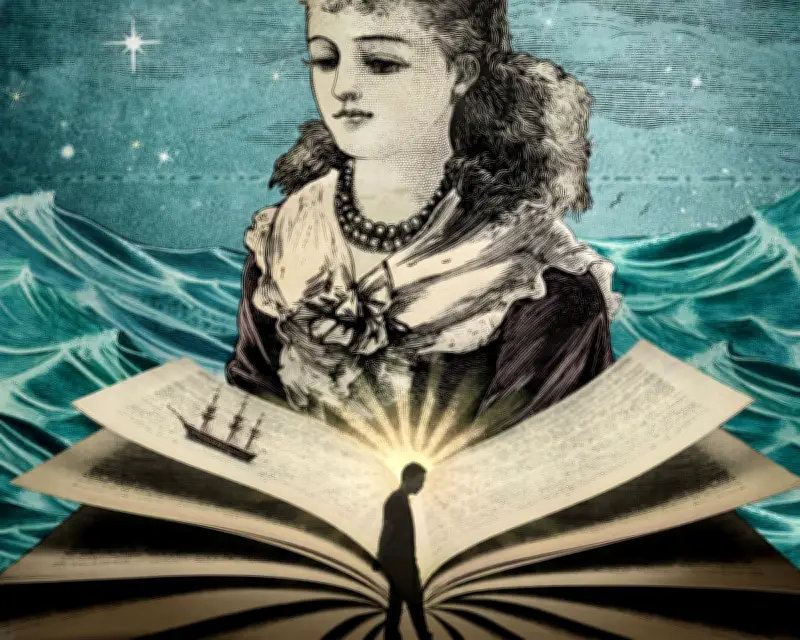
I was especially struck by the story of Elizabeth Villiers, or The Sailor Uncle, which I focused on for my lecture, delivered to two dozen 20-year-olds in a dusty theatre. It begins after the young Elizabeth's mother has died. She does not think of her death as a cause for tears, as she has never seen her father cry; he mostly locks himself in his study.
That changes when her "sailor Uncle" returns from sea, and Elizabeth takes him to his sister's grave, where he is struck by an "agony of grief". This in turn sets off Elizabeth's father. The "very first day I ever saw my father weep", she tells us, became the day she "first learned my mother's death was a heavy affliction". Elizabeth, upset, blames her uncle for bringing painful feelings into her home. Nevertheless, he is kind to her and when he eventually heads back to sea, Elizabeth realises that she will miss him terribly.
This part of Lamb's story really got to me when I narrated it to my students that morning. Elizabeth's father sits her down, dries away the tears she has shed for her uncle, and says to her: "Let it be a lesson to you to be as kind as possible to those you love; and remember, when they are gone from you, you will never think you had been kind enough."
Tears in the lecture theatre
At this point in my lecture, I realised I was crying, and had been for some time. My students were aware, but rather than laughing with embarrassment, they were rapt. One girl, who also had cheeks shining with tears, looked straight at me and simply nodded, slowly.
Lamb does not spell it out, but the father is finally working through his grief. He has exited the locked study of his repressed emotions. Grief is a complicated thing, and always distinct in its complications, but what we shared in that lecture theatre was a recognition of the power of literature to make grief shareable, and somehow bearable.
The sense of loss we feel for those we love, Lamb's little book tells us, reminds us that there are many kinds of love that make life worth living in the first place. When my dad died, my grief was complicated by the fact that I long ago felt I had lost him; I had been grieving for years, and I was not sure I had any tears left. Mrs Leicester's School helped me see that I did.