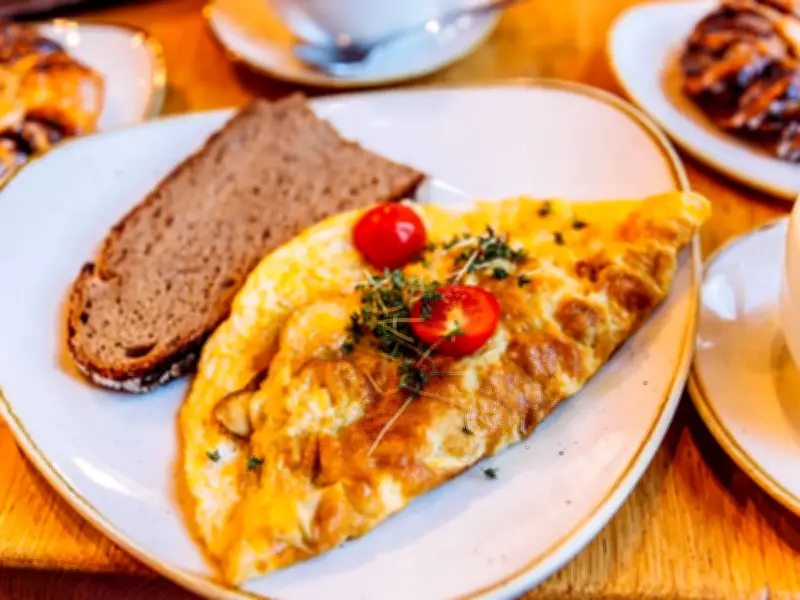
Michelin-starred chef Paul Foster has shared his recipe for making a light and fluffy omelette, revealing that the key to success lies in using precisely three eggs and controlling the heat carefully.
Omelettes are a versatile dish suitable for breakfast, lunch, or dinner, requiring only a few basic ingredients. They can be filled with endless combinations, from cheese and ham to vegetables and fresh herbs. However, achieving the perfect texture can be challenging, as overcooking quickly leaves eggs dry and rubbery.
The chef's key tips
Paul Foster, who has teamed up with British Lion Eggs to share his recipe, insists that even novices can perfect the art of the omelette. For a single serving, he recommends using exactly three eggs, whether medium or large. In his view, two is "never enough", while four "is too much".

He also cautions against overbeating the eggs, advising to whisk only until the mixture is combined. Overdoing it will result in a foamy consistency, introducing too much air and compromising the final texture.
Heat, seasoning, and pan choice
The chef said: "Heat matters; use a medium-high heat. You are looking for the butter to foam without colour. If it just melts, it's not hot enough; if it starts to brown straight away, it's too hot. Reduce the heat as the omelette comes together."
He added: "Remember to season, only add salt just before cooking and don't allow it to sit. Salt will break down the proteins in the egg and affect the texture if added too early."
Choosing the right fat is also crucial. The chef opts for butter, though those concerned about burning can swap it for a neutral oil, such as sunflower or vegetable oil. The pan size matters too — too small and the omelette won't cook properly and will be tricky to roll, while too large and it will cook too quickly. For a single-serving omelette, he recommends a pan measuring 15-20cm in diameter.
Filling, folding, and finishing
Avoid overfilling the omelette. Paul said: "Use a fine grater for cheese and distribute it evenly. Most fillings are best going in at the end, just before folding, as it will be much easier to get an even finish and help prevent cracks when rolling."
The chef added: "Allow to rest for 10 to 15 seconds before folding, this will reduce the risk of tearing." Folding, not flipping, should be done when the omelette is set as one piece, but the top is still slightly runny and soft. Use a spatula to fold one side into the third, then fold it back into the third again to create a rolled effect.
"Then, carefully turn onto a warm plate so the fold line is on the bottom," he said. As a finishing touch, rub a fresh knob of butter over the omelette once plated to achieve a "luxurious glaze", which will also lend it extra flavour. A garnish of freshly chopped herbs such as chives or dill, along with a fine grating of lemon zest, can also be added. Paul noted that these additions can "really bring it to life".