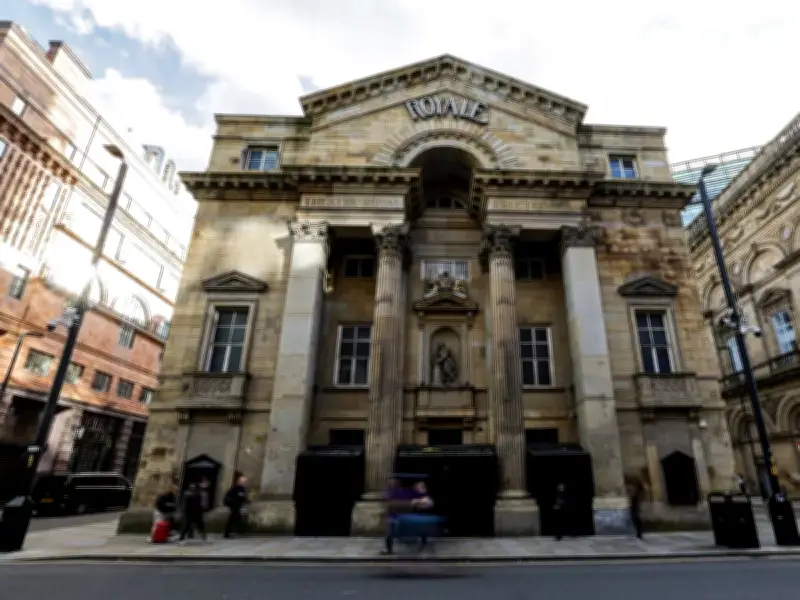
Manchester's Theatre Royal on Peter Street, where Take That made their television debut in 1990, has stood empty for nearly 20 years, prompting concern from campaigners and conservation groups.
The Grade II-listed building began life in 1844 when local entrepreneur John Knowles bought the site of the Wellington Hotel after the city's existing royal theatre on Fountain Street was destroyed in a fire. It opened by September the following year, built in the Classical style by architects John Gould Irwin & Francis Chester at a cost of £22,000 - around £2.5m at today's prices. More than 2,100 people attended the opening night performance of Douglas Jerrold's comedy Time Works Wonders.
For years it was Manchester's premier theatre, hosting some of the greatest Shakespearean actors and opera singers of the day. But by the early 20th century its fortunes waned. In 1922, it was stripped out and relaunched as a 'super-cinema' seating 2,500. By the 1970s it became a bingo hall, then in 1978 it was converted into the Discotheque Royale nightclub.
Nightclub heyday
In 1989, with Manchester at the centre of the clubbing universe, 'Royales' was given another facelift after First Leisure Corporation, owners of Blackpool Tower, carried out a £3.5 million refurbishment. The Manchester Evening News reported at the time: "The transformation of the former Theatre Royal, Peter Street, into a dazzling new discotheque is giving a new lease of life to some of the building's grander features. Ornate plaster and woodwork carvings on the inside and delicate masonry work on the outside are all being lovingly restored to an elegant overall theme."
Thousands of clubbers poured in at weekends, joined by Premier League stars and celebrities. The Hitman and Her crew, including co-presenter Pete Waterman, were regular visitors, even filming the show's last-ever episode there in 1992. On Halloween night 1990, Michaela Strachan introduced Take That - Gary, Mark, Howard, Jason and Robbie - live on the show, predicting: "The group is going to be enormous. Britain's answer to New Kids On The Block. Here they are, it's Take That."
DJ Brutus Gold - real name Nigel Wanless - put on the club's popular disco night Love Train throughout much of the 90s. He told the M.E.N in 2021: "We did every Wednesday and it was always sold out with people queuing right down the road. It was a phenomenal atmosphere, at an incredible time in Manchester. We used to have all the footballers there in Royales, Dwight Yorke was there every Wednesday and David Beckham with Ryan Giggs."
Closure and ownership
Royales remained popular into the early 2000s, before it became known as Infinity, M-Two and latterly Coliseum. In 2009, the club's doors closed for the final time. Proposals to convert the building into a hotel and live music venue were mooted but never realised, while rumours the Library Theatre could take up residence there were scuppered when the plans proved too costly.
Land Registry records show it was bought for £4.2m in December 2013 by Edwardian Theatre Royal Ltd, a subsidiary of Edwardian Hotels. A year earlier, the Edwardian Group, which also owns the five-star Edwardian Hotel in the old Free Trade Hall next door, said it would work with Manchester council and English Heritage to develop the building. Group director Robert Morley said at the time: "We know that the city is keen that the site should be put to some positive use. We can imagine uses that would be complimentary to the hotel next door and we are not ruling anything out."
In 2016, the firm said it was 'continuing to develop our plans for the Theatre Royal'. Commercial development director Iype Abraham said: "As part of that we are carrying out an internal feasibility study to ensure that the site is sensitively maximised to its full potential and best reflects the space, location and history." Since then, the company has remained tight-lipped on its plans. The Manchester Evening News made a number of attempts to contact the Edwardian Group for this article, but didn't receive a response.
Current state and calls for action
It's said the building is currently being used as a store-room and workshop. Industry insiders suspect the owners are holding onto it to prevent it falling into a rival's hands, although any plans to convert it into a hotel would likely prove extremely costly. Urban explorer Razor Twisted Exploring ventured into the old nightclub in 2023 to record a video for his YouTube channel, describing the interior as being like a 'time capsule'. He said: "The huge multi-level nightclub was still recognisable, with balconies overlooking the former dance floor and several old bars. I found an old Club Coliseum sign, Eye Candy event flyers, megaphones, unusual coffin-shaped props and other nightclub memorabilia still left behind."
A council inspection last year is said to have revealed some parts of the building were deteriorating with potential problems with water leaking in. It's said the authority is looking to address this with the owner.
Conservation group SAVE Britain's Heritage said the building had potential to be given a new lease of life. Conservation officer Lydia Franklin said: "It is time for an encore for the Theatre Royal. As the city's oldest surviving theatre this building should be celebrated, not allowed to deteriorate for over a decade. We highlighted the theatre in our Manchester publication 'Boom not Bust' as having great potential, thanks to its central location, for being returned to use as a performance space. And plenty of theatres have also found new roles across the UK. Take the Palace Theatre in Swansea which found new life as an business hub and office space. This significant building deserves to be back in the spotlight."
Historic theatres conservation group the Theatres Trust, which put the building on its 'Theatres at Risk Register' in 2013, said it had been in contact with the owners, adding there was a lot of interest from potential buyers looking to reopen the venue. The group said: "Theatres Trust has been contacted by several different organisations all with a potential interest in acquiring the building and reopening it for entertainment use. This could see a vibrant and sympathetic new use for the theatre. Theatres Trust will continue to seek a route to open discussions with Edwardian Hotels London and/or a future owner to ensure that any proposals for the Theatre Royal will preserve the significance of this important building and not preclude it from being brought back into live performance use in the future."
A Manchester council spokesperson said: "We are rightly proud of our city's history and we have a strong record of celebrating and championing our heritage against a backdrop of unprecedented economic and population growth over the last two decades. The population of our city centre is around 100,000 people - from probably only a few hundred in the 1990s. This is a welcome sign of prosperity and a city brimming with confidence, which means our residents are choosing to remain here due to employment opportunities, good housing and quality of life, and globally renowned attractions and entertainment. We continue to meet the challenge of balancing our heritage and our growth.
"We believe the two can exist together and through the planning process, every application is robustly assessed on its own merits, but also how it fits into the existing city context - and how it will exist in the Manchester of the future. Inevitably the focus is often what is lost as opposed to what has been saved and reused over the years. Much of the Northern Quarter, NOMA, Ancoats - these are all areas where the focus has been almost entirely on refurbishing our heritage buildings, while delivering massive change and tangible outcomes - new jobs and new homes. We also have a number of conservation areas in the city centre alone, which helps us protect our valued heritage properties.
"And where development interacts with these buildings, these applications are given every scrutiny available to us. We work closely with developers to bring forward the highest possible quality development - and we put high demands on developers in this city to ensure world-class investment, including public realm and other infrastructure. This is particularly true where buildings have further protections - such as the Theatre Royal on Peter Street, which is Grade II listed and privately owned. We will work closely with building owners to ensure these buildings are redeveloped sensitively and appropriately, while making sure these building don't deteriorate while development comes forward.
"We understand that growth and development - particularly in the context of heritage and our city centre - will always create debate, as it does in cities across the world. We take our responsibility as custodians of our city seriously and while we often have to make difficult decisions in the ongoing balance of old and new, they are never taken lightly."