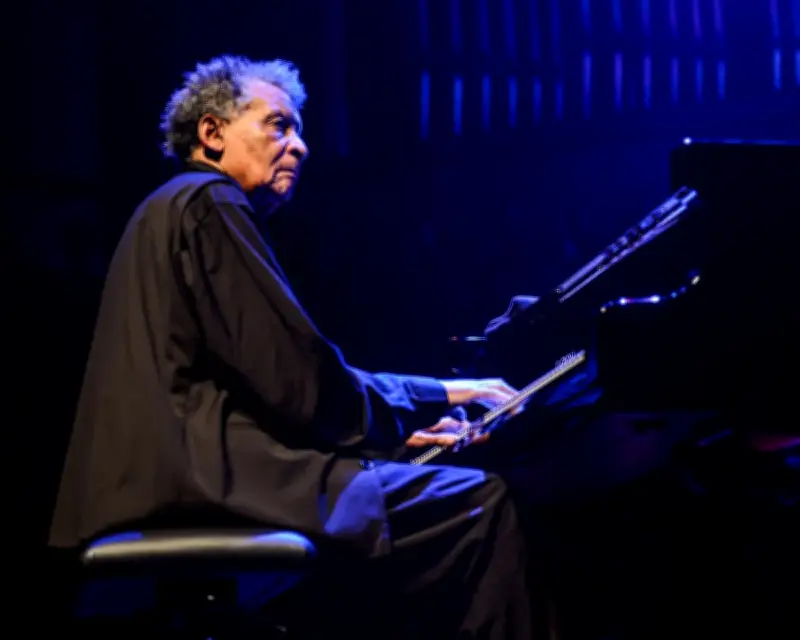
South African jazz composer and pianist Abdullah Ibrahim has died at the age of 91. His family announced his death in a statement released on Monday, noting that he passed away peacefully in Germany after a short illness.
A Life Dedicated to Music
Born in Cape Town as Adolph Johannes Brand, Ibrahim began composing music at age seven and made his professional debut at 15. Known initially as Dollar Brand, he became a prominent figure in local jazz circles during the 1950s. In 1960, he recorded an album with the Jazz Epistles, titled Jazz Epistle Verse One, which was the first full-length jazz LP by Black South African musicians. Although their music was not explicitly political, they were targeted by the apartheid government.
International Career and Influences
Ibrahim moved to Europe in the 1960s, where he met Duke Ellington and later recorded with him. He relocated to New York in 1965. Reflecting on Ellington in 2024, Ibrahim said, "I always say we never thought of Ellington as an African American – we thought of him as a wise old man in the village. You have any musical problem or inspiration, you go to Ellington. And he has been that bulwark for many, many, many musicians."
In the United States, he performed at the Newport Jazz Festival and embarked on a solo tour, often stepping in for Ellington. Regarding his move away from South Africa, Ibrahim remarked in 1984, "We don't really leave, you know. It's a tactical retreat. We regard ourselves as cultural freedom fighters."
Conversion and Legacy
He converted to Islam in 1968 and changed his name to Abdullah Ibrahim. Over his career, he recorded more than 70 albums, with his most recent released in 2024. His most famous piece, Mannenberg, recorded in 1974, became a major anti-apartheid anthem and reportedly inspired Nelson Mandela during his imprisonment.
Ibrahim also composed soundtracks for films, including Claire Denis's No Fear, No Die and Chocolat. He received numerous awards, such as the German Jazz Trophy and a South African music lifetime achievement award. The Guardian's John Fordham noted that Ibrahim "has written some of the most vividly beautiful themes to emerge from his culture's special chemistry of African vocalised phrasing."
One of his final solo performances was at the Cape Town International Jazz Festival in March 2025.