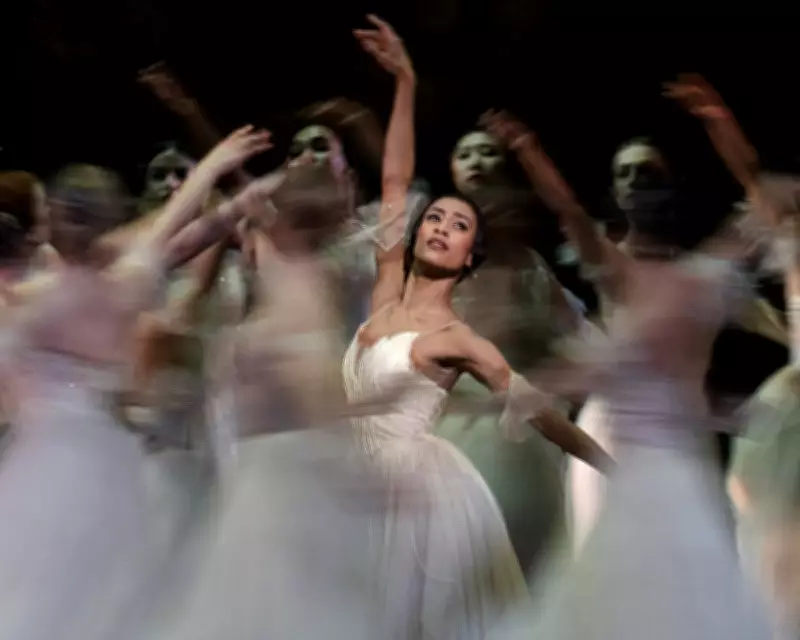
Royal Ballet's Giselle: Marianna Tsembenhoi Soars in Stunning Debut Performance
A dancer's debut in one of ballet's great leading roles is always a significant event, but it becomes particularly noteworthy when that dancer is a first artist, three ranks below principal in the ballet hierarchy. Twenty-five-year-old Marianna Tsembenhoi is clearly being tipped as a future star, and the Royal Ballet's faith in her looks well placed based on her first outing as the tragic peasant girl Giselle at the Royal Opera House in London.
Technical Brilliance and Emotional Depth
From her first entrance, buoyant across the stage, the Ukrainian dancer, who came to train in the UK in 2017, impresses with her elevation, as if her weight is barely touching the ground. Tsembenhoi's bright-eyed, girlish Giselle has the lightness of innocence and goodness. She is technically a very tidy dancer, with long arms that sway like willow branches, bringing clarity and feeling to the role.
Tsembenhoi is not the only one making her debut tonight. Joseph Sissens also takes on the leading man role of Albrecht for the first time. This is a hard character to pull off: does Albrecht genuinely love Giselle even though he is a nobleman engaged to someone else and only posing as a peasant? Sissens is subtle but has absorbed the innate self-possession of the privileged. He does not need his finery to emanate the quiet confidence of someone who always gets what he wants. He cares for Giselle, and his dancing is full of care too, with tightly fluttering beats of his feet and a way of eking out the end of a phrase.

A Journey from Innocence to Spirituality
Giselle is a coveted role because within the space of two hours, she moves from innocence to disbelief, madness, and out into the realm of spirits. Tsembenhoi's mad scene has the maturity to use stillness to draw our attention in before unhinging. In the afterlife of act two, her girlishness has vanished, and the neatness of technique that played as simplicity in act one now reads as quiet resignation. This is not a reinvention of Giselle nor an infinite inner world, but Tsembenhoi is already confidently her own artist.
The second act is solemn and sorrowful, with the wilis, or spirits, bewitchingly ghostly. Nadia Mullova-Barley as their queen, Myrtha, has a fantastically stark, still power to her dancing. In a completely contrasting role, Julia Roscoe's Bathilde, Albrecht's aristocratic fiancee, is a deliciously imperious Mean Girl, so enjoyably patronising to poor Giselle. They are an excellent supporting cast to Tsembenhoi's fast-rising star.
This performance at the Royal Opera House in London runs until 20 March, offering audiences a chance to witness a promising talent in the making. With her debut, Tsembenhoi has proven that she can handle the emotional and technical demands of a classic role, setting the stage for a bright future in ballet.