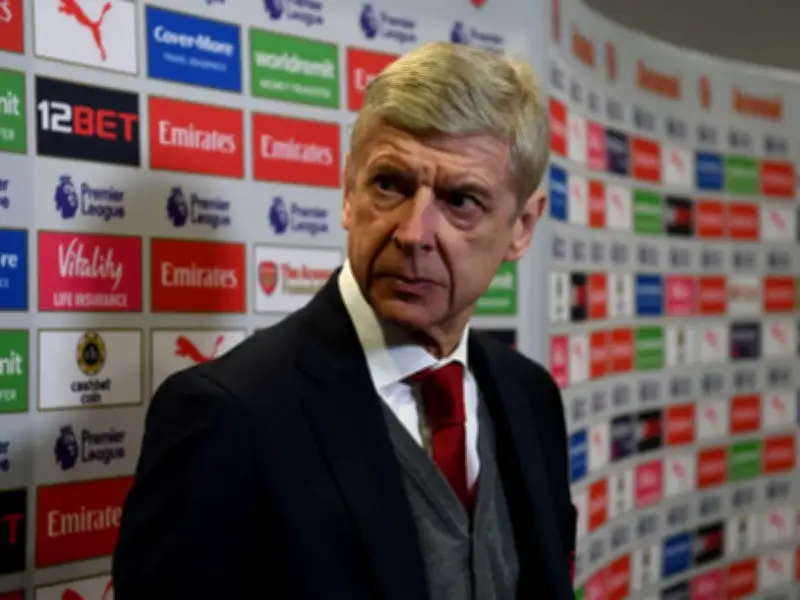
Arsene Wenger's warnings about Manchester City's spending in 2011 have been vindicated, and football now owes him an apology.
Back in the summer of 2011, Wenger had reached the end of his tether. He was as frustrated as many people had ever seen him as he spoke to three of us in a little corridor outside a dressing room after a draw with Hangzhou Greentown in Yiwu on a pre-season tour of China and Malaysia.
Manchester City, who had signed Emmanuel Adebayor and Kolo Toure two years earlier, were courting yet more Arsenal players, and Roberto Mancini had openly spoken about wanting to sign Samir Nasri.
Wenger's 'Platini's big test' warning
It was on that tour that Wenger had also questioned City's £400m sponsorship deal with Etihad Airways, describing it as "Platini's big test." Michel Platini was championing UEFA Financial Fair Play. UEFA's rules were just coming in, and Wenger was incredulous when talking about City's world record 10-year deal.
The deal was struck with Etihad which, a few of us wrote at the time, was "owned by the Abu Dhabi government and has close links to the City owner, Sheikh Mansour, a member of the Abu Dhabi royal family." We didn't know our words would come back like this.
It dwarfed Arsenal's deal with another airline, Emirates, which was £90m over 15 years. They were incredibly similar as they were big commercial deals and stadium naming rights.
'Financial doping' and the fight for respect
"We must have done a bad deal," said Wenger with a huge dash of sarcasm. City described Wenger's comments as "unfounded and regrettable" and insisted the figures were "not accurate."
And it was against that background that Wenger felt utterly powerless. City's sponsorship deal dwarfed Arsenal's. And now City were cherry-picking all of Arsenal's best players.
Wenger, talking about Mancini's public pursuit of Nasri, said: "These comments are not allowed. They are against the basic rules of football. We want is respect and we don't make these comments about players who are under contract at other clubs. It's time football in England came back to these basic rules."
He was so angry as he spoke in that little corridor. I remember it so clearly. There was only two or three of us there. He could barely contain his rage.
Wenger called it first
Wenger was fighting with one hand behind his back. But, let's be clear, he was in there still fighting. It was a miracle that Wenger even kept Arsenal competitive. Look at the difference in figures.
Wenger used to call it "financial doping." It was his pet subject. And, looking back, Wenger called it first. His insight, knowledge and campaigning was unparalleled.
The back pages carried his words day after day, week after week. Don't listen to anyone who says no-one listened.
But, unfortunately, football did not listen closely enough. Yes, the Premier League brought in its own financial rules and restrictions. But it feels like football failed him even though he was clearly years ahead of everyone else.
The scale of City's alleged breaches
That summer of 2011, Wenger started by insisting Arsenal would not sell both Nasri and Cesc Fabregas in the same window.
Nasri had his heart set on City. His teammates would rib him that he should stop driving round the M25 and head straight for Manchester. The deal was done.
Fabregas had his heart set on Barcelona. That is maybe more understandable because he was a boyhood fan and was always going to return one day.
They both went eventually, and Wenger was made to look weak, which was grossly unfair. Ultimately, Wenger was utterly powerless to stop two of his best players departing in the same summer.
Because when City came in at that time they always got their man. Toure, Adebayor, Nasri, Gael Clichy and Bacary Sagna all went on the same path.
All of this really should put in perspective the scale of City's alleged breaches. Sometimes we get lost in the legalities of it all. The sheer scale and the financial complexities of it all. Who owns what and so on. It's draining.
But putting it in pure and simple football terms offers far more context. City's commercial deals - which were described by the Premier League commission as "artificially inflated" - allowed them to spend bigger and sign all of their rivals' best players.
The Arsenal and Wenger case study is so clear. It is, quite frankly, a miracle that other teams were able to compete and beat City during those times.