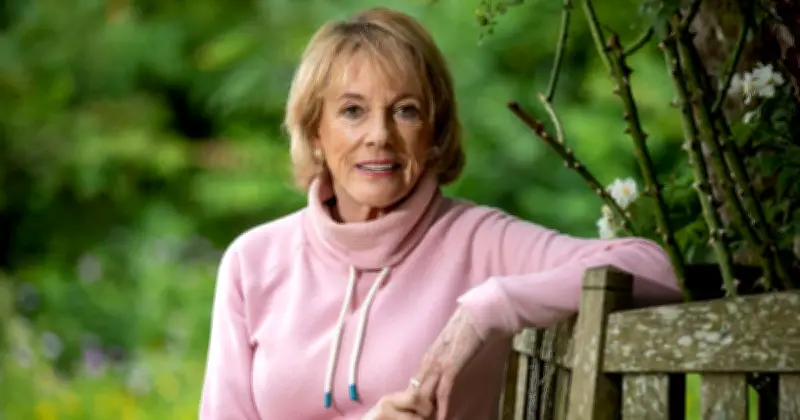
Dame Esther Rantzen has died at the age of 86, ending a life defined by campaigning, broadcasting, and a final heroic push for assisted dying.
It was typical of her fighting spirit that she used her terminal illness not as a cue for self-pity but as a platform for one last campaign. After announcing in January 2023 that she had been diagnosed with terminal cancer, she devoted her final years to the crusade for the legalisation of assisted dying in this country. As she faced her own mortality with graceful courage, she declared that her aim was to end needless suffering and fear over end-of-life care.
A final campaign for assisted dying
Her intervention captured the public imagination and, with the support of the Express, put the discussion about euthanasia at the centre of public life. The impact of her work was made more powerful by the revelation that she had signed up to the Dignitas Clinic in Switzerland, in part so her family would avoid “painful memories” of “a bad death”.
Even in her mid-eighties and gripped by cancer, she remained a tireless force, gathering more than 200,000 signatures on a vast petition and forcing the House of Commons to hold a debate on assisted dying. Although she has not yet succeeded in altering the law, her valiant efforts put the idea of reform back on the agenda.
Childline and other legacies
Perhaps the most notable of her initiatives was the creation in 1986 of Childline, which provided confidential help to children in danger and distress, particularly those at risk of abuse. The need for such a service was highlighted on its very first night of operations, when more than 50,000 calls were made. She described Childline as “the most important project I have ever been involved with. We can reach children that nobody else can help and I know we have saved lives.”
This idea was copied by 150 countries around the world. Other achievements included the establishment of Silverline, a telephone befriending service for the elderly, and the launch of a successful programme to provide more organ transplants for children with liver disease, following the tragic case of Ben Hardwick, who died at the age of three. She became patron of the Ben Hardwick Fund, and over the years she was a patron or vice-president of 55 charities.
Broadcasting career and personal life
Her influence also stemmed from the BBC show That’s Life, which ran for 21 years from 1973 and regularly attracted audiences of more than 20 million. She battled for police interviews to be recorded, children to give evidence in court via video link, babies’ cots to be made safer, restrictions on smacking, and rear seatbelts for children to be made compulsory.
Born to an electrical engineer father at the BBC, she graduated from Oxford and began as a trainee sound effects assistant before becoming a researcher on current affairs shows. Her husband Desmond Wilcox, himself a BBC producer, described her as “quick, clear-thinking, articulate, even aggressive, capable of great anger, fierce compassion – and fearful puns. She is bad at delegating, a confirmed workaholic and usually suffers from exhaustion”.
Their relationship began as an affair in 1968, causing controversy, but they married in 1977, had three children, and were devoted to each other. When he died of a heart attack in 2000, she was shattered, but carried on campaigning. Even after her 80th birthday she was involved with a new charity, Silver Stories, where children read tales to older people. “It’s delightful but I’ve got to raise money. Sometimes your own conviction infects others so I will ask friends. One calls it ‘being Rantzened’.” The whole nation will now miss being Rantzened.