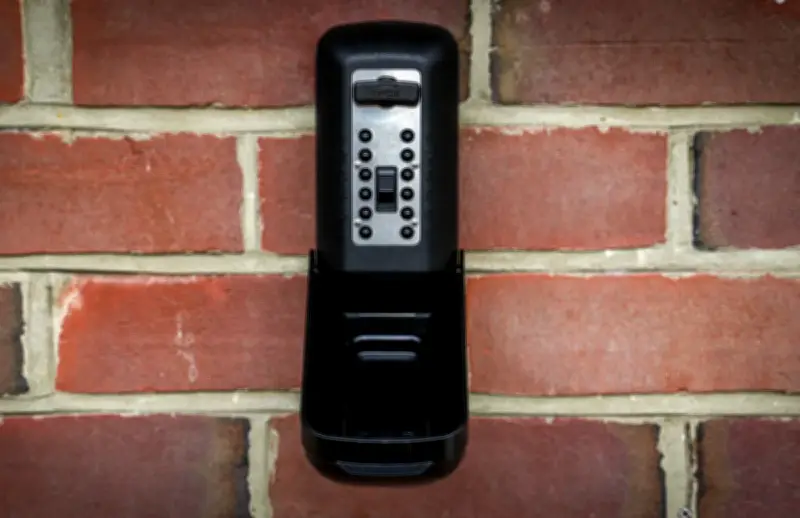
Key safes are a practical solution for securing spare keys and granting access to authorised people such as tradespeople or Airbnb guests. They offer a far better alternative to hiding a key under a mat or in a shed. These simple boxes, mounted next to doors, have become common across the country, especially in tourist destinations, where they simplify guest access without complex handover instructions.
However, as testing revealed, not all key safes are built the same. While the basic function is identical, features, pricing, and durability vary greatly. This review examined a range of simple coded key safes using a four-digit combination lock, from inexpensive boxes to Police Preferred models.
Best key safes at a glance
- Best overall: Ark Tamo – £128, Amazon.co.uk
- Best budget buy: Master Lock Select Access 5401EURD – £15.99, Amazon.co.uk
- Best for large bunches of keys: Burton Keyguard Digital XL – £59, Amazon.co.uk
- Best value option: Key Safe C500 Pro – £68, Amazon.co.uk
- Best for maximum protection: Ark Tamo Pro – £179, Amazon.co.uk
What is a key safe and how were they tested?
A key safe is a simple box attached to the outside of a property, requiring light DIY skills to install. A combination lock provides access to a small, key-sized inner chamber where keys can be stored securely. The code can be shared with others who need access, avoiding the need to leave a key under the mat.
Each key safe was tested for installation process, ease of use, and capacity. After installation, the combination dials or buttons were checked for ease of operation and access in both daylight and night conditions. Each safe was also subjected to two break-in attempts: one using a screwdriver to lever the front open, and a second impact test to see if the safe would break or shatter when hit with a hammer.
Top performers in the test
The Ark Tamo uses a multi-push concept, allowing individual buttons to be pressed up to four times, creating more than 9.7 million possible combinations. It features 10 large illuminated buttons, internal key hooks, and stood up well to break-in attempts. The screwdriver failed to break through, and repeated hammer blows didn't crack the casing.
The Master Lock Select Access 5401EURD is a compact, wall-mounted box secured by four rotating combination wheels. It is simple to install, though the dials can be fiddly with cold hands. The internal cavity can hold up to eight keys with careful arrangement. Break-in attempts proved impossible, though there are no independently verified security credentials for this safe.
The Burton Keyguard Digital XL is among the largest key safes tested. It uses a mechanical push-button lock with codes of between three and eight characters. The full-protection weather cover completely stopped water from reaching the safe. It proved impressively resistant to forced entry, with the largest compartment tested.
The Key Safe C500 Pro is an established high-security key safe with a conventional push-button keypad. Setup is straightforward, with more than 4,000 possible combinations. The removable weather cover completely shields the keypad, and the hardened zinc-alloy construction held up during hammer blows, though with some cosmetic damage.
The Ark Tamo Pro is a heavyweight security device with a zinc-alloy casing concealing a stainless-steel internal vault, with hardened anti-saw pins and coned hinge pins. It can be accessed via 10 illuminated buttons, and both the screwdriver and hammer test failed, leaving visible marks but the safe intact. It weighs more than 2.2 kg.
The Key Safe P500 Pro features large push-button controls and a rotary release, making it easy to operate with one hand or for anyone with limited dexterity. The order of numbers in the code doesn't matter. It has raised numbers for touch but no illumination. Build quality is ultra-robust, and attempts to lever it open proved unsuccessful.
The AJ Products Key Hider Conrad is an inexpensive option with a conventional four-dial combination lock and zinc-alloy casing. Setting the combination is quick and easier than programming more sophisticated models. It proved tougher than expected in testing, though the supplied fixings gave way during the impact test.
What to consider when buying a key safe
Security is a key consideration. Cheaper models can be opened with a lever action from a screwdriver or a sharp hit from a hammer. Some models carry Loss Prevention Certification Board (LPCB) certification and meet the Secured by Design Police Preferred specification. Lock types include rotating number wheels, common on cheaper to mid-range models, and mechanical push buttons, more common on premium models.
Capacity is important, as many people require up to three keys to gain access to their property. Weather protection varies, with some safes better placed in a sheltered location while others can withstand full UK winter weather. Ease of use in cold and dark conditions is also a factor, as dials and buttons can become harder to operate with freezing fingers.
Installation should be on a solid wall such as brick, blockwork, concrete, or stone. While the Police recommend placing key safes out of sight, some safes meeting Secured by Design standards can be left in more visible locations. Tucking the box out of sight adds an extra layer of protection, as it makes break-in attempts less likely.
There is always an element of risk when using a key safe, so it is best to check with your home insurance provider before installing one. A quick check of your home insurance policy terms should highlight any issues.