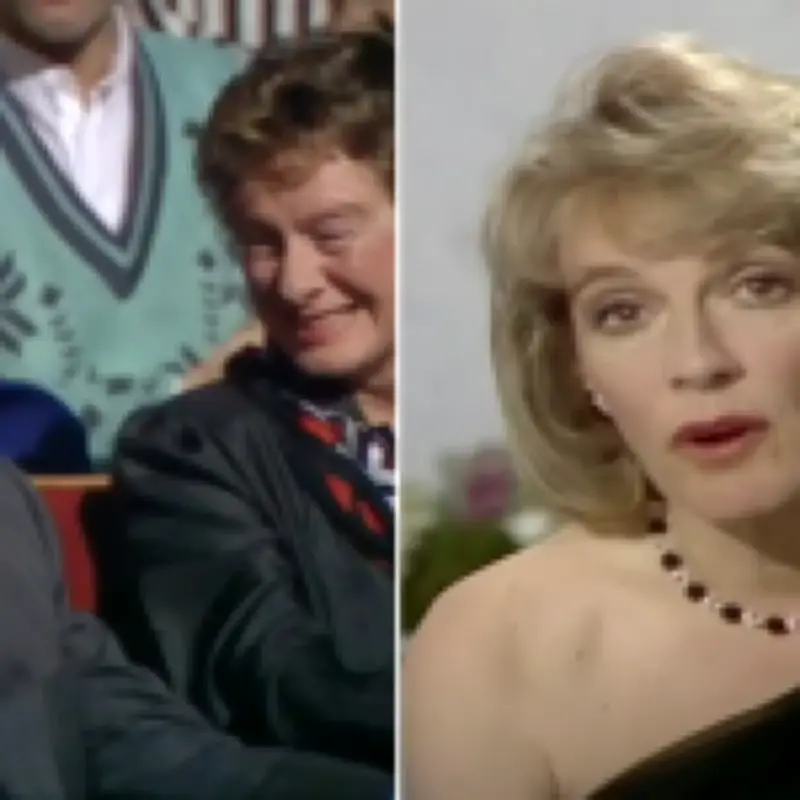
The late Dame Esther Rantzen, who died aged 86, is being remembered for a poignant 1988 episode of That's Life! in which she honoured Sir Nicholas Winton, the man who organised the rescue of 669 children from Czechoslovakia.
Dame Rantzen, the broadcaster and philanthropist who founded Childline, died three years after being diagnosed with terminal lung cancer, after which she became a spokesperson for the assisted dying bill. Since her death, fans have fondly recalled her career, including her time as the face of the BBC series That's Life! from 1973 to 1994.
The 1988 segment that moved viewers
During the clip, which has gone viral regularly over the years, Dame Rantzen helped introduce viewers to audience member Nicholas Winton, who was knighted in 2003. Sir Winton organised the rescue of 669 children from Czechoslovakia, the vast majority of whom were Jewish, following the Nazi occupation in 1939. He carried out a mammoth and dangerous coordination effort to rehome these children in the UK.
On the episode, several of these children were contacted as adults and told that it was Sir Winton who was behind their life-saving escape. Dame Rantzen explained during the tearful segment: 'We asked as many as possible of these grown-up children to get in touch with us so they'd have the chance to thank Mr Winton personally.'
She then addressed the live studio audience, where Sir Winton sat in the front row: 'Can I ask, is there anyone in our audience tonight who owes their life to Nicholas Winton. If so, could you stand up please.' As several rows of people stood up, Dame Rantzen encouraged him to 'turn around' and see the impact of his actions. She added: 'You'll have a chance to meet all these people properly after the programme. In the meantime, Mr Winton, on behalf of all of them, thank you very much indeed.' Sir Winton was then showered in applause.
Why she brought him onto the show
Reflecting on why she wanted to bring him onto the show years later, she told the Radio Times that she had discovered he was disappointed he had not been able to save more children. 'I was devastated that he felt he had failed. I wanted to prove to this extraordinary man that every life he had saved was precious,' she explained.
Following Dame Rantzen's death, a heartfelt letter she wrote was released to the public. The posthumous message read: 'I am so sorry I cannot send you each individual thanks for the fun, the support and the help you have been to me. I have been immensely lucky in the friendship and the professional advice I have had from you, which has enabled me to live such a long and happy life.'
The letter continued: 'Sadly, all good things come to an end, as they say. So I particularly wanted to say goodbye and thank you so very, very much. Perhaps I will see you eventually, on the other side. I do hope so.'