In the social media age, we are used to reading the innermost thoughts of strangers – and of sharing our own, with nothing more than a tap of a phone screen. But it hasn't always been this way. For women in particular, denied a voice in a male-dominated world, their private diaries were often their only outlet.
Take Joan Wyndham, for example – a writer featured in Secret Voices by Sarah Gristwood, an anthology of women's diary entries from the past four centuries. As German bombs fell across Britain in 1941, Joan was more interested in a different kind of explosion. Sarah says: "She describes her first orgasm in her writing – not something a lady would have spoken aloud." Joan added in her diary: "Now I suppose I am completely beyond the pale as far as the Church is concerned."
Intimate Confessions and Tragedies
Or take Anne Lister, the woman behind hit TV show Gentleman Jack, who wrote frankly about her attraction to women at a time it was still a serious taboo. Anne wrote in 1821: "I love, and only love, the fairer sex and thus beloved by them... my heart revolts from any love but theirs."
Sarah's book contains plenty of tragedy as well as titillation. Jewish refugee Anne Frank wrote possibly history's most famous and chilling diaries, saying in 1943 as a 13-year-old hiding from the Nazis in Amsterdam: "I could go on for hours about all the suffering the war has brought, but then I would only make myself more dejected. There is nothing we can do but wait as calmly as we can. Jews and Christians wait, the whole earth waits; and there are many who wait for death."
Survival and Longing in the Arctic
Ada Blackjack, a Native American explorer, spent eight months as the sole survivor of an expedition to Wrangel Island in the Arctic. In her 1923 diary, she wrote about her daily survival, her care for her dying companion Lorne Knight, and her deep longing for her son Bennett. "If I be known dead, I want my sister Rita to take Bennett my son, for her own son," she wrote.
Diaries, author Sarah says, are time capsules that give insight into the most intimate thoughts moments of a person's life – as well as the world at the time of writing. She says: "The earliest Japanese diaries date back 1,000 years. But from an English language point of view, the first women's diaries appeared at the end of the Elizabethan age. Some are written without the thought that they will ever see the light of day. Anne Frank, for example, wouldn't have known hers would be read by millions around the world."
Royal and Celebrity Insights
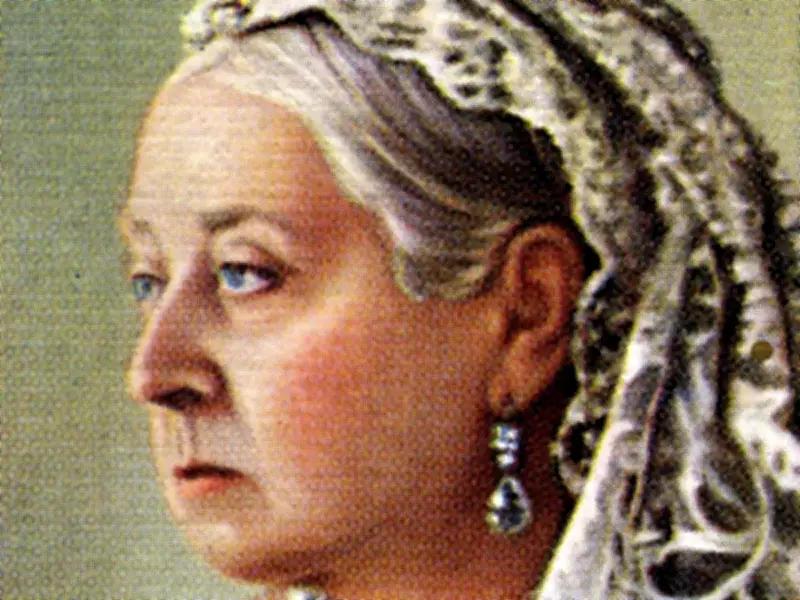
Sarah adds: "After reading so many diaries, I believe that in the end every diary becomes for the diarist about the diarist. Even if they know someone else is likely to read it someday, it's still the form of writing in which women let out the thoughts and feelings they weren't supposed to express." Even Queen Victoria, who would have known her diaries were destined to be preserved, allowed a glimpse of her inner thoughts – mostly about her feelings for her beloved husband.
"My dear Albert came in today from the rain; he looked so handsome in his white cashmere britches, with nothing on underneath," she wrote in 1839. The following year, she added: "My dearest Albert put on my stockings for me. I went in and saw him shave; a great delight for me."
Marriage, War, and Adventure
Sometimes, the less rosy side of marriage came out too. Lady Anne Clifford, known as "the lady of letters" whose extensive diaries chronicled her battles with male entitlement, wrote of her husband in 1617: "Sometimes I had fair words from him and sometimes foul."
Nella Last volunteered as a diarist for the Mass Observation Archive starting in September 1939 when World War II began. Given the code name "Housewife 49" by the project based on her role and age at the start, she chronicled civilian life in Barrow-in-Furness, Lancashire. She kept writing for nearly 30 years until 1966, producing roughly 12 million words – one of the longest diaries in the English language.
Sarah says: "During the Second World War, she began to feel differently about her relations with her husband. Once upon a time, before the war, she'd have been desperately worried when he was furious and agitated, and had been expected to have his dinner ready for him when he got home. But now she's telling him to 'behave like a grown-up.'" Nella wrote in 1940: "He told me rather wistfully I was 'not so sweet'... and I said: 'Well! Who wants a woman of 50 to be sweet?'"
Explorers and Writers
Other women's experiences were less relatable to everyday life. Mary Kingsley, the pioneering Victorian explorer, travelled solo through dangerous regions of West Africa in the 1890s. After falling into a 15ft game pit lined with sharp ebony spikes near the village of Efoua in modern-day Gabon in 1897, she wrote: "It is at these times that you realise the blessings of a good thick skirt... I was completely saved from the spikes by my thick heavy skirt. Had I been wearing trousers, I should have been pinned like a butterfly."
In the 1930s, Anne Morrow Lindbergh wrote about the appalling kidnap and murder of her child. Sarah says: "Charles, known as the 'Lindbergh baby', was tragically abducted and murdered at 20 months old in what was called the 'crime of the century'. Anne wrote in 1932: "He has already been dead a hundred years. Impossible to talk without crying."
Some extracts provide an insight into the hobbies and interests of celebrities. Celebrated author Virginia Woolf, for example, loved cars. She wrote in 1927: "On the backs of paper I write down instructions for starting cars. We have a nice little shut up car in which we can travel thousands of miles. The world gave me this for writing The Lighthouse, a book which has sold 3,160 copies. All images are now tinged with driving a motor."
And double Oscar-winning actress Emma Thompson wrote a candid and detailed behind-the-scenes diary to be published alongside the release of Sense and Sensibility in 1995. "Roast beef and a square of chocolate for lunch. I keep tripping over my frock and swearing," she revealed.
Elsewhere, Beatrix Potter wrote in an elaborate code that was cracked some years after her death. Sarah says of the Peter Rabbit author: "She would write in code about how dissatisfied, depressed and angry she was about her life as a Victorian young lady at home." Beatrix wrote, aged 16, in 1883: "I am one day up and down another. Have been a long way down today, and now my head feels empty and I am nothing in particular. Will things never settle? Is this being grown up?"
Sarah says: "She needed some space in her own head where she could write down her secret voice, if you like, and know that nobody else could read it." Unfortunately for Beatrix, we're still reading it today.