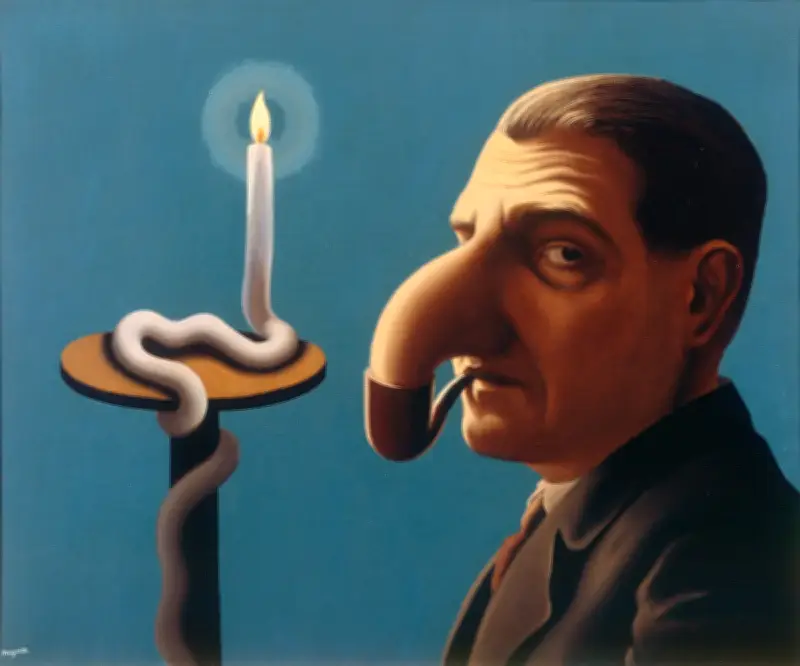
The Gagosian gallery in Grosvenor Hill has transformed its space into a dazzling, curtained environment for This Is Not A Pipe: The Afterlife of Magritte, a show that brings together the Belgian surrealist's works with those of contemporary artists. The exhibition explores Magritte's enduring influence without being overly reverential, offering an experience that is both immersive and unsettling.
Magritte, known for his bowler hats, apples, and famous assertion that a pipe is not a pipe, remains one of the most recognisable and beloved artists. His imagery permeates advertising, magazine covers, and broader pop culture. The show includes numerous classics and intriguing rarities, such as The Flowers of the Journey from his first solo exhibition in 1926, The Listening Room (1958) with its room-filling apple, and The Philosopher's Lamp (1936), a self-portrait with a pipe-shaped nose. The Exception (1936), a half-fish, half-cigar, charms before unsettling the viewer.
Contemporary Responses and Sculptural Highlights
The exhibition specifically examines Magritte's influence on contemporary artists, displaying their work alongside his own. While this approach proved problematic for the Tate's Frida Kahlo exhibition, here Magritte's pieces remain in the majority, and the new works reflect a similar strain of wit rather than slavish imitation.
Among the contemporary pieces, Sarah Lucas's SLAG, made of stuffed tights, stands out. Isabelle Albuquerque's Orgy For Ten People In One Body: 7 (2021), featuring teddy bears with a woman's body in black locust hardwood, and Jeff Koons's shiny stainless steel toy locomotive are also notable. Vija Celmins's Pink Pearl Eraser (1966–67) and Soshiro Matsubara's Der Traum des Schmetterlings (2018–26) add to the eclectic mix. Magritte's own hat and suitcase are displayed, intriguing artifacts in themselves.
Disquieting Depths and Dark Humour
Yoko Ono's Sky TV, featuring a live feed of the sky above the gallery, echoes Magritte's cloud works, represented here by The Curse (1931). The exhibition reveals that Magritte's titles often undercut apparent playful levity, and seeing the paintings face-to-face, liberated from image fatigue, proves disquieting. Curtains fall in the middle of the ocean, a woman's blonde hair frames a figure made of a cage door, and The Drums of Death (1965) depicts a double image of a bowler-hatted man.
The longer one spends with the works, the more their disturbances—things turning into what they shouldn't—sink in. In The Blow to the Heart (1952), a rose wields a dagger. The contemporary art largely complements Magritte well, as seen in Victor Man's Titiriteros (2023), where puppeteering witches gaze down on Magritte's Natural Selection (1938), in which clouds sit on the ground and rain upwards. The show runs until December 12 at Gagosian.