One particularly heartwarming aspect of my widowed mother's return to Jordanhill in 2024, the neighbourhood where I grew up during the 1970s, is the opportunity it provides for me to revisit old familiar places during my occasional city breaks. Foremost among these cherished locations is a single-storey brick building sprawling amidst a vast expanse of social housing.
The Enduring Charm of Knightswood Library
Completed in 1972, Knightswood Community Centre – where the late local Member of Parliament, Donald Dewar, once hosted lively bingo sessions for spirited grandmothers – has not aged particularly gracefully. The building's fabric appears dated, and the swimming pool at its core has long been derelict. However, the library within remains, to me, a quiet haven of profound joy. It was the very first library I ever knew, and as a serene physical space, it has barely changed over the past half-century.
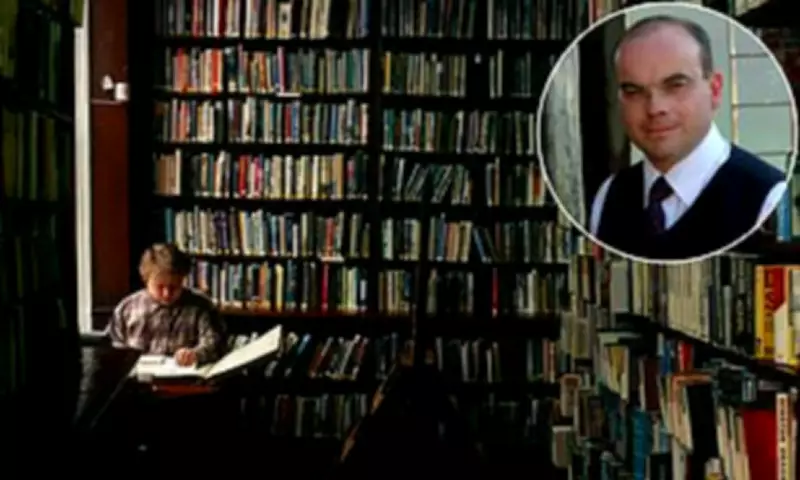
It continues to be quietly busy, serving as a safe space and a warm retreat for local pensioners. Boys in distinctive Jordanhill school blazers bend their heads in quiet study. While there are not nearly as many books as I remember from my youth – the emphasis now is much more on providing internet access – Knightswood Library persists as an ongoing, quiet endeavour for community decency and learning.

A Lifeline in Stornoway
Even today, I frequently resort to my local library here in Stornoway. I rely on its excellent reference section for local history, use it for occasional photocopying, and consult it for some arcane point of research that cannot readily be accomplished online. Just the other day, I dropped in to verify a detail in the electoral register.
Near the door stood the usual display of retired library books available for purchase for mere pennies. I was amused to note no fewer than five cancelled copies of David Walliams' The Boy in the Dress – surely five more copies from that disgraced author's hand than the Outer Hebrides ever required. Libraries may be regarded as something of a public sector Cinderella in contemporary times, but they were absolutely central to the rise of an educated, lettered working class.
The Pre-Digital Reliance
In the early 1990s, due to the requirements of my job, I had to use our local library far more frequently and out of sheer necessity. In that bygone era, at least as far as the Western Isles were concerned, there was no worldwide web to consult. Many a newspaper feature was deftly stitched together from the scant collection available at our facility in Tarbert, Harris. If you needed clear information very quickly, the children's non-fiction shelves often proved ideal.
Furthermore, any local library serves as an ideal point of reference for capturing the authentic feel and spirit of a place. This ranges from the community notices pinned to the bulletin board to the specific volumes the staff have thoughtfully selected for special display.
An Oasis in North Bend
In October 1996, I found myself in a small town in the Pacific North-West of the United States – North Bend, Washington. The local bar was an eerily tense den of conscious, open transgression, complete with frosted bottles of Budweiser and a sign prohibiting the carrying of concealed firearms. A holstered gun on open display was, apparently, not considered an issue.
I had been lured to North Bend for the legendary cherry pie at the Mar T diner and because the town served as a filming location for the television series Twin Peaks. Afterwards, feeling replete, I discovered North Bend's public library and browsed its shelves for a contented hour, immersed in its quiet, brightly lit civility.
The Carnegie Legacy
Scotland holds a notable place in the history of libraries because it gave the world Andrew Carnegie. Born in Dunfermline in 1835, he was whisked away at the age of 12 when his family emigrated to the United States. He began his working life as a bobbin boy in a cotton mill, later becoming a telegrapher. Already wealthy by his thirtieth birthday, he moved into the steel industry. By 1901 – with a personal fortune equivalent to roughly $300 billion in today's values – Carnegie was the richest man in America.

He was not without flaws. His attitude towards workers pressing for better pay and conditions was, to put it mildly, robust. Late in life, Carnegie also became fascinated by spelling reform. It is thanks to him that ordinary Americans today labor, while posher ones enjoy the theater. Only his death in 1919 spared us such orthographic delights as filosofy.
However, he possessed a simple, profound love for libraries. He believed he owed everything to those he had frequented as an ill-educated but literate youth. Through his generosity, the Dunfermline Carnegie Library opened in his hometown in 1883 and continues to prosper today. That was merely the beginning. By the time of his death, he had bankrolled the construction of more than 2,500 libraries throughout Britain and the United States.
Conditions and Magnificence
It was never a blank cheque – or, as he would doubtless have preferred, a blank 'check'. The local authority had to demonstrate the need for a library, provide the site, pay ten percent of the construction costs, and commit to running and funding the facility thereafter. Yet, Carnegie's libraries were built, and some are of palatial magnificence.
The Edinburgh Central Library, opened on George IV Bridge in 1890, was the very first public library in Scotland's capital. It is a pile of architectural splendour featuring terrazzo floors, a grand staircase, and a stately dome. A bust of Carnegie gazes upon visitors from those sweeping stairs. Within its walls are a children's library, a fiction library, a grand non-fiction library, a music library, a cathedral-like reference library, a splendid basement Scottish library, an art library, and even a dedicated Edinburgh library. All you have to do is walk in off the street and read.
Transforming a Nation
It is no exaggeration to state that, through his generosity in Scotland alone, Andrew Carnegie transformed our nation. However mean your circumstances or lowly your station in life, if you could read, you could use a library. Scotland proved to be an early adopter of lifelong learning. Libraries were central to the rise of a lettered working class, the surge of the Labour movement, and, one could persuasively argue, the foundation of the post-war welfare state.
Carnegie was not the sole benefactor. In Glasgow alone, philanthropists like George Baillie and Stephen Mitchell also funded generous library provision. As Baillie articulated in 1883, the aim was 'to aid the self-culture of the operative classes, from youth to manhood and old age, by furnishing them with warm, well-lighted, and every way comfortable accommodation at all seasons, for reading useful and interesting books.'
The Modern Struggle and Enduring Value
Libraries are, alas, something of a public sector Cinderella today: their opening hours grow ever briefer, and their funding becomes ever meaner. Stornoway Public Library was evicted from its magnificent purpose-built premises around 1979 because the local council required more office space. It languished for twenty years in squeaky-floored Portakabins before being consigned to a repurposed, windowless shop on Cromwell Street.
Its gentle staff toil all day under artificial light and can only display a fraction of the books they hold in storage. Yet, it hangs on tenaciously and is still deeply cherished by those who love nothing better than having their nose in a book. As the young-adult novelist Joan Bauer has pithily observed: 'My grandma always said that God made libraries so that people didn't have any excuse to be stupid.'
From the grand Carnegie edifices to the modest community hubs like Knightswood, libraries remain vital lifelines. They are repositories of knowledge, sanctuaries of quiet contemplation, and enduring testaments to the belief that access to learning should be a universal right, not a privilege. Their struggle for relevance and funding in the digital age does not diminish their foundational role in shaping literate, informed, and civil societies.