Massive Biblical Network Reveals 63,779 Interconnections Across Scripture
A remarkable visualisation project has uncovered an extensive network of more than 63,000 connections woven throughout the entire Bible, drawing renewed attention from believers who argue this intricate web points toward divine authorship. The connections, meticulously identified through collaboration between a computer scientist at Carnegie Mellon University and a Lutheran pastor in Germany, stretch comprehensively across all sixty-six books of scripture.
This sophisticated network links people, events, and thematic elements scattered throughout both the Old and New Testaments, creating a complex tapestry of interrelationships that researchers have transformed into a striking visual representation.
Visualising the Biblical Tapestry
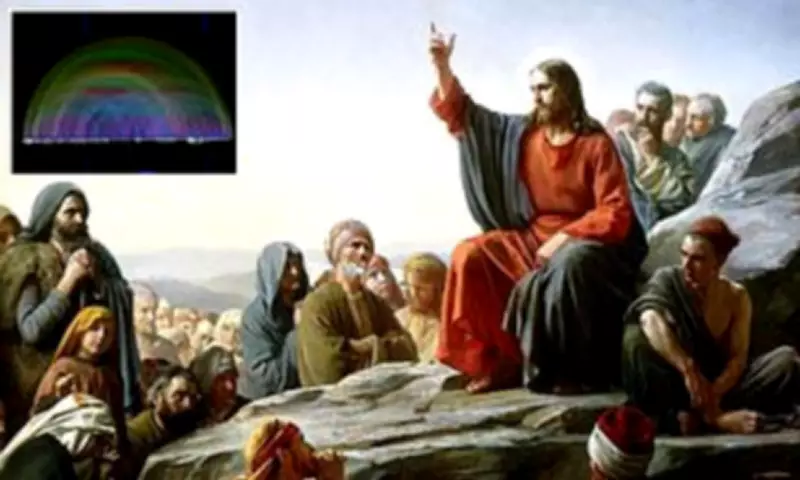
Researchers developed an innovative visualisation that lays out every chapter from Genesis to Revelation along a single continuous line. Each vertical bar within this visualisation represents an individual chapter, with taller bars clearly marking sections that contain more verses. Thousands of elegantly curved lines stretch between different books to link related passages, with darker lines prominently highlighting verses that share the greatest number of connections.

The resulting arcs form a vivid rainbow-like pattern that visually demonstrates how extensively the Bible is woven together from beginning to end. This comprehensive visual approach allows viewers to observe the full structural complexity of biblical connections from a distance while still discovering finer details upon closer examination.
Notable Cross-References and Connections
The network reveals numerous significant connections that span centuries of biblical composition. One prominent example ties Genesis 2:9, which describes the Tree of Life in the Garden of Eden, directly to Revelation 22:2, where this powerful symbol dramatically reappears in the Bible's final vision of paradise.
Another crucial connection links Exodus 12, which describes the Passover lamb, to John 1:29, where Jesus is explicitly referred to as the 'Lamb of God.' Prophetic passages in Isaiah 7:14 are also meaningfully connected to Matthew 1:23, which directly links this ancient verse to the birth of Jesus centuries later.
Further significant connections include Isaiah 53, which describes a suffering servant wounded for others, cross-referenced with John 19 detailing the crucifixion of Jesus. The dramatic crossing of the Red Sea in Exodus 14 is repeatedly referenced in Hebrews 11, linking early accounts of divine deliverance to later teachings on faith.
Historical and Linguistic Scope
This extraordinary network spans books believed to have been written by more than forty different authors over approximately fifteen hundred years. It remarkably bridges three continents—Asia, Africa, and Europe—and three distinct languages: Hebrew, Aramaic, and Greek.
The Bible, composed over centuries by dozens of individuals, encompasses vastly different historical eras, diverse cultural contexts, and varied literary styles. Yet the connections between passages, often linking early Old Testament writings to later New Testament teachings, have long been cited as evidence of remarkable theological continuity throughout scripture.
Project Origins and Renewed Attention
The network was originally created in 2007 through a unique collaboration between computer scientist Chris Harrison and Lutheran pastor Christoph Römhild, who painstakingly assembled a comprehensive digital dataset of cross-references found throughout the Bible. Their work has recently gained significant renewed attention across social media platforms, where pastors and religious commentators have pointed to the network as compelling evidence of what they believe represents a unified message throughout scripture.
One user posted emphatically on X: 'That's literally impossible: you can't get twenty people in a room and tell them to write an essay about one topic and get agreement.' In a video shared by Silverdale Baptist Church in Tennessee, pastor Tony Walliser highlighted how the Bible connects stories across generations while consistently focusing on a central figure, Jesus Christ.

'Now, let me ask you how that just happened?' Walliser declared in the video. 'You go wow, it must have had a major, amazing general editor, yeah, it did: God.'
Theological Implications and Scholarly Debate
These cross-references represent conceptual links between passages that share similar themes, references, people, or locations, many of which traditionally appear in the margins of printed study Bibles. Supporters of the project assert that the sheer density of connections—totaling 63,779 identified relationships—highlights what they view as remarkable internal consistency across books written by multiple authors over extensive periods.
Some theologians and believers have argued that the discovery of tens of thousands of interconnected references substantially strengthens the case for divine inspiration. They emphasize that maintaining such thematic unity across such a vast and historically complex text would have required extraordinary coordination, especially considering that many biblical books were composed generations apart without apparent collaboration.
However, some scholars have offered cautious perspectives, noting that cross-references are not necessarily definitive proof of divine authorship. Instead, they observe that religious traditions often deliberately build upon earlier writings, intentionally referencing established teachings and narratives. This layered textual structure, they argue, is consistent with how many historical religious texts naturally evolve through interpretive traditions and theological development.
The project aimed to accomplish more than simply cataloguing these references; it sought to reveal the profound depth and complexity of scripture in a visually striking format that could be understood at both broad structural levels and detailed analytical levels. According to Harrison, the primary goal was to produce something that carefully balanced aesthetic beauty with substantive meaning while genuinely honoring the complexity of biblical text.